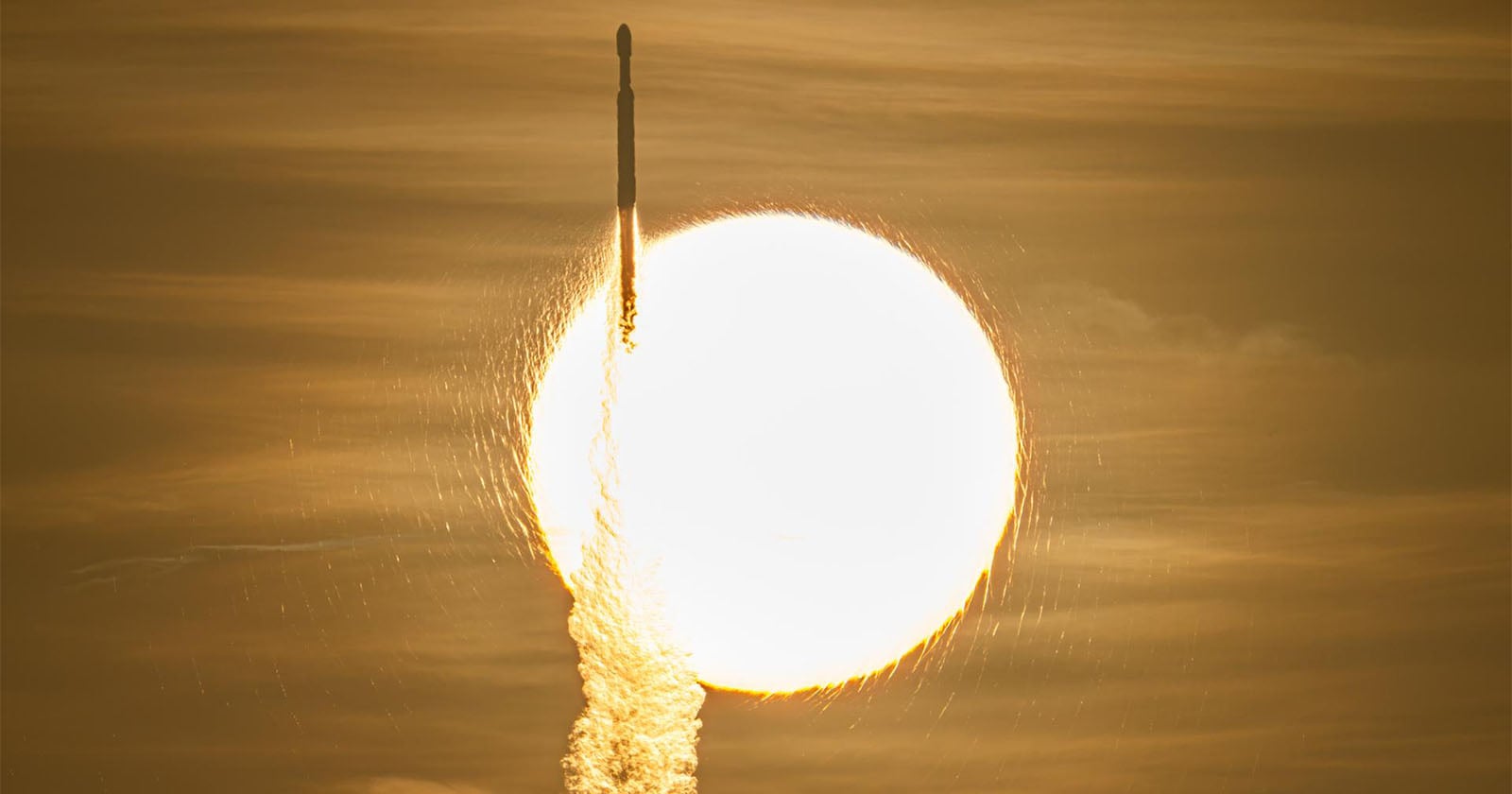
This morning, as the Falcon Heavy cleared the pad at Kennedy Space Center, the Nancy Grace Roman Space Telescope carried more than just a 300-megapixel eye into the cosmos. It carried a question that has hovered over physics for decades: what exactly is dark energy, and why is the universe's expansion accelerating? For those of us who follow the intersection of science and culture, this launch is not merely a technical milestone. It is a reminder that some of the most profound art is written in light that has traveled a million miles to reach us. The telescope's journey feels less like a mission and more like a curated exhibition opening, one where the gallery walls are made of gravity and the installations are galaxies.
We would tell a reader who asked us about this: pay attention to what Roman represents beyond the headlines. Unlike its celebrated predecessors, Roman is designed for survey-scale vision, capturing vast swaths of sky in a single frame. That means the data it returns will not just be for a handful of specialists. It will be a public archive of the universe's behavior, available to researchers and, eventually, to the visual storytellers who translate raw data into something we can feel. For the creative collaborators in our audience, this is a rare convergence. The same telescope that probes dark energy will also deliver wide-field imagery that could redefine how we visualize the cosmos, turning cold numbers into vibrant, immersive compositions. We are not just watching a rocket; we are watching a new visual language being born.
The practical takeaway here is quieter but just as meaningful. Roman's million-mile destination, the Sun-Earth L2 Lagrange point, is not an arbitrary choice. It is a stable perch where the telescope can observe without the interference of Earth's glow, a detail that speaks to the patience and precision that define this endeavor. For the health-conscious enthusiast who values discipline, there is a parallel. The mission's success depends on years of careful calibration, not a single dramatic moment. That is the same ethos we champion in our own lives, whether we are refining a workout routine or curating a personal aesthetic. It is not about the spectacle of the launch; it is about the sustained practice of looking closer.
What we will be watching for is how Roman's first images are released. Will NASA frame them as raw scientific data, or will they invite the artistic community to interpret them? That decision will tell us whether this mission becomes a closed chapter in an astrophysics journal or an open invitation to a broader conversation. Our hope is that the agency leans into the latter. Because in a world that often feels fragmented, a telescope that can see the universe's origins has the power to remind us of our own shared beginning. The rocket has launched; the real question is whether we are ready to see what it reveals. We would tell you to keep your eyes on the data, because that is where the beauty will be found.