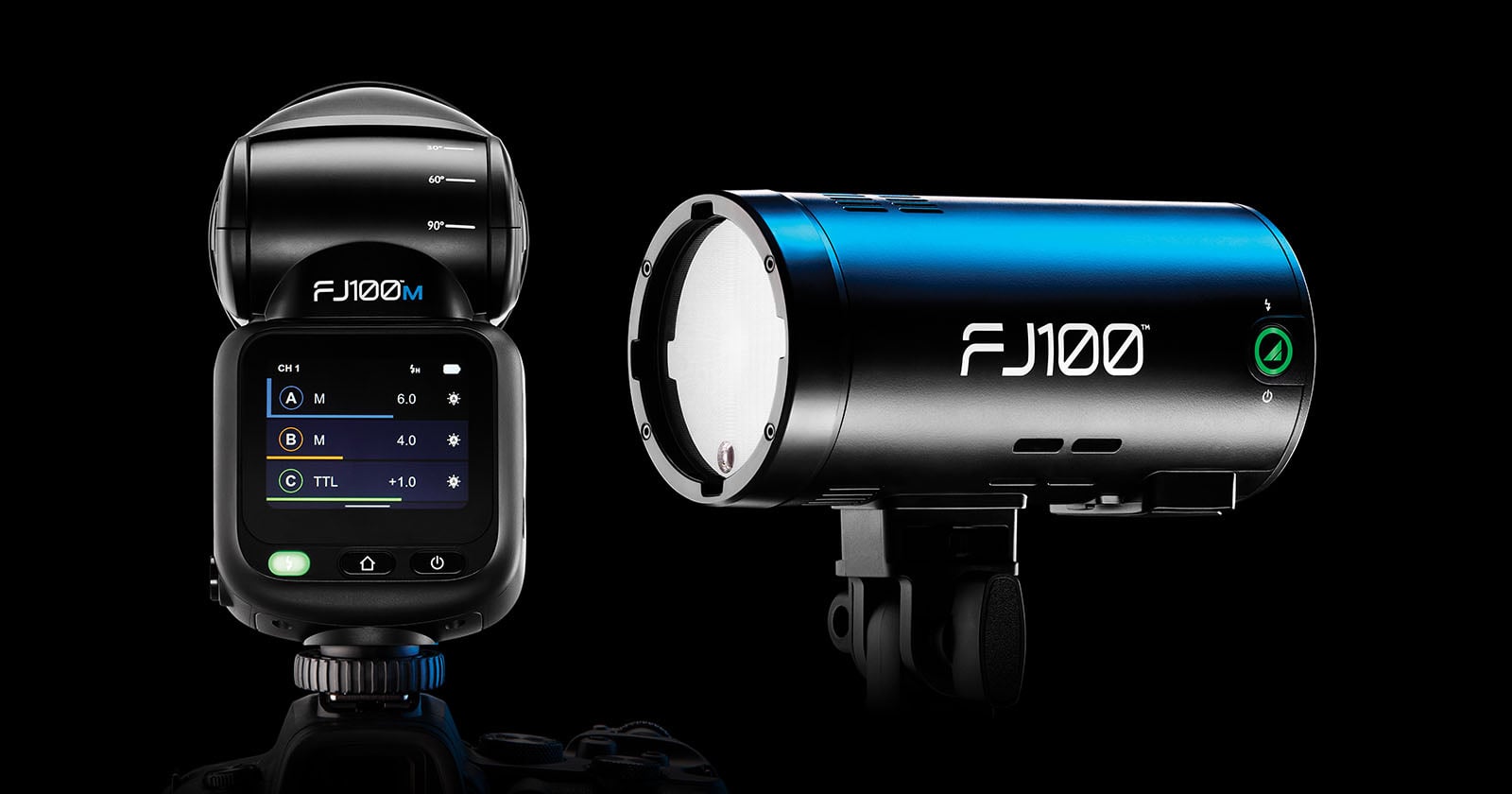
Westcott's FJ100-series announcement lands in a curious place within the creative workflow. On one hand, the promise of compact wireless lighting is hardly new; on the other, the specific pairing of a Touchscreen AC/DC Strobe with a Touchscreen Speedlight in the same series feels like a quiet acknowledgment that creators no longer want to choose between power and portability. They want both, and they want it without hauling a production van. The FJ100 lights are the smallest entries yet in the FJ Wireless System, which matters less for the spec sheet and more for what it unlocks: a bag that fits under an airplane seat, a setup that can be broken down in minutes, and a visual language that stays consistent whether you are shooting in a studio or a hotel hallway. That flexibility echoes the kind of curated simplicity we champion here, much like how Leica Lux 2.0: Crafting iPhone Photography with Artistic Vision proves that the best tool is often the one you already have in your pocket.
But let's be honest about what excites us, and what should excite you. The real story is not the watt-seconds or the recycle times, those are numbers we can debate later. The story is how a speedlight and a strobe now share a system, a battery, and a touchscreen interface, meaning you can move from an on-camera flash to a off-camera key light without rethinking your entire gear bag. For the working photographer juggling boudoir sessions or editorial portraits, this is the difference between a creative flow and a technical interruption. It is the same philosophy behind Collaborate & Create: Boudoir Sessions Offered Across Florida's Coast, where the emphasis is on the experience of making images, not the anxiety of managing gear. Westcott is essentially saying that your lighting should adapt to your artistic eye, not the other way around. That is not a marketing line; that is a practical shift in how we approach a shoot.
Here is our take, and we will keep it grounded. If you are a solo creator or a small team, these FJ100 lights deserve a serious look because they collapse the distance between the ambitious ideas in your head and the physical reality of your setup. The touchscreen interface is not a gimmick; it is a direct response to the countless times we have all fumbled with dials and menus while a subject waits. We would tell a reader who asked us, "Should I care?" this: if you have ever left a light at home because it was too heavy, or skipped a shot because you could not be bothered to set up a full strobe kit, then yes, this is your invitation to stop compromising. The inclusion of both AC and DC power means you are not tethered to a wall, and the speedlight version offers a lighter footprint for run-and-gun work. It is not about being the most powerful or the most technical; it is about being present in the moment.
The one thing we are watching closely is how this ecosystem matures. Westcott has built a strong foundation with the FJ system, but the true test will be in the accessories, the battery life over a year of heavy use, and how seamlessly these new lights integrate with older FJ gear. We are not asking for a revolution; we are asking for reliability. And that is the concrete point we want to leave you with: do not buy this for the hype, buy it because it solves a real problem, the problem of getting out of your own way and making the image you envisioned. If the FJ100 series is any indication, the path forward is smaller, smarter, and far more fluid. We will be watching to see if the rest of the system follows.