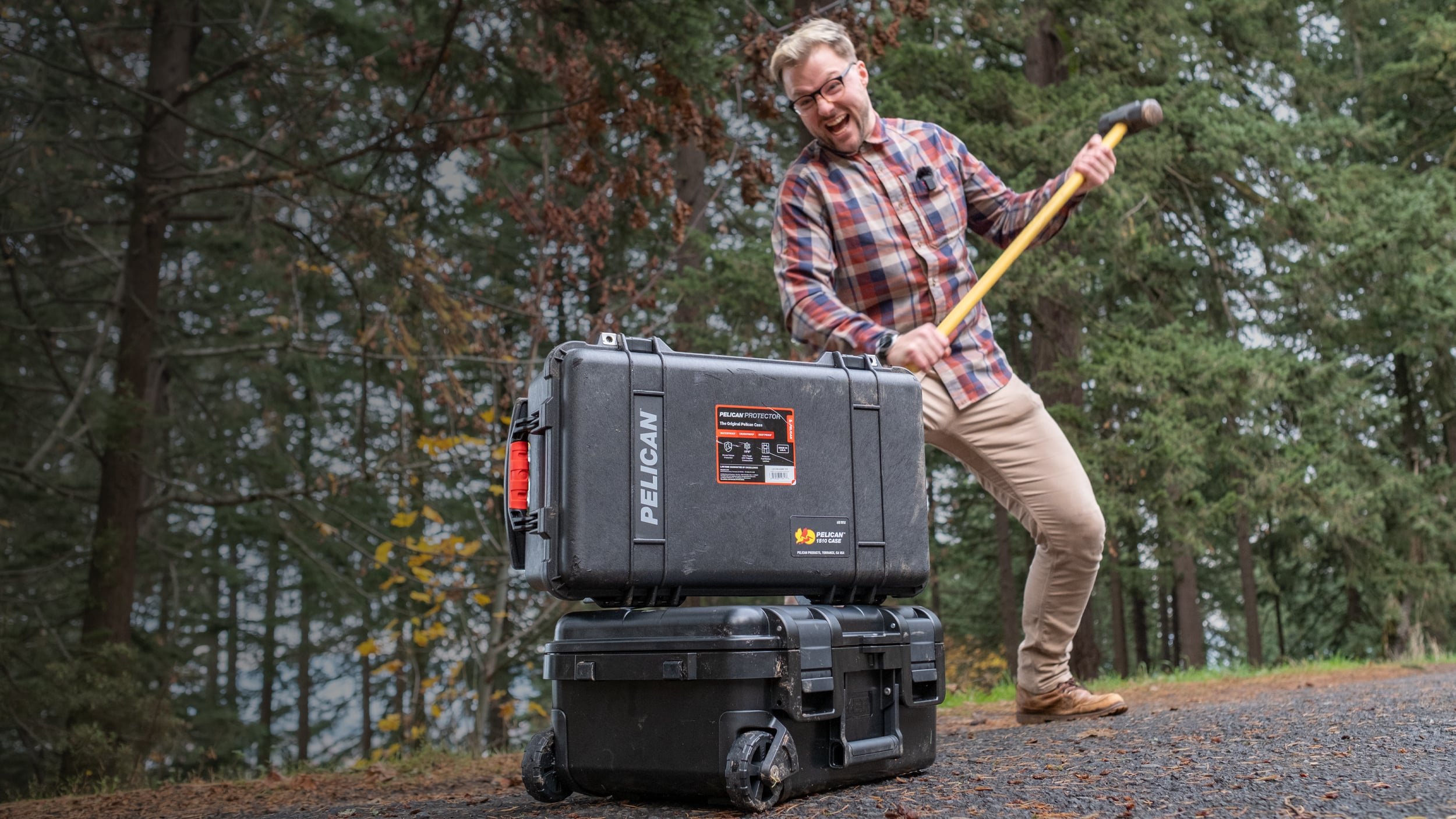
We have a strong opinion about the Pelican Protector 2.0 versus the YETI GoBox showdown: it is the most honest gear test we have seen in years, and the results matter far more than a simple winner's circle. Stuffing both cases full of glass and rolling them down a hill is not a laboratory simulation; it is the kind of real-world abuse that separates curated design from marketing hype. For anyone who has ever packed a fragile lens, a cherished medium-format camera, or a handful of vintage wine glasses for a weekend shoot, this test cuts straight to the core of what "protection" actually means. We have long argued that gear should earn its place in your kit, and this trial proves that a hard case is only as good as its weakest seal. If you appreciate the intersection of function and form, you will want to read how this test compares to The Accidental Discovery That Redefined Medium Format Travel, where a single camera's durability changed an entire workflow.
Our take is that while both Pelican and YETI produce undeniably robust shells, the real story here is about the internal systems. The Pelican Protector 2.0 relies on its classic, almost architectural foam cutouts, a solution that feels timeless but demands that you commit to a layout. The YETI GoBox with the KOR Insert, by contrast, offers a modular approach that adapts to shifting cargo, which aligns perfectly with the ethos we admired in Discovering Yeti's New Apparel Where Performance Meets Pure Aesthetic. That apparel drop proved YETI understands that performance and beauty can coexist; the GoBox system extends that philosophy into storage. The glass test revealed which approach handles unpredictable impacts better, and the answer is not as simple as brand loyalty. The foam in the Pelican cradles each item individually, but the KOR Insert's flexible dividers absorbed shock in a way that felt more forgiving during the chaotic tumble.
What this means for you, the creative professional who values both aesthetics and durability, is a practical dilemma. Do you want a case that protects a perfectly arranged kit, or one that can handle last-minute swaps and still keep everything intact? The Pelican Protector 2.0 remains the choice for the meticulous packer who knows exactly what goes where, and who enjoys the ritual of customizing foam. The YETI GoBox, paired with the KOR Insert, suits the spontaneous shooter or the traveling artist who needs to reconfigure on the fly. Both are aspirational pieces of gear, but the test stripped away the gloss and revealed their true personalities. This is not about which brand is better; it is about which system matches your workflow. We would point you to The Digifilm 2 captures the candid glow of your best nights out as a reminder that the best tools are the ones that disappear into your process.
The concrete takeaway is this: before you buy either case, simulate your own worst-case scenario. Fill it with something breakable, drop it from the height of your car trunk, and see which inserts hold. The glass test on that hill is not a stunt, it is a blueprint for how you should evaluate any protective case. The question left hanging is whether Pelican will eventually release a modular insert system of its own, or if YETI will refine the GoBox latch for an even tighter seal. Until then, the choice is yours, and it depends entirely on how you pack.