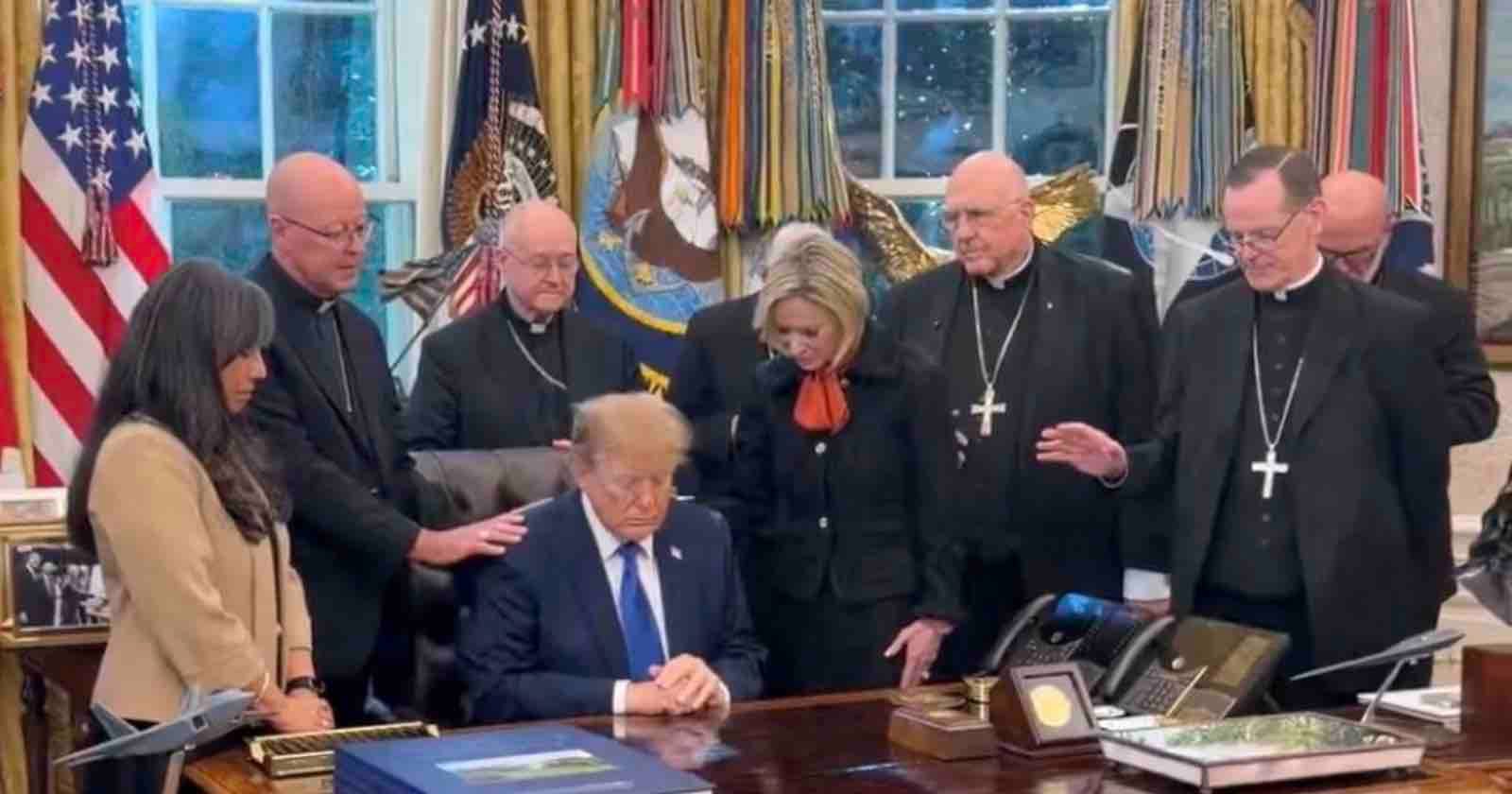
Permission is a fragile currency, and the White House just spent someone else's without asking. Two Catholic bishops have publicly stated that photographs of them at a gathering with President Donald Trump were released by the administration without their consent. Our take is straightforward: this is not a minor oversight. It is a reminder that when power meets imagery, the subject's agency can vanish in a single shutter click.
This moment echoes a tension we have seen before in vastly different contexts. Consider the photographer who spent over a decade living with Black cowboys and cowgirls for A Decade Riding Alongside America's Overlooked Cowboy Culture. That project succeeded because it was built on trust, the subjects were collaborators, not props. The bishops' complaint reveals the opposite: a platform using its reach to frame a narrative without the consent of those within the frame. Or look at the German court ruling that Google Earth invaded privacy with unapproved aerial photos of a man's home, detailed in A German court rules Google Earth invades privacy with unapproved aerial home photos. In both cases, the core question is the same: who controls the image, and at what point does public interest override personal consent?
For our readers, creatives, curators, and health-conscious individuals who value authenticity, this story matters on a practical level. You likely understand the power of a well-composed image. You also likely understand that the best images are born from collaboration, not coercion. The bishops' claim strips away the polish of official photo releases and exposes the raw mechanics: a subject can be reduced to a visual asset in someone else's story. The White House may see this as a routine publicity move. But for anyone who has ever had their likeness used without permission, whether in a campaign, a gallery, or a social media feed, it feels different. It feels like a violation of the unspoken agreement that your image is your own.
The specific takeaway here is direct: always secure explicit consent before publishing someone's likeness, especially when the platform is as powerful as the White House. The bishops' concern is not about being seen with the president; it is about being seen without their say-so. That distinction is everything. As we move through a world saturated with curated visuals, the question we should all ask is not just what the image shows, but who gave permission for it to exist in public. Watch for how the White House responds, or whether it responds at all. Silence, in this context, is also a statement.