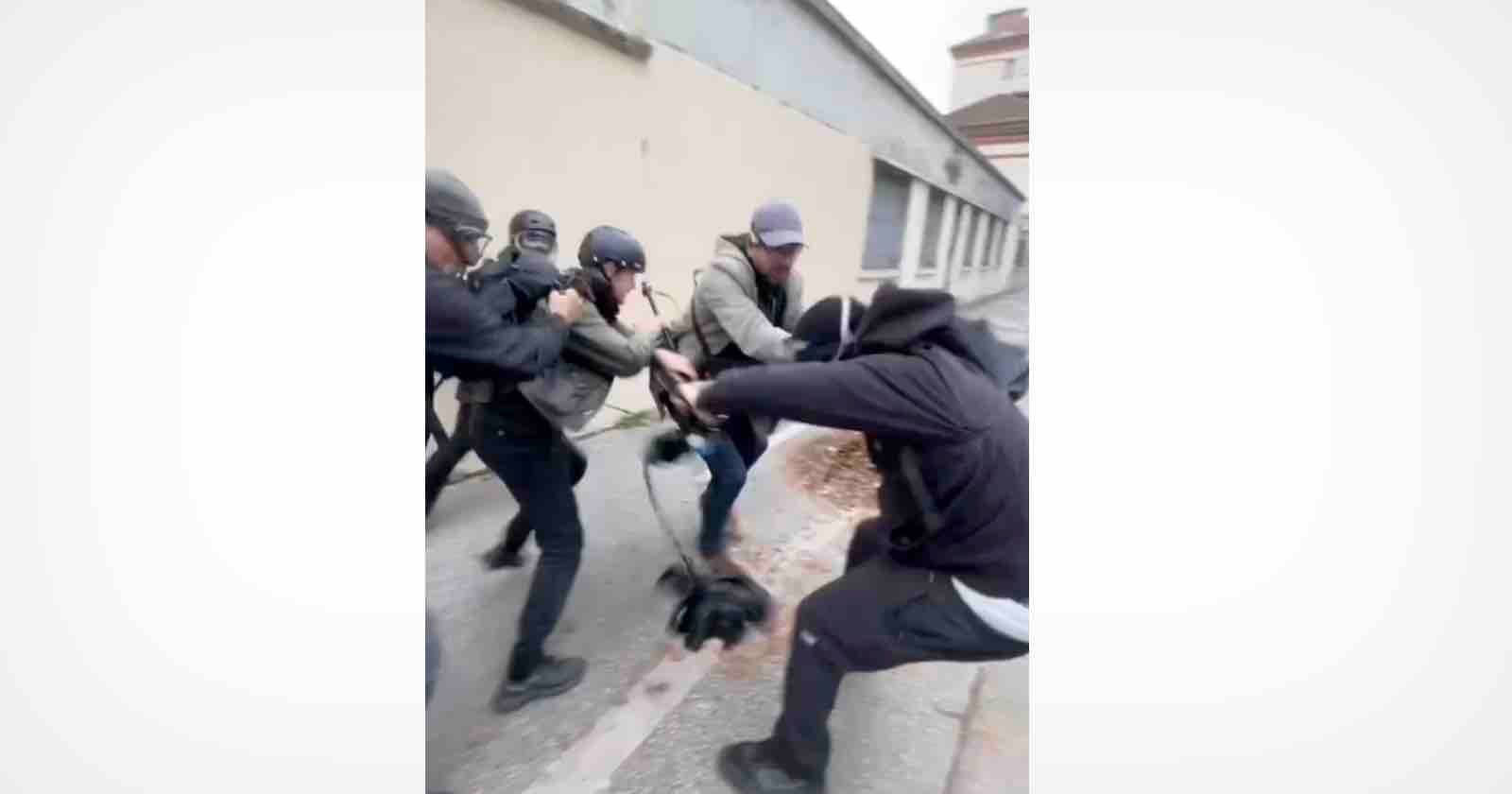
The lens is meant to capture truth, not absorb its punishment. When a cameraman was badly beaten and his camera equipment stolen while covering protests in France this weekend, the message was unmistakable: the act of bearing witness has become a target. This is not an abstract debate about press freedom. It is a concrete assault on the very tool that allows us to see beyond the curated frames of social media and into the raw, unvarnished reality of our world.
For our community, readers who appreciate the art and craft of image-making, who understand that a lens is both a creative instrument and a documentarian's lifeline, this story cuts deep. We have celebrated the precision of the Voigtländer Nokton 35mm f/1.2 Lens Redesigned for Sony and Nikon and marveled at how Nikon Curates the Viewfinder's Artful Journey in its Tokyo museum. We geek out over the enduring brilliance of a 12-Year-Old Icon: Why the Nikon D750 Still Shines in 2026. These are the objects of our passion, the tools we covet and cherish. But this weekend in France, the same equipment became a target of violence. The camera was not just stolen; it was smashed in an act of symbolic destruction aimed at silencing the story it held.
Our opinion is plain: there is no artistic integrity worth celebrating if the hand behind the viewfinder is not safe. The beauty of a perfectly composed frame, the joy of a rediscovered classic lens, the heritage of optical engineering, all of it rings hollow when journalists are beaten for doing their job. We cannot separate our admiration for the craft from our obligation to defend the people who practice it. The Voigtländer Nokton is a marvel of design, but it is worthless if it cannot be carried into a protest without drawing a punch. The Nikon D750 is a legend, but its sensor captures nothing if the person holding it is on the ground.
This incident forces a practical reckoning for every photographer and filmmaker in our audience. Are we prepared for the risk that comes with documenting the uncomfortable? Do we consider the weight of our gear not just in grams, but in the danger it may invite? The cameraman in France was doing what many of us aspire to: showing the world something it needs to see. The consequence was a beating and a stolen tool. The specific question we are left with is not whether press freedom is under threat, that is now obvious, but whether the communities that celebrate the art of photography are willing to stand as loudly for the safety of the artists as they do for the sharpness of the glass.