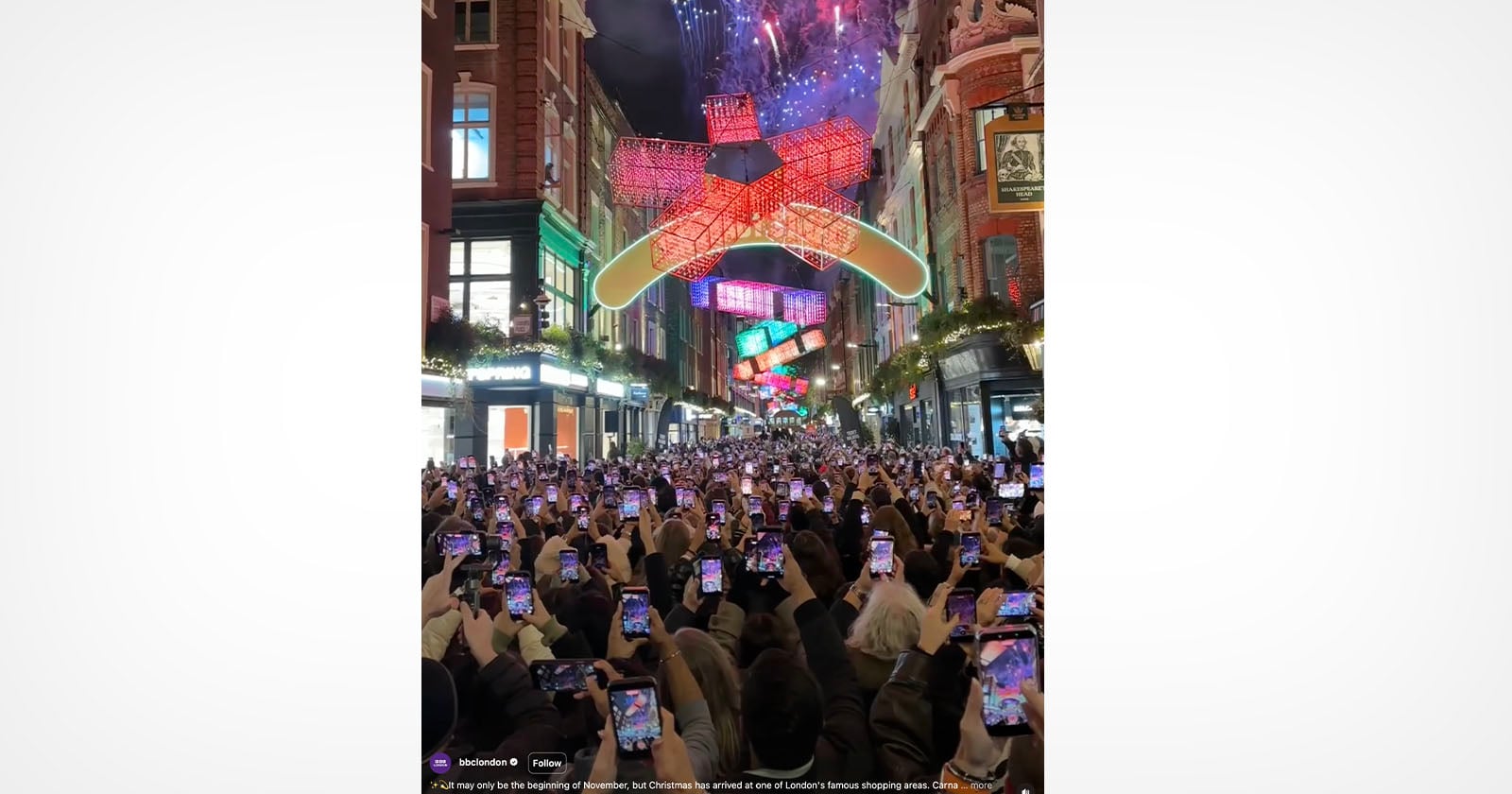
There is something quietly unsettling about watching a crowd of people watch a city's Christmas lights flicker on through the screens of their phones. The video from Central London has sparked exactly the kind of conversation we need right now: a prompt to reconsider what we are actually present for. Our take is simple, when the tree lights flicker, put the phone down. Not because photography is wrong, but because the instinct to capture can so easily override the instinct to feel.
This moment of collective pause resonates with a deeper tension in how we experience beauty. Consider the quiet patience required in Three years of British dog shows captured in playful, candid frames, where photographer Jasper Cable Alexander spent years showing up to dog shows simply to observe, not to stage. His candid frames reward a kind of attention that cannot be rushed. Or think of the precision demanded by The One Classic Lens That Still Elevates Your Craft in 2026, a tool that asks you to be deliberate, to frame with intention rather than reflex. Both remind us that the best images are often born from restraint, not reaction. The London crowd, holding phones aloft before the lights even reached full glow, was reacting, not creating.
The practical takeaway here is not a call to abandon photography. It is a call to choose your moments. There is a difference between documenting a memory and blocking it. When you watch a tree ignite through a four-inch screen, you are trading the full sensory experience, the cold air on your face, the collective gasp of strangers, the way light spills across wet pavement, for a flattened version you will likely scroll past in a week. The authentic memory lives in the body, not in the camera roll.
What we are really talking about is presence. And presence is a practice, not a default. Next time you find yourself at a live event, ask: Am I here to capture this, or am I here to live it? If the answer is both, fine, but take one full breath, eyes up, before you reach for the phone. That single second of unmediated attention might be the only frame that matters.