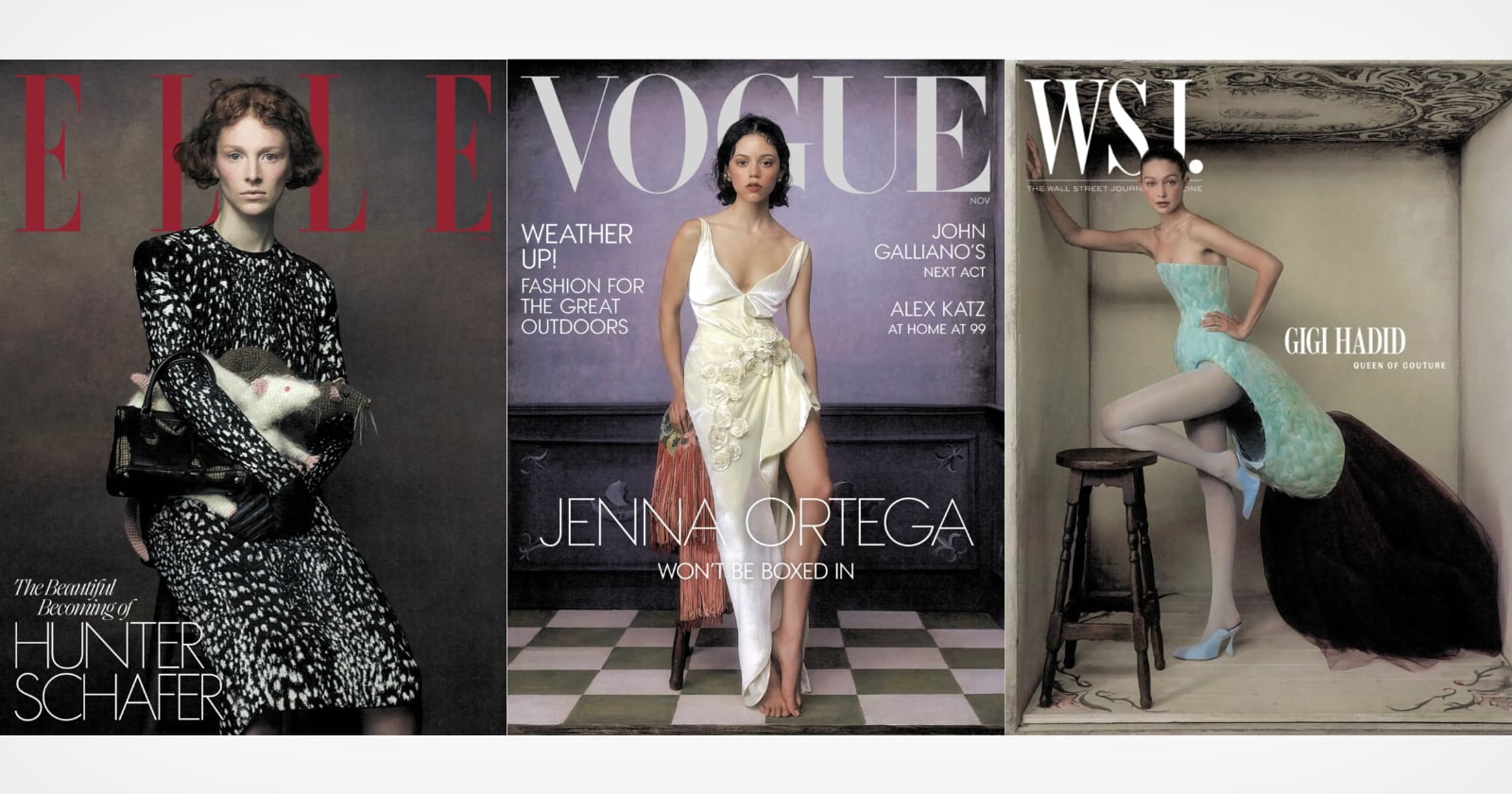
Vogue, Elle, and The Wall Street Journal Magazine all chose the same photographer for their November issues, and the result feels less like a serendipitous collision of good taste and more like a missed opportunity for distinct storytelling. It is a quiet failure of curation, and for a world that craves the authentic and the original, that stings. When three of the most powerful arbiters of style produce covers that are nearly interchangeable, they don't just repeat an image, they dilute the very idea of editorial vision. This is not about blaming a singular artist; it is about asking our audience to consider what gets lost when convenience or a singular aesthetic dominance overrides the messy, wonderful work of creative collaboration.
We have long argued that the magic of a portrait lies in the relationship between the subject and the eye behind the lens. The A 200-Foot Fall in Portugal, Then a Photographer's Unbroken Spirit story is a stunning reminder of that: a photographer who has risked everything for a unique frame, whose very survival is a story of chasing singular moments. By contrast, this November cover-gate feels like a studio session that forgot the "session" is supposed to be a dialogue. Each magazine has its own voice, Vogue's high glamour, Elle's accessible edge, The Wall Street Journal Magazine's polished intellect. Hiring one photographer for all of them suggests a fear of variation, a preference for a safe, proven formula over a riskier, more vibrant point of view. What we are left with is a set of images that could belong to any luxury brand, not the hallmark of a magazine with a soul.
Our own exploration of The curated art of the smile: unposed or empty touched on the fine line between a genuine expression and a hollow one. These covers flirt dangerously with that line. When an aesthetic is borrowed wholesale, the subject's authenticity can become secondary to a pre-approved mood. The practical consequence for our readers, who are both creators and consumers of lifestyle imagery, is a clear question: Are you seeking the image that feels inevitable, or the one that feels true? The magazines may sell copies, but they risk losing the trust of an audience that has grown sophisticated enough to spot a borrowed frame.
The lesson here is not that we should never repeat a collaborator; some of the greatest photographic partnerships in history are proof otherwise. The lesson is that repetition without intention becomes lazy. As you curate your own visual world, whether on a feed, in a portfolio, or across a campaign, ask yourself if the work you are producing could have been made by anyone, for anyone. If the answer is yes, you have missed the point. We'll be watching to see if these three editors use the criticism as a catalyst for bolder, more divergent choices in the coming months, or if the single lens becomes a comfortable habit.