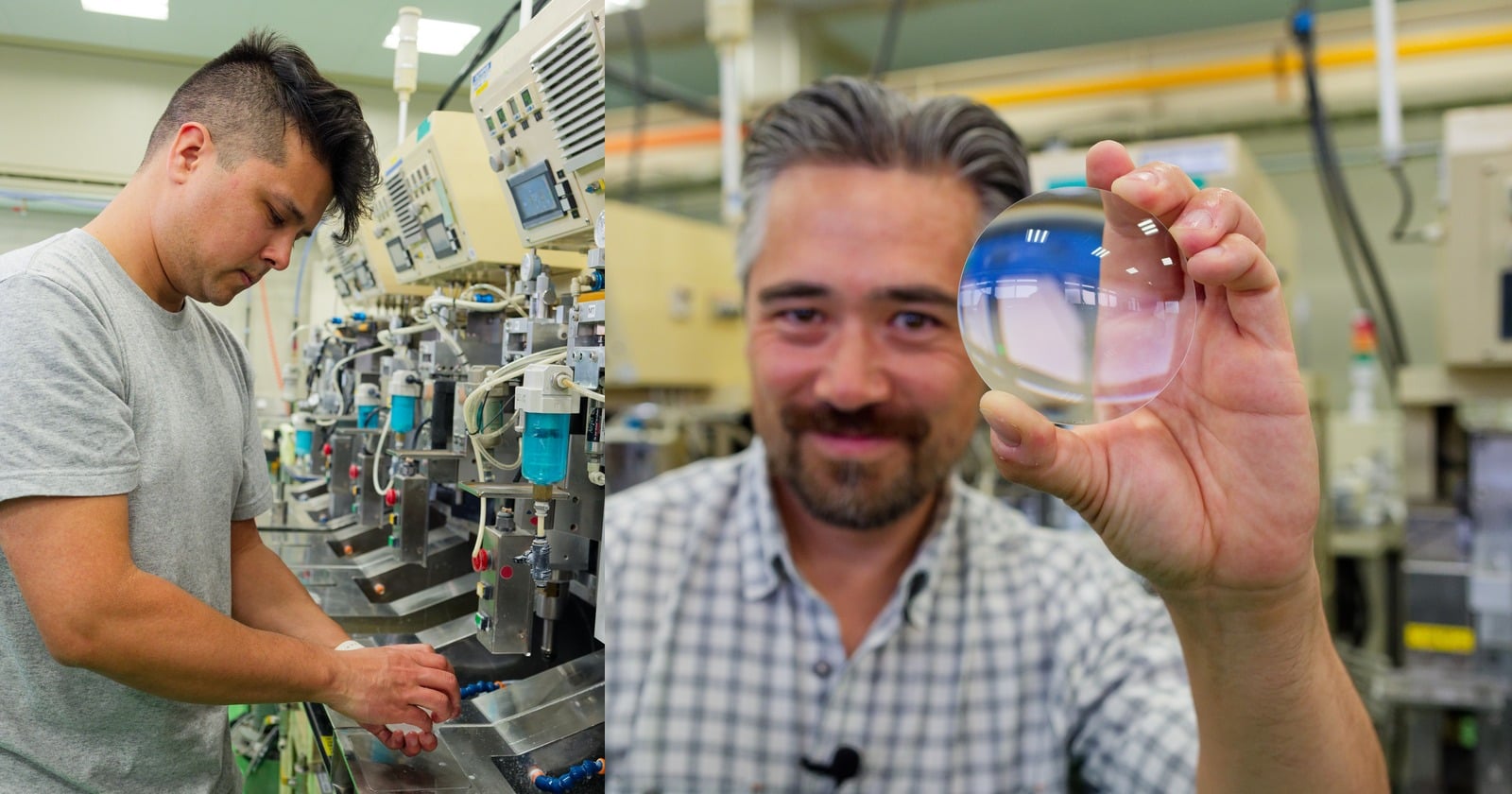
There is something quietly radical about a photographer admitting they do not understand how a lens is made. Most of us would rather pretend we know, nod along when someone mentions aspherical elements or fluorite coatings, and keep our eyes on the final image. But the visit to the Okaya Manufacturing Site in Japan, and the research that followed, does not let us off that easily. It forces a reckoning with the gap between what we use and what we know. Our take is simple: the most meaningful relationship with a tool begins when you stop taking it for granted.
That reckoning lands at an interesting moment. We recently explored how Adobe MAX Unveils AI That Sculpts Light and Style Into Your Photos, a development that promises to reshape what a photograph can be with almost no physical input from the user. The contrast is striking. At Okaya, the craft is slow, tactile, and learned over years, people shaping glass and preparing tools with a precision that software cannot simulate. Meanwhile, another story in our pages, A curated lens on nature's finest details, revealed in stunning finalists, reminds us that the best close-up photography depends on optics that can resolve the almost invisible. Neither AI nor compositional instinct can compensate for a lens that was ground without care. The Okaya visit makes the connection explicit: the finalists' images exist because someone, somewhere, understood how to craft a piece of glass.
What this means in practical terms is that we should ask harder questions about the things we rely on daily. It is easy to treat a camera lens as a sealed black box, input light, output image, and move on. But the Okaya process reveals a world of decisions: how the glass is melted, how the tools are dressed, how a human being learns to feel when a surface is true. That knowledge is not a footnote to the art of photography; it is the foundation. For anyone who calls themselves a creative collaborator or a health-conscious enthusiast, two audiences we speak to often, the lesson applies beyond cameras. The fitness gear you trust, the skincare you apply, the fashion you choose: each one was shaped by someone who learned a craft. Ignoring that process does not make you more sophisticated. It makes you less engaged.
There is a specific consequence worth holding onto. The Okaya site is not a museum of obsolete techniques; it is a working factory where the next generation of lenses is being made. The question it leaves us with is not about nostalgia for handcraft, but about proximity. How close are we willing to get to the making of the things we love? The answer determines whether we remain consumers of a surface aesthetic or become participants in a deeper, more authentic relationship with the objects that frame our lives.