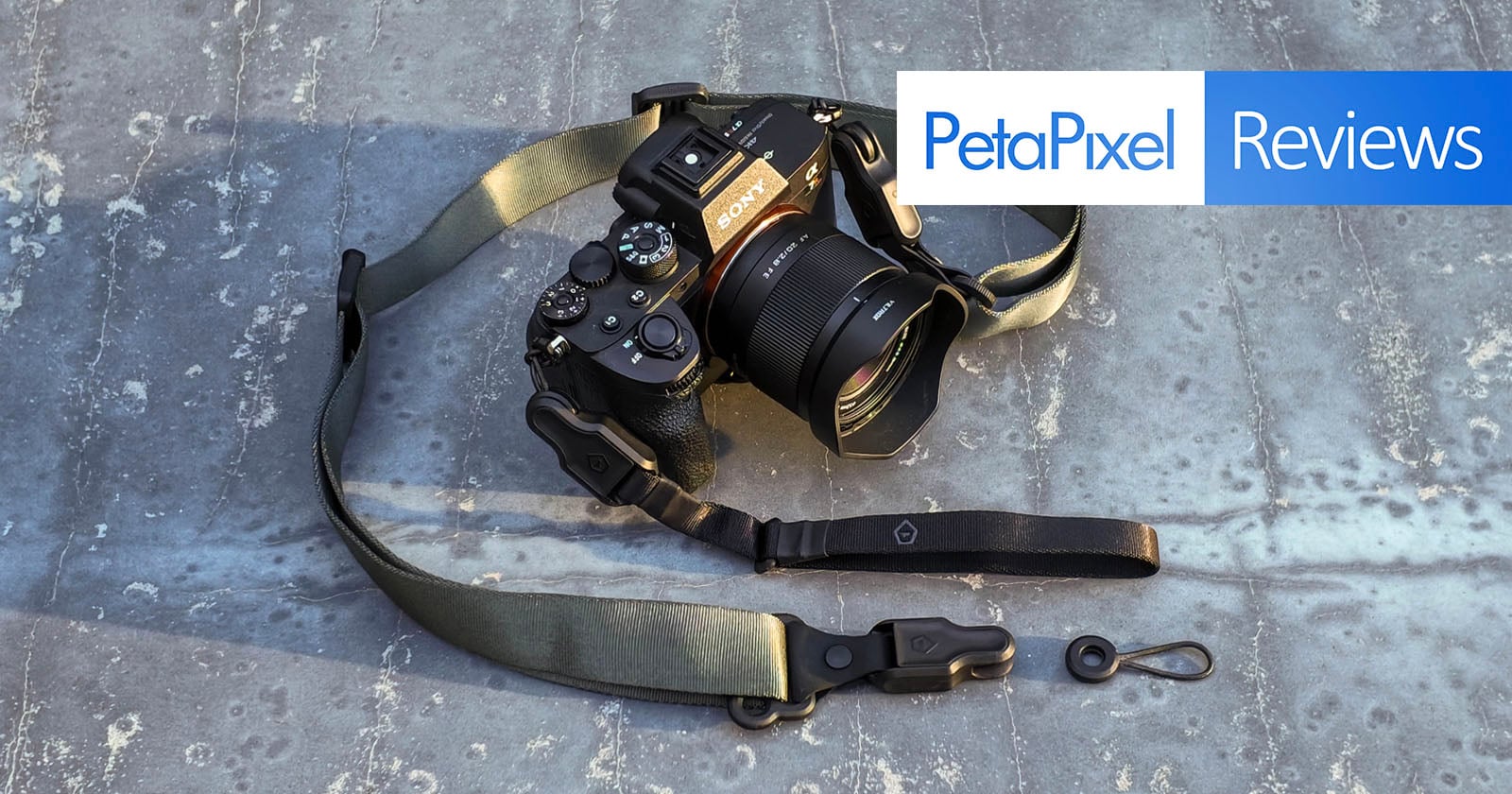
There is something quietly revolutionary about a company finally taking the camera strap seriously, and Wandrd's new Magnetic Camera Strap System earns that distinction. For too long, photographers have accepted the clunky, the inconvenient, and the vaguely irritating as the price of carrying a camera, but this system suggests that the accessory itself can be part of the creative flow rather than an obstacle to it. By pairing magnetic alignment with a mechanical lock, Wandrd has solved a problem many of us didn't realize we were tolerating until we saw a better way.
The practical implications for anyone who regularly switches between a handheld setup and a strap are immediate. No more fumbling with tiny clips or worrying about metal buckles scratching a lens barrel during a quick transition. That magnetic pull guides the connector into place with a satisfying certainty, and the mechanical lock ensures it stays there, no accidental releases, no second-guessing. It is the kind of design thinking that feels obvious only after someone else has done it, and it speaks directly to the audience that values both form and function. We have seen other recent attempts to rethink photographic tools, such as Canon unveils timer remotes and a compact mic for creative storytellers, which similarly focused on removing friction from the shooting experience, but Wandrd's approach targets a different kind of friction, the one you feel before you even press the shutter.
What makes this more than a simple hardware upgrade is the philosophy behind it. Wandrd is treating the camera strap not as an afterthought but as a curated part of the kit, something that should feel as intentional as the camera body itself. This resonates with a creative community that increasingly demands equipment that doesn't compromise on aesthetics or ease of use. The strap becomes an extension of the photographer's movement, not a tether that gets in the way. Compare this to the conversation happening around The Z5IIC promised nostalgia but delivered a familiar frame, where a camera body leaned heavily on retro appeal without rethinking the user experience underneath, Wandrd, by contrast, delivers nostalgia for no one but utility for everyone.
The specific takeaway here is that Wandrd's magnetic system eliminates the single most persistent annoyance of strap usage: the moment of transition. Whether you are switching from a neck strap to a wrist strap, or simply removing the camera from your bag, that magnetic alignment cuts the time and frustration in half. It is a small detail, but in a creative workflow, small details compound into real momentum. The open question now is whether other accessory makers will follow suit, or whether Wandrd has quietly set a new standard that the rest of the industry will spend years trying to match.