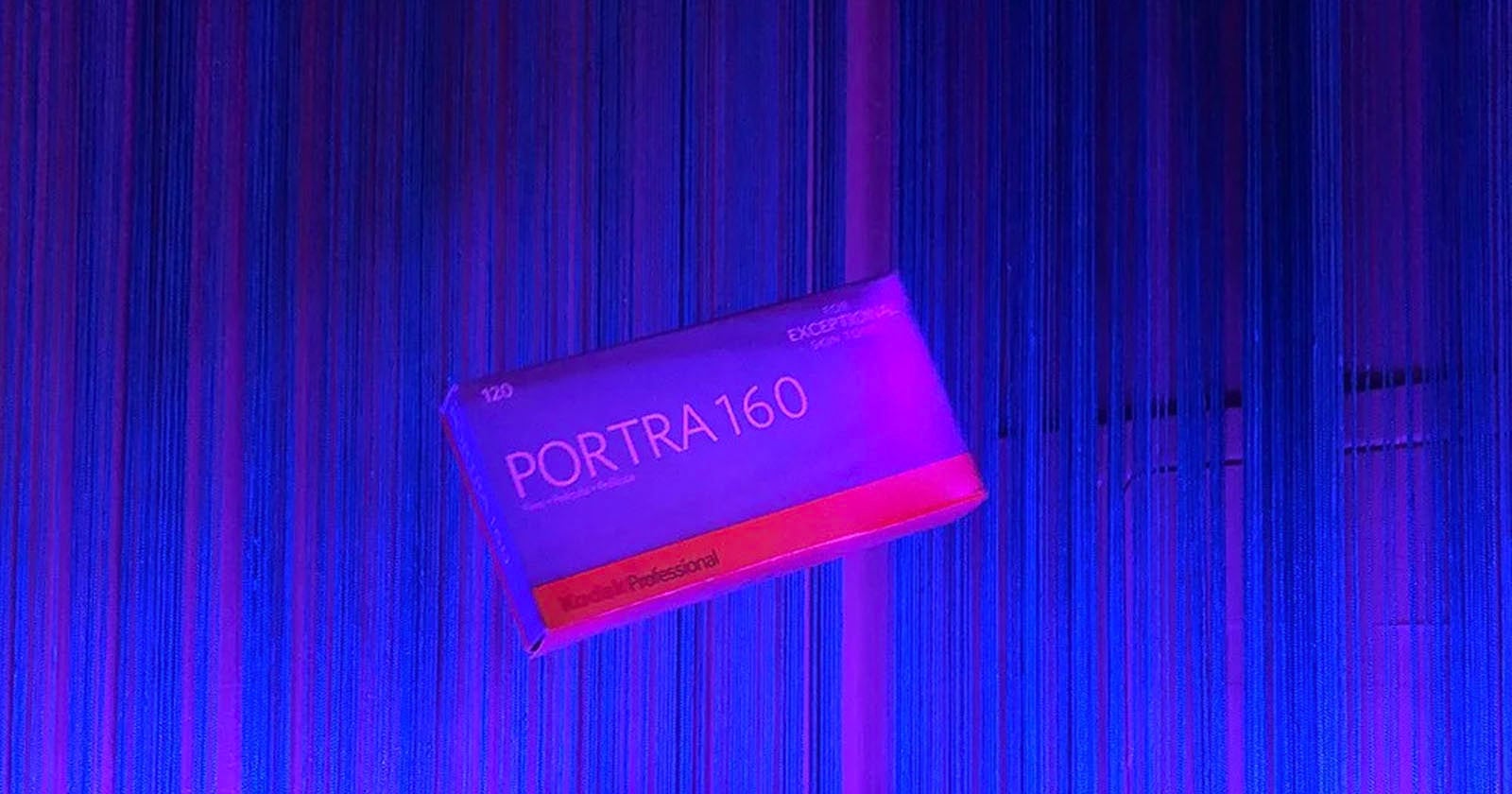
We've said it before, and we'll say it again: Portra 400 is a nearly flawless film. But Portra 160? That's the one we reach for when we want something quieter, something truer. Where its higher-ISO sibling thrives on golden-hour glow and forgiving latitude, Portra 160 demands a more deliberate hand, and rewards it with a grain structure so fine it feels like the image was painted rather than exposed. It's a film that asks you to slow down, to meter carefully, and to trust that the subtlety in the shadows is worth the extra stop of light. For the creative who values control over convenience, this is the frame that feels like a secret. And if you've ever wondered how a different lens can shift your entire visual language, our piece on the A Curious 220-Degree Fisheye Lens Frames a New World for Medium Format explores exactly that kind of creative pivot, one that, like switching to Portra 160, changes how you see the shot before you take it.
What makes Portra 160 "more perfect" isn't technical superiority in the abstract; it's the way it aligns with a specific philosophy of image-making. At box speed, it delivers a neutral palette that refuses to lean warm or cool, giving skin tones a porcelain-like authenticity that feels both timeless and current. Where Portra 400 can sometimes push highlights into a dreamy haze, Portra 160 holds detail with a surgical clarity, ideal for editorial work, studio portraits, or any scenario where precision matters more than mood. This is not a film for snapshots; it's a film for compositions. And if you're building a kit around that kind of intention, consider how the NOCS Portal AFN7 Writes a New Rulebook for Weatherproof Cameras gives you the freedom to shoot in conditions where you'd normally pack up. Paired with Portra 160, that camera becomes a tool for capturing unlikely beauty, rain-slicked streets, soft overcast light, the quiet moments most films would wash out.
For the practical shooter, this matters beyond the darkroom. Portra 160's fine grain and accurate color mean it scans beautifully for digital output, retaining detail that survives cropping and color grading. It's a film that respects post-production almost as much as it respects the moment of capture. That makes it an ideal choice for photographers who want their analog work to sit alongside digital files without compromise, the same audience that might be intrigued by how the Vivo X Fold6 Frames Every Moment With Curated Precision approaches computational photography with a similar philosophy of control. Both tools, the film and the foldable, share a belief that the camera should disappear into the craft.
Here's the takeaway: if you've only ever shot Portra 400, buy a roll of Portra 160 and force yourself to shoot it at box speed in full midday sun. Watch how the highlights hold, how the shadows stay open, how the image feels like a print before it's ever developed. Then ask yourself whether "perfect" should be loud or whether it should be precise.