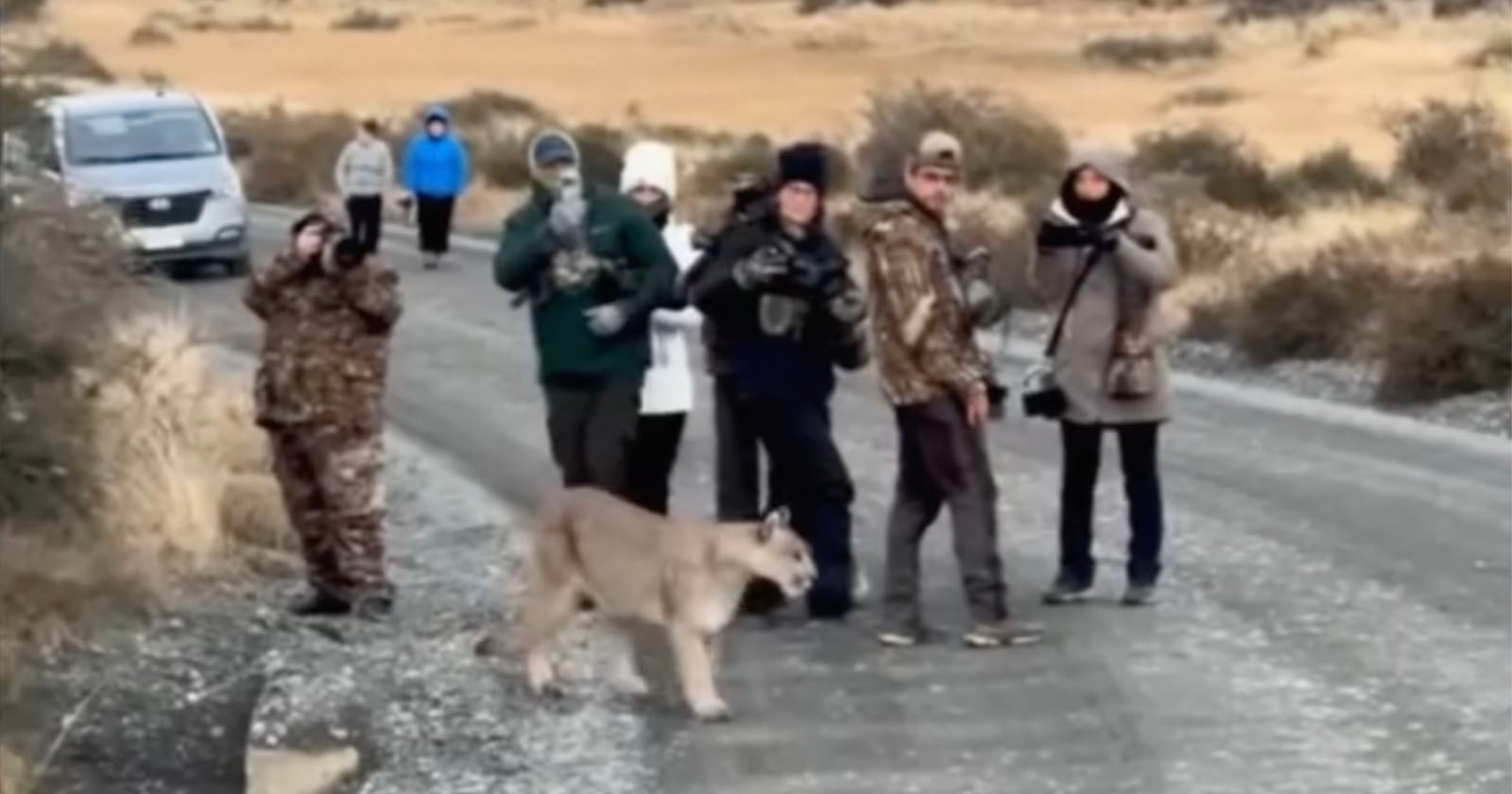
There is a moment in the viral video from Torres del Paine that stops you cold. A puma, known locally and entirely wild, moves through a cluster of photographers on a dirt road as she stalks her prey. She is so close that the gap between predator and lens is measured in inches. The internet reacted quickly, accusing the photographers of recklessness and harassment. The photographers, in turn, defended themselves, insisting they were still, quiet, and respectful of the animal's space. Watching the footage, we are caught between two truths: the undeniable rush of being that near to raw nature, and the uneasy feeling that we are witnessing the line between observer and participant dissolve.
This tension is not unique to Patagonia. It echoes a quieter, more sobering story we recently covered in A Quiet Count: South Africa's Cheetah Population Reveals a Stark Reality. There, the data was clinical: camera traps revealed far fewer cheetahs than expected. The wild is not an infinite resource. It is measurable, fragile, and increasingly shaped by our presence. The puma in Torres del Paine is habituated, not tame. That distinction matters. Habituation means she has learned that humans with cameras are not a threat. It does not mean she has consented to our proximity. The photographers argue they were passive participants, but passivity is not neutrality. Every step closer, every shutter click, alters the animal's calculus of risk.
For our readers, creative souls who value authenticity and the curated moment, this asks something harder than outrage. It asks for honesty about intention. We chase these encounters because they feel aspirational: the perfect frame, the wild eye contact, the story of being there. But the pursuit of that image can quietly erode the very wildness we seek to capture. Compare this to the deliberate patience required in Capturing Cosmic Beauty: An Astrophotography Journey with Nikon, where the subject is light and time, and the photographer must wait, not approach. The cosmos does not habituate. It demands a different discipline, one of stillness and acceptance that you are small and the subject is unreachable. That feels truer to the artistic sensibility we admire.
So what do we tell a reader who asks about this? We say this: the most authentic relationship with wildlife is the one where you leave more than you take. A photograph is a taking. It captures a moment, but it also captures the animal's attention, its energy, its split-second decision about whether to flee. The concrete takeaway here is a simple rule: if the animal changes its behavior because of you, you are too close. The puma did not change her path, but the crowd certainly changed hers. Next time you are in the field, ask yourself whether your presence is a gift or a tax on the wild. The answer determines whether you are documenting the world or merely consuming it.