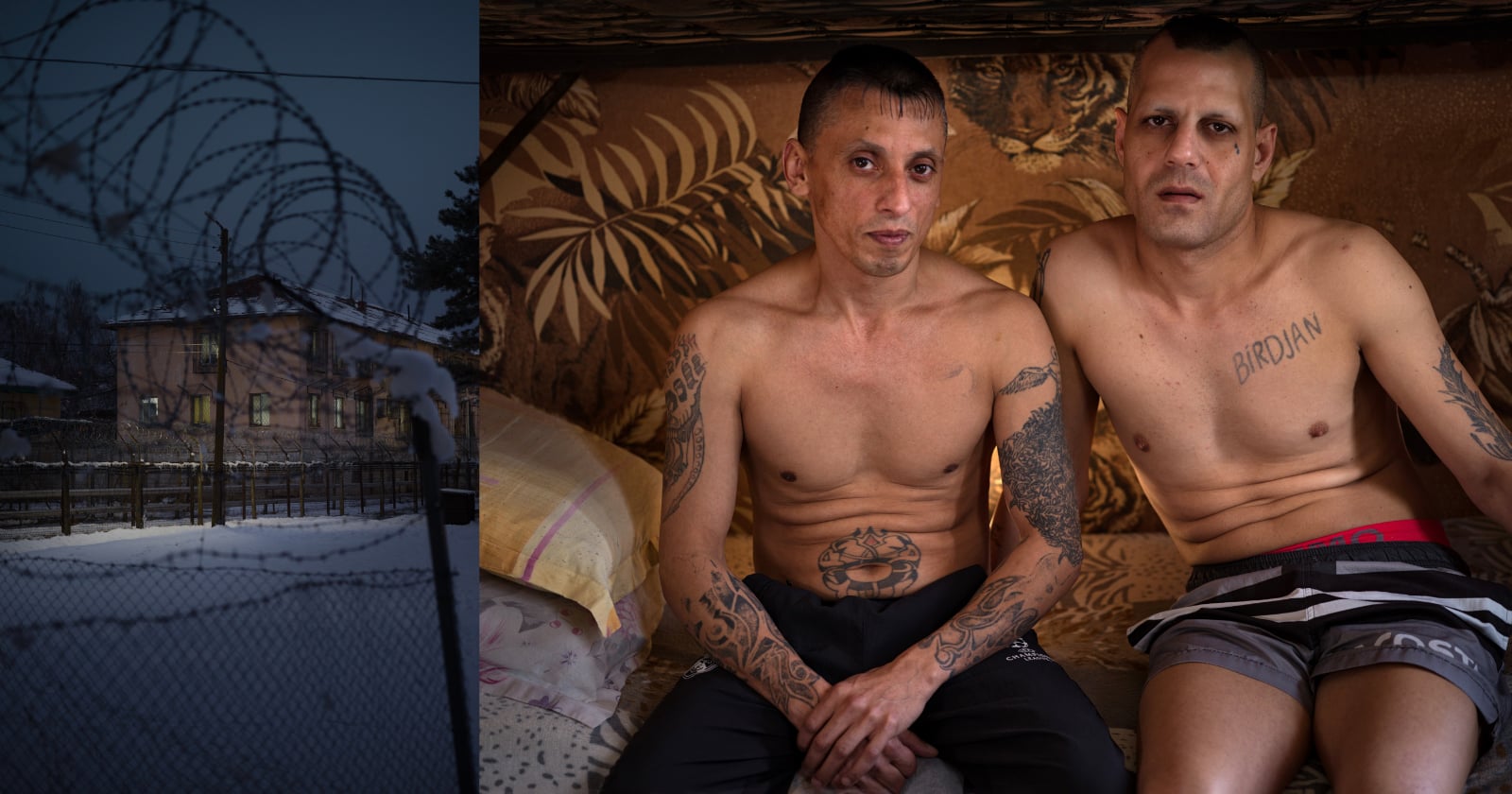
There is a particular kind of quiet that lives inside a maximum-security prison. It is not the silence of peace, but the hush of survival. When we learned that a photographer spent a year documenting inmates in Bulgaria's most notorious prison, a place that holds the country's largest population of murderers serving life sentences, we were not expecting a story about crime. We were expecting a story about time. And that is exactly what we got. The imagery, as described, is raw: two shirtless men with tattoos on a bed, animal print wallpaper behind them, a snowy fenced yard with barbed wire visible through a window. It is a visual contradiction that feels both staged and brutally honest. This is not a documentary that seeks to explain away violence; it is an immersive portrait that asks us to sit with the discomfort of humanity in a space designed to strip it away.
We write often about the joy of the streets and the artistry of the frame. Finding Joy on the Streets, One Frame After Fashion reminds us that photography can elevate the mundane into something worth celebrating. But this project does the opposite. It takes the extraordinary circumstance of incarceration and grounds it in the mundane details of daily existence: the texture of a mattress, the way light falls on a tattooed shoulder. We think that is the more difficult skill. Capturing beauty is easy; capturing truth is not. For our readers, the practical takeaway here is not about gear or technique. It is about patience. The photographer did not walk in and shoot for a day. They earned access through consistency, through showing up until the camera became invisible. That is a lesson that translates directly to any portrait work you do, whether you are shooting a friend on the street or a stranger in a cell. You cannot demand authenticity; you can only be present long enough for it to surface.
We would tell a reader who asks about this project to resist the urge to see it as dark tourism. This is not about gawking at tragedy. It is about recognizing that the line between the world inside those walls and the one outside is thinner than we like to admit. The animal print wallpaper in that cell is a small act of defiance, a reclaiming of personal taste in a place that denies choice. It echoes the spirit we see in Capturing Cosmic Beauty: An Astrophotography Journey with Nikon, where the vastness of space becomes a way to find perspective on our own small lives. Here, the walls are not vast, but the emotional depth is just as infinite. We are not saying these men are innocent, and we are not saying they are monsters. We are saying they are here. And this photographer had the courage to look at them without flinching.
As the art world prepares for events like the Experience Photography's Artistry: The 5 Boro Foto Fest Returns, we hope this work finds its place in the conversation. Not as a spectacle, but as a study in endurance. The specific detail we will watch for is how the photographer handles the transition from subject to story. Did they stay in touch with any of the inmates? Did the year change their view on justice? We do not know yet. But we do know that the most powerful photography does not answer questions; it leaves us with better ones. And for that, we are willing to look closer.