X-Ray Telescope Celebrates America’s 250th Birthday With Cosmic Fireworks
Our take
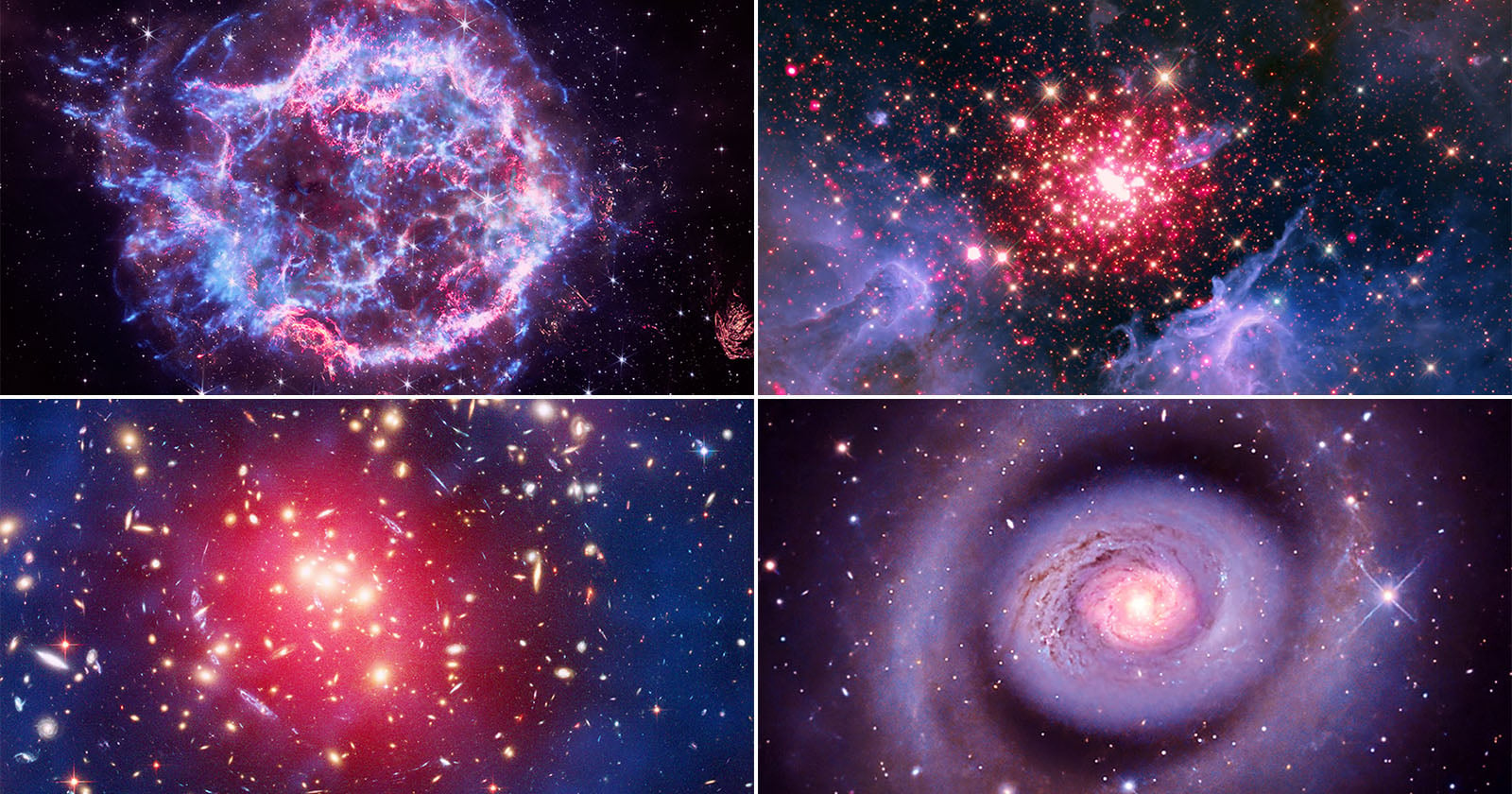
The cosmos has offered a spectacular, if unexpected, birthday gift to the United States. NASA’s Chandra X-ray Observatory, in a fitting display of ingenuity and artistry, has presented four new images of the universe rendered in the patriotic hues of red, white, and blue to mark America’s 250th anniversary. It’s a clever and visually arresting demonstration of how scientific data can be transformed into something both informative and aesthetically pleasing. This isn’t simply about pretty pictures; it's a tangible representation of the ongoing quest to understand the universe and a showcase of the powerful tools we’ve developed to do so. For those interested in exploring the creative side of capturing light and movement, our piece on 5 Easy Ways to Capture Creative Fireworks Photos offers some practical tips that, while focused on terrestrial fireworks, share a similar spirit of artistic experimentation. The ability to manipulate and interpret data in entirely new ways – like this color mapping of X-ray emissions – is a testament to the evolving intersection of science and art. It reminds us that observation and creation often go hand-in-hand, a concept also explored in the deeper examination of photographic legacy found in The Canon EOS Rebel 300D Came Out 23 Years Ago: How Well Has It Aged?, demonstrating the enduring impact of technological evolution on artistic expression.
The brilliance of this celebration lies not just in the striking visuals, but in the underlying science. Chandra observes the universe in X-rays, a form of light invisible to the human eye. These X-rays reveal energetic phenomena – superheated gas in nebulae, the remnants of exploded stars, and the swirling activity around black holes – that would otherwise remain hidden. Assigning red, white, and blue to different energy levels or emission types allows scientists to translate this complex data into a format more accessible to a broader audience. The resulting images are evocative, hinting at the raw power and beauty inherent in these cosmic events. This approach also subtly underscores the vital role of citizen scientists and visual communicators in bridging the gap between complex scientific findings and public understanding. It’s a curated representation of the universe, meticulously crafted to inspire and educate. One could even draw parallels with the way a photographer frames a scene to tell a story, as demonstrated by the evocative storytelling in Fisherman’s Mysterious Photographs Capture Essence of Selkie Folklore, where visual cues are used to evoke a specific atmosphere and narrative.
Beyond the immediate celebratory aspect, this initiative highlights a broader shift in how space agencies are engaging with the public. Historically, scientific visualizations have often been presented in a more technical, grayscale format. While these images are undeniably valuable for research purposes, they can lack the immediate visual appeal necessary to capture the imagination of a wider audience. By embracing artistic interpretation and leveraging the power of color, NASA is making the wonders of the universe more relatable and accessible. This is crucial for fostering public support for scientific endeavors and inspiring the next generation of astronomers, engineers, and explorers. It’s a sophisticated strategy that recognizes the importance of aesthetic appeal in communicating complex scientific concepts – a form of visual diplomacy, if you will. The deliberate choice of patriotic colors also cleverly ties the scientific discovery to a sense of national pride, amplifying its impact and resonance.
Looking ahead, it’s intriguing to consider how this approach might influence future space exploration and data visualization. Will we see similar artistic renderings of data from other telescopes and missions? Could this inspire the development of new tools and techniques for visualizing scientific data in more engaging and intuitive ways? The blending of scientific rigor and artistic expression shown here represents a promising trend—one that has the potential to unlock new avenues for understanding and appreciating the vastness and beauty of the cosmos, and to inspire a deeper connection between humanity and the universe we inhabit. Perhaps the future holds holographic representations of nebulae, or interactive simulations that allow users to explore black holes in vibrant, immersive detail. What new forms of cosmic storytelling will emerge, and how will they shape our understanding of the universe?
In celebration of the United States of America's 250th birthday, NASA has unveiled four new images from its Chandra X-ray Observatory that show the wonders of the Universe in resplendent red, white, and blue.
Read on the original site
Open the publisher's page for the full experience