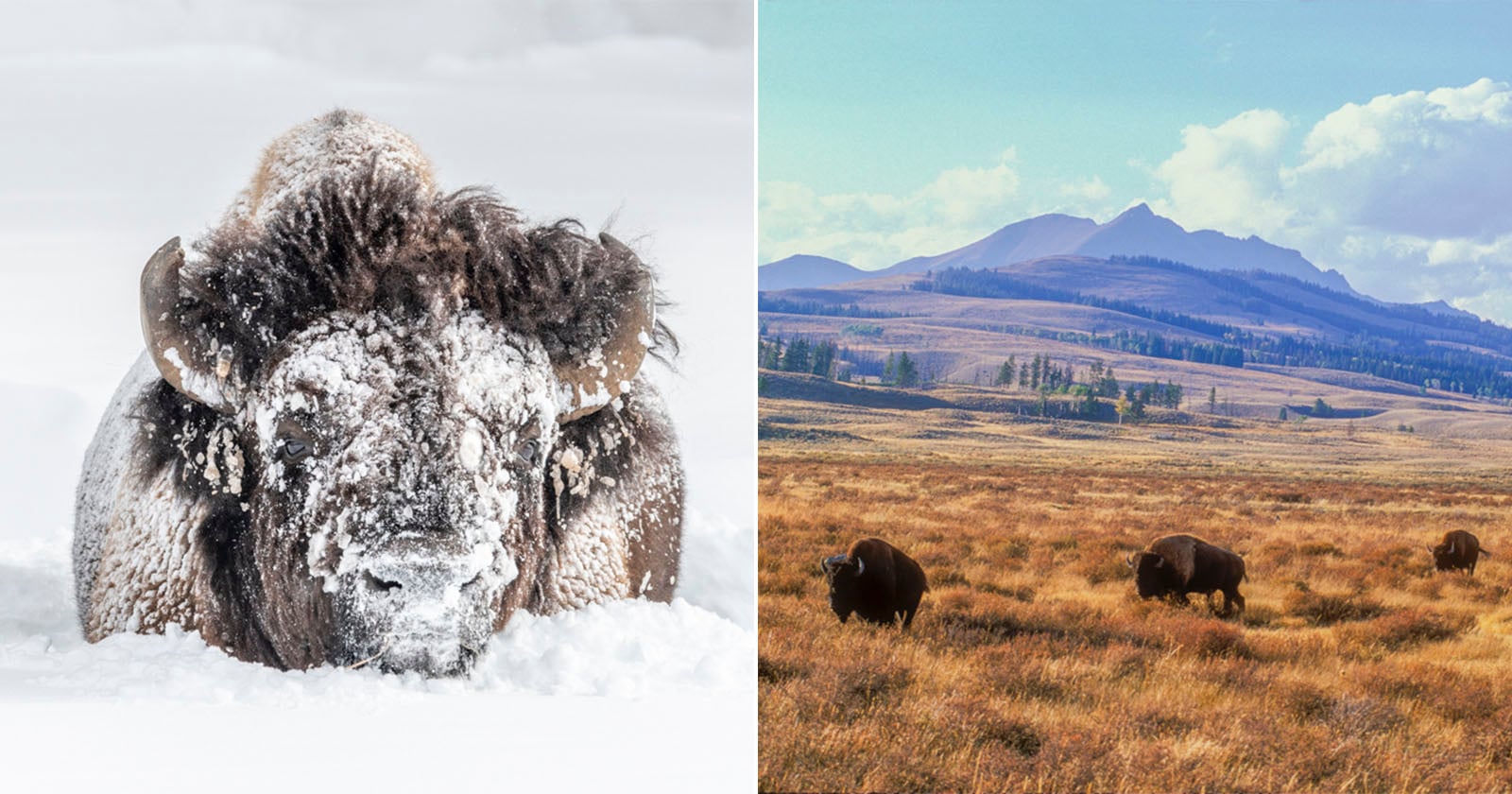
There is a quiet authority in a fifty-year commitment to one place. Yellowstone photographer Tom Murphy has spent half a century in the park, building a body of work that is less about capturing a single perfect frame and more about bearing witness to a landscape in constant, slow motion. His photographs of bison, snow-covered and grazing beneath vast mountain skies, do not shout for attention. They ask you to stop, to look longer, to consider what it means to know a place so intimately that you can anticipate its light before it arrives.
This is the opposite of the disposable content that floods our feeds. Murphy's approach feels almost radical in its patience. He did not go to Yellowstone to grab a viral shot and leave. He stayed. That distinction matters for anyone who creates, whether with a camera, a paintbrush, or a yoga mat. The artists and photographers we admire most are often the ones who commit to a subject until the subject reveals something new. Consider how Collaborate & Create: Boudoir Sessions Offered Across Florida’s Coast asks participants to trust a process over time, or how Cultivating Connection: Creating Comfortable Portrait Experiences emphasizes the slow work of building rapport before the shutter clicks. Murphy's career is the same principle stretched across decades.
What we find most striking is not the technical mastery, though that is clearly there. It is the authenticity that emerges from familiarity. Murphy does not need to manufacture drama in his images because he knows the drama is already present in the bison's winter coat, in the steam rising from a hot spring, in the way a herd moves across a meadow at dusk. His work reminds us that the most compelling art often comes from the most grounded relationships, not from chasing novelty, but from deepening one's view of the ordinary until it becomes extraordinary.
For our readers, the practical takeaway is this: choose one subject and refuse to exhaust it. Whether that is a place, a practice, or a person, the depth you achieve by staying put will almost always surpass the breadth you gain by moving on. Murphy's fifty years in Yellowstone did not make his work repetitive. It made it layered. Leica Lux 2.0: Crafting iPhone Photography with Artistic Vision may offer new tools for seeing, but Murphy proves that the most essential tool remains the willingness to wait. The question his career leaves us with is not how to get the shot, but how to stay present long enough to see what has been there all along.