•6 min read•from POPSUGAR
The Real Reason Netflix's "Age of Attraction" Is So Cringe-y

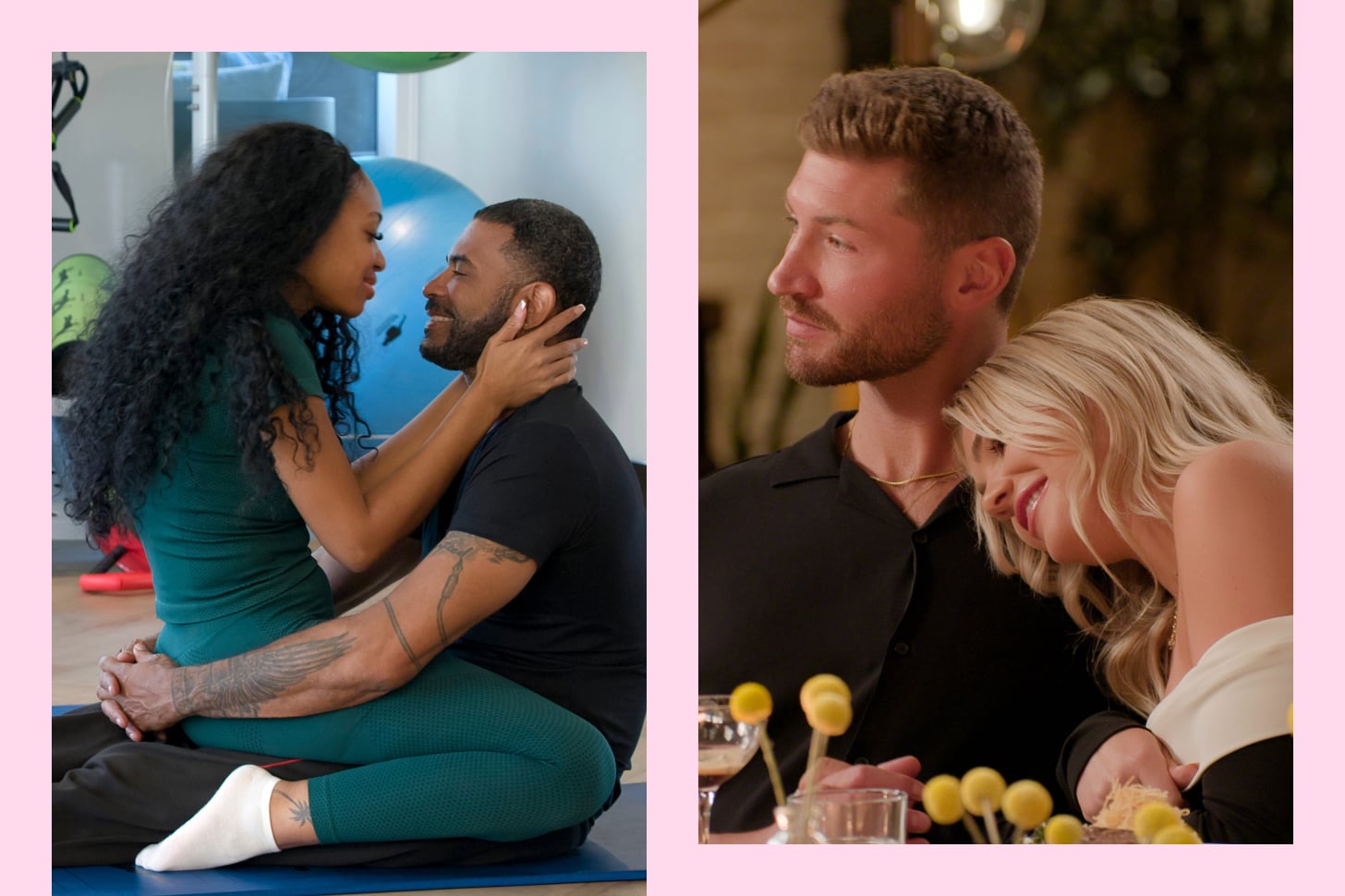 Age-gap relationships have long been the object of scrutiny and conversation — from people investigating gendered double standards to asking the sex question of it all. And a big place we see these interrogations play out is on screen. (Just think about the debates "Babygirl" sparked back in 2024.)
The latest source of discourse is Netflix's "Age of Attraction," a reality show where dozens of straight, conventionally attractive singles date without knowing how old everyone else is. Once they've found someone to commit to, both of them enter the Promise Room, where they reveal their ages in a dramatic fashion and take their relationship to the real world.
Snippets from the eight episodes and the recent reunion have gone viral, with audiences eager to learn if one of the greatest dealbreakers in the dating scene is merely superficial. But ultimately, the TV show's premise proves to be potentially harmful for contestants. Netflix, it seems, is more interested in capitalizing on the taboo surrounding the issue rather than equipping the younger participants with the skills needed to navigate such a complicated situation.
Experts Featured in This Article
Sofie Roos is a licensed relationship therapist and sexologist for Passionerad.
Although the adage "age is just a number" often prevails, our age and maturity level are never an arbitrary factor when it comes to dating, according to Sofie Roos, a licensed relationship therapist and sexologist. "While the number itself is neutral, age comes with life experience, financial stability, social confidence, and status," she says. "All these are factors that tend to lead to an imbalance, and a certain risk for the older partner getting a more leading and dominant role."
That very much plays out on the show, where many of the older partners expect to be handed the reins, on the sole basis of their "experience" and "authority." Take, for example, the case of "Age of Attraction"'s Jorge and Vanelle. Sparks fly during the 60-year-old criminal defense attorney and 27-year-old project manager's first meeting. But the couple eventually leaves the show early after an explosive argument where Jorge is "talking at her, not talking with her," as Vanelle tells members of the crew. The whole blow-up reinforces that both sides of an age-gap relationship need to be aware of existing power structures and dynamics.
"What we can see in most relationships is that power is determined by who's setting the tone: who's in control, who adapts, and whose needs are being prioritized?"
Similar issues surface in 41-year-old flight attendant Leah and 26-year-old business owner Chris's on-screen romance, with the former being controlling and clingy. In one episode, Chris makes several attempts to get some alone time, causing Leah to throw a nasty temper tantrum. My final straw is when he tells her that he's going to take a 10-minute shower, to which she responds with, "I hate you."
"What we can see in most relationships is that power is determined by who's setting the tone: who's in control, who adapts, and whose needs are being prioritized?" Roos says. "When someone starts telling their partner who they should be, it's a crystal clear sign of the relationship turning no-equal, and the risk is always greater when someone is much older."
Some age-gap relationships can also be built on fetishization, but "Age of Attraction" conveniently glosses over this possibility, assuming that it's always a matter of preference rather than an example of predatory behavior. Viewers may find themselves wondering if certain couples on the show really do like each other for who they are, or if they're more interested in what the other could symbolize.
We see this with Andrew, a 38-year-old bar owner who brings 22-year-old social media manager Libby to meet his friends. There is something so unnerving about a group of much older men joking about how it isn't their first time seeing him date someone "not even old enough to rent a car to see him." I couldn't help but cringe while watching this scene, and I kept wondering: does this man even like his partner for who she is? We never see much of what they both have in common, or what else he might like about her besides how she fits neatly into his problematic type.
According to Roos, one way to differentiate between a genuine connection and a fetishization is looking at what the person gets attracted to. Is it a unique quirk, core value, or life goal, or is it tied to a characteristic feature that can be replicated in another person? Repeating the same patterns or resorting to "stereotypical ideas and expectations" of a partner, as Roos puts it, is a sign that a partner may have a problematic approach to age-gap relationships.
It's worth noting that couples with large age gaps aren't necessarily doomed. Spoiler alert: on the show, Andrew and Libby actually end up together, and so do 49-year-old stylist Vanessa and 29-year-old corporate purchaser Logan. Outside "Age of Attraction," many high-profile examples over the years have also proven that age-gap relationships can be healthy and supportive: Sarah Paulson and Holland Taylor, Harrison Ford and Calista Flockhart, and Priyanka Chopra and Nick Jonas come to mind.
But for a relationship to reach this stage, those involved must not only address the elephant in the room but also accept that it's an important consideration. This means not sugarcoating reality with common excuses like "but they're so mature for their age."
"It can feel uncomfortable to talk openly about power, but articulating the differences between you and your partner when it comes to finances, experience, or status makes it a lot easier to avoid the imbalance," Roos advises. And that's important no matter anyone's age.
For age-gap couples, it's important to honor each other's growth, no matter what that looks like. Perhaps a non-judgmental space to grow for the younger person, or a sense of stability and security for their older counterpart will do the trick. "But the moment anyone feels like they're raising their significant other, illustrating examples as if they don't understand, and controlling their behavior is a sign to stop and ask yourself what's going on," she says.
Instead, creating a third culture is encouraged: incorporating both of your current tastes and life stages to build something new. Mutual trust and respect is the backbone of any healthy relationship, at the end of the day. Sadly, with the way the show was structured and marketed, "Age of Attraction" didn't really care about that. By only focusing on how different each couple was, they failed to show how they could ever be truly equals.
Angel Martinez is a Manila-based culture writer, consumer researcher, and content strategist. Her work on the internet, identity, and their intersections has been published in Vice, i-D, Vox, and Business Insider, among others.
Age-gap relationships have long been the object of scrutiny and conversation — from people investigating gendered double standards to asking the sex question of it all. And a big place we see these interrogations play out is on screen. (Just think about the debates "Babygirl" sparked back in 2024.)
The latest source of discourse is Netflix's "Age of Attraction," a reality show where dozens of straight, conventionally attractive singles date without knowing how old everyone else is. Once they've found someone to commit to, both of them enter the Promise Room, where they reveal their ages in a dramatic fashion and take their relationship to the real world.
Snippets from the eight episodes and the recent reunion have gone viral, with audiences eager to learn if one of the greatest dealbreakers in the dating scene is merely superficial. But ultimately, the TV show's premise proves to be potentially harmful for contestants. Netflix, it seems, is more interested in capitalizing on the taboo surrounding the issue rather than equipping the younger participants with the skills needed to navigate such a complicated situation.
Experts Featured in This Article
Sofie Roos is a licensed relationship therapist and sexologist for Passionerad.
Although the adage "age is just a number" often prevails, our age and maturity level are never an arbitrary factor when it comes to dating, according to Sofie Roos, a licensed relationship therapist and sexologist. "While the number itself is neutral, age comes with life experience, financial stability, social confidence, and status," she says. "All these are factors that tend to lead to an imbalance, and a certain risk for the older partner getting a more leading and dominant role."
That very much plays out on the show, where many of the older partners expect to be handed the reins, on the sole basis of their "experience" and "authority." Take, for example, the case of "Age of Attraction"'s Jorge and Vanelle. Sparks fly during the 60-year-old criminal defense attorney and 27-year-old project manager's first meeting. But the couple eventually leaves the show early after an explosive argument where Jorge is "talking at her, not talking with her," as Vanelle tells members of the crew. The whole blow-up reinforces that both sides of an age-gap relationship need to be aware of existing power structures and dynamics.
"What we can see in most relationships is that power is determined by who's setting the tone: who's in control, who adapts, and whose needs are being prioritized?"
Similar issues surface in 41-year-old flight attendant Leah and 26-year-old business owner Chris's on-screen romance, with the former being controlling and clingy. In one episode, Chris makes several attempts to get some alone time, causing Leah to throw a nasty temper tantrum. My final straw is when he tells her that he's going to take a 10-minute shower, to which she responds with, "I hate you."
"What we can see in most relationships is that power is determined by who's setting the tone: who's in control, who adapts, and whose needs are being prioritized?" Roos says. "When someone starts telling their partner who they should be, it's a crystal clear sign of the relationship turning no-equal, and the risk is always greater when someone is much older."
Some age-gap relationships can also be built on fetishization, but "Age of Attraction" conveniently glosses over this possibility, assuming that it's always a matter of preference rather than an example of predatory behavior. Viewers may find themselves wondering if certain couples on the show really do like each other for who they are, or if they're more interested in what the other could symbolize.
We see this with Andrew, a 38-year-old bar owner who brings 22-year-old social media manager Libby to meet his friends. There is something so unnerving about a group of much older men joking about how it isn't their first time seeing him date someone "not even old enough to rent a car to see him." I couldn't help but cringe while watching this scene, and I kept wondering: does this man even like his partner for who she is? We never see much of what they both have in common, or what else he might like about her besides how she fits neatly into his problematic type.
According to Roos, one way to differentiate between a genuine connection and a fetishization is looking at what the person gets attracted to. Is it a unique quirk, core value, or life goal, or is it tied to a characteristic feature that can be replicated in another person? Repeating the same patterns or resorting to "stereotypical ideas and expectations" of a partner, as Roos puts it, is a sign that a partner may have a problematic approach to age-gap relationships.
It's worth noting that couples with large age gaps aren't necessarily doomed. Spoiler alert: on the show, Andrew and Libby actually end up together, and so do 49-year-old stylist Vanessa and 29-year-old corporate purchaser Logan. Outside "Age of Attraction," many high-profile examples over the years have also proven that age-gap relationships can be healthy and supportive: Sarah Paulson and Holland Taylor, Harrison Ford and Calista Flockhart, and Priyanka Chopra and Nick Jonas come to mind.
But for a relationship to reach this stage, those involved must not only address the elephant in the room but also accept that it's an important consideration. This means not sugarcoating reality with common excuses like "but they're so mature for their age."
"It can feel uncomfortable to talk openly about power, but articulating the differences between you and your partner when it comes to finances, experience, or status makes it a lot easier to avoid the imbalance," Roos advises. And that's important no matter anyone's age.
For age-gap couples, it's important to honor each other's growth, no matter what that looks like. Perhaps a non-judgmental space to grow for the younger person, or a sense of stability and security for their older counterpart will do the trick. "But the moment anyone feels like they're raising their significant other, illustrating examples as if they don't understand, and controlling their behavior is a sign to stop and ask yourself what's going on," she says.
Instead, creating a third culture is encouraged: incorporating both of your current tastes and life stages to build something new. Mutual trust and respect is the backbone of any healthy relationship, at the end of the day. Sadly, with the way the show was structured and marketed, "Age of Attraction" didn't really care about that. By only focusing on how different each couple was, they failed to show how they could ever be truly equals.
Angel Martinez is a Manila-based culture writer, consumer researcher, and content strategist. Her work on the internet, identity, and their intersections has been published in Vice, i-D, Vox, and Business Insider, among others.Want to read more?
Check out the full article on the original site
Tagged with
#high-end lifestyle
#luxury fashion
#fashion editorial
#street fashion
#global fashion trends
#outfit ideas
#fashion collaborations
#fashion photography
#seasonal fashion trends
#fashion inspiration
#Age-gap relationships
#relationship dynamics
#power dynamics
#power structures
#gendered double standards
#control in relationships
#dating scene
#sex question
#relationship therapist
#taboo relationships