Iran Allows Only 15 Ships To Cross Strait Of Hormuz Daily Per The Ceasefire Agreement
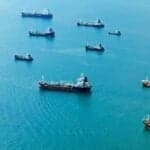


Shipping through the Strait of Hormuz remained limited on Thursday even after a ceasefire between Iran and the United States, with only a few vessels moving through one of the world’s busiest oil routes.
Per reports, Iran is allowing no more than 15 ships per day to pass through the strait. This is far lower than the usual traffic of around 140 vessels a day before the conflict began.
In the last 24 hours, only one oil products tanker and five dry bulk carriers crossed the strait. Two Iranian-flagged tankers also passed through.
Iran has made it clear that ships cannot pass freely. Deputy Foreign Minister Saeed Khatibzadeh said vessels must take approval from the Iranian military and authorities before entering. He added that ships need to make necessary arrangements to ensure safe passage.
He also pointed to “technical restraints” due to recent attacks on Iran and the narrow width of the strait, saying these factors require tighter control. Iran has also sent radio messages to ships, asking them to coordinate and seek permission before transit.
At the same time, Sultan Al Jaber said that restricting access is affecting energy flows and that controlled passage cannot be seen as normal movement.
The situation is different from what Donald Trump had earlier said. He stated that Iran had agreed to keep the strait open and safe. However, Iran’s Supreme Council later said the United States has accepted Iran’s control over the waterway.
The Strait of Hormuz is about 34 kilometres wide at its narrowest point between Iran and Oman. It connects the Gulf to the Indian Ocean and carries about one-fifth of the world’s oil and gas shipments, along with other goods such as fertilisers.
The route has been largely shut since the conflict began at the end of February, after Iran was hit by coordinated strikes by the United States and Israel.
This disruption has already increased global oil prices. On Thursday, Brent crude rose by more than 3 per cent to around $98 per barrel.
The current ceasefire is temporary and expected to last two weeks. As part of the talks, Iran has shared a 10-point proposal, while the United States has its own 15-point plan.
There are still major differences between the two sides, especially on uranium enrichment and access to the strait.
Talks are expected to take place in Islamabad, with Iranian officials set to arrive for discussions.
Iran has also suggested that under a long-term agreement, it may charge ships for passing through the strait. The fee could depend on the type of vessel, its cargo, and other conditions.
The situation remains important for countries like India, which depends heavily on this route. Nearly 90 per cent of India’s LPG imports pass through the Strait of Hormuz.
References: Reuters, Hindustan Times
Want to read more?
Check out the full article on the original site