Iran Denies Charging Any Toll For Indian Tankers Transiting The Strait Of Hormuz
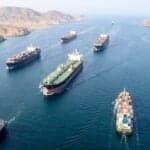


Iran has said that Indian tankers passing through the Strait of Hormuz have not paid any toll, amid ongoing tensions in the region affecting shipping and energy supplies.
Iran’s ambassador to India, Mohammad Fathali, told reporters that no charges had been taken from Indian vessels so far and suggested checking with the Indian government for confirmation.
His remarks came after Donald Trump said the United States would block ships that make payments to Iran for transit through the Strait.
India has also denied reports that it paid any toll to secure the movement of nine liquefied petroleum gas (LPG) tankers through the waterway.
These ships exited the region after Iran restricted transit following the start of the conflict in West Asia. At present, 15 Indian-flagged vessels are still in the Persian Gulf.
The Strait of Hormuz remains a key route for India, with around half of its crude oil and LPG imports passing through it. Any disruption in this corridor affects cargo movement and energy supply.
During a press briefing at the Iranian Embassy in New Delhi, Fathali said Iran considers India a friend and that both countries share common interests. He added that there has been regular contact between the two sides during the conflict.
Iran has maintained that the Strait is part of its territorial waters, while India has said it is an international waterway.
Fathali also said Iran is working on a mechanism to manage the passage of ships through the Strait and wants to help India with navigation. He added that Iran is ready to sell oil to any country willing to buy it.
There have been multiple high-level contacts between the two countries. Prime Minister Narendra Modi and Iranian President Masoud Pezeshkian held two phone calls, while External Affairs Minister S. Jaishankar spoke several times with Iranian Foreign Minister Abbas Araghchi.
India has also increased its outreach to Gulf countries. Jaishankar spoke with Kuwait’s foreign minister and Singapore’s foreign minister to discuss the regional situation and the safety of Indian nationals. He also completed a two-day visit to the UAE.
Petroleum Minister Hardeep Singh Puri visited Qatar, and Commerce Minister Piyush Goyal held talks with his counterpart in Oman and with trade ministers from Saudi Arabia, the UAE, Bahrain and Kuwait.
India has sent humanitarian aid to Iran, with the third consignment leaving on Monday. Minister of State for External Affairs Pabitra Margherita attended a mourning ceremony at the Iranian Embassy in New Delhi for Iran’s Supreme Leader Ali Khamenei on the 40th day after his death. Former Union minister Mukhtar Abbas Naqvi was also present.
References: Reuters, Times of India
Want to read more?
Check out the full article on the original site