Inside Urban Cowboy Denver, Where Vintage Americana Meets Modern Escape

Room Key is TZR’s definitive guide to the world’s most exclusive stays. From private island resorts to design-forward urban escapes, each feature offers an insider’s look at the properties redefining modern luxury.
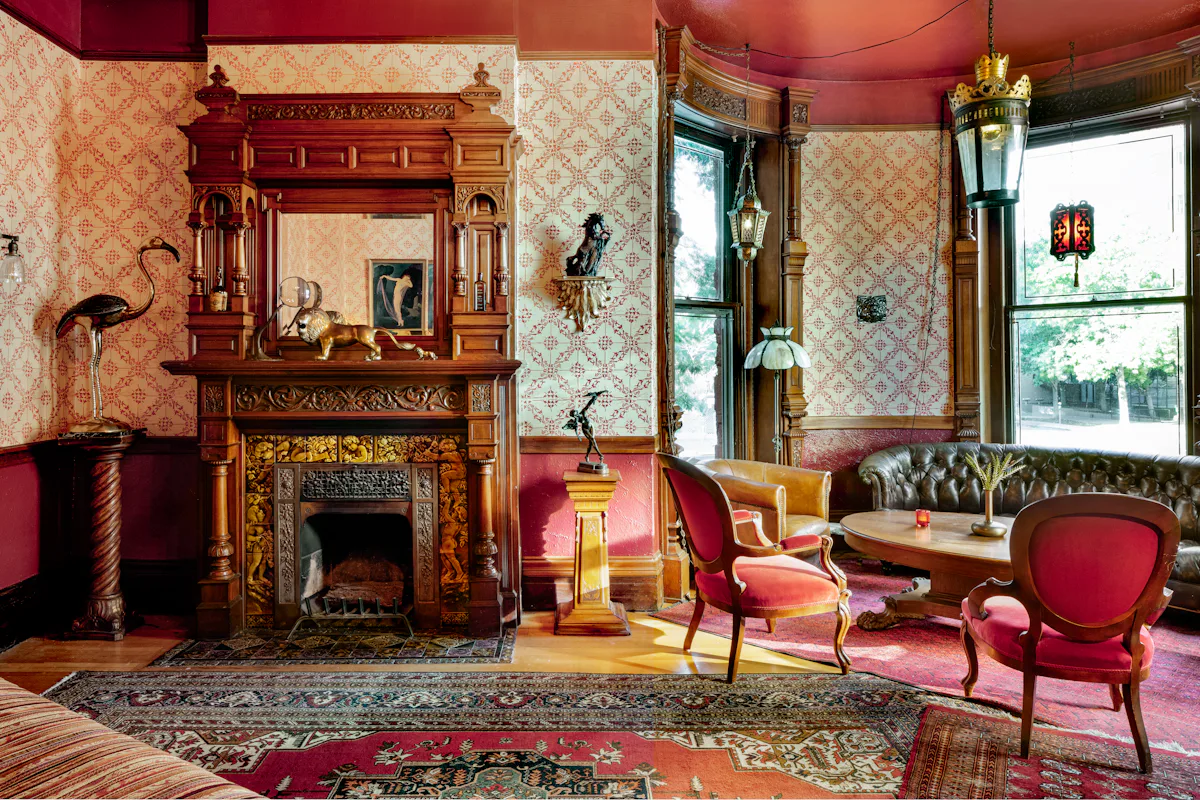
Minimal design is one way to erase burdensome clutter of everyday life (both physical and mental). But after more than a decade of hotels stripping their design to Scandi-inspired, bare-bones structures/environs, the pared-back aesthetic borders on boring. Denver’s Urban Cowboy boutique hotel is the antidote. With its commanding, hand-carved Bavarian staircase adorned with gargoyles and swans, single-pane glass covering the building’s 159 windows, original Lincrusta wall coverings, custom inlay floors, hand-carved coffered ceilings, and ornate fireplaces, the Queen Anne mansion is a preservationist’s dream — and one that abounds with the kind of heirloom opulence that’s tough to re-create today.
Long known as the George Schleier Mansion (Schleier was a famous 19th-century business tycoon) and built by prominent Denver architect E.F. Edbrooke in the 1880s, the property has landed stylish stewards in current owners Jersey Banks and Lyon Porter. The pair have antiqued, thrifted, and picked their way across Middle America to fill the historic building with unique finds that conjure romantic nostalgia and form a cowboy-meets-Victorian aesthetic.
In the parlor, a gold-rush-era mirror ball powered by heat throws squares of color on the walls. The adjacent sitting room is both cozy and sexy, enveloped in boudoir red and dotted with unexpected accents, like animal figurines (a brass armadillo here, a ceramic cheetah there). And that’s just the start. No matter which seat you take on a round, Swedish leather couch dropped in the center of the room, there’s ample eye candy to take in: Plumes, tiles, and texture are masterfully layered in a way that would make Tony Duquette proud.
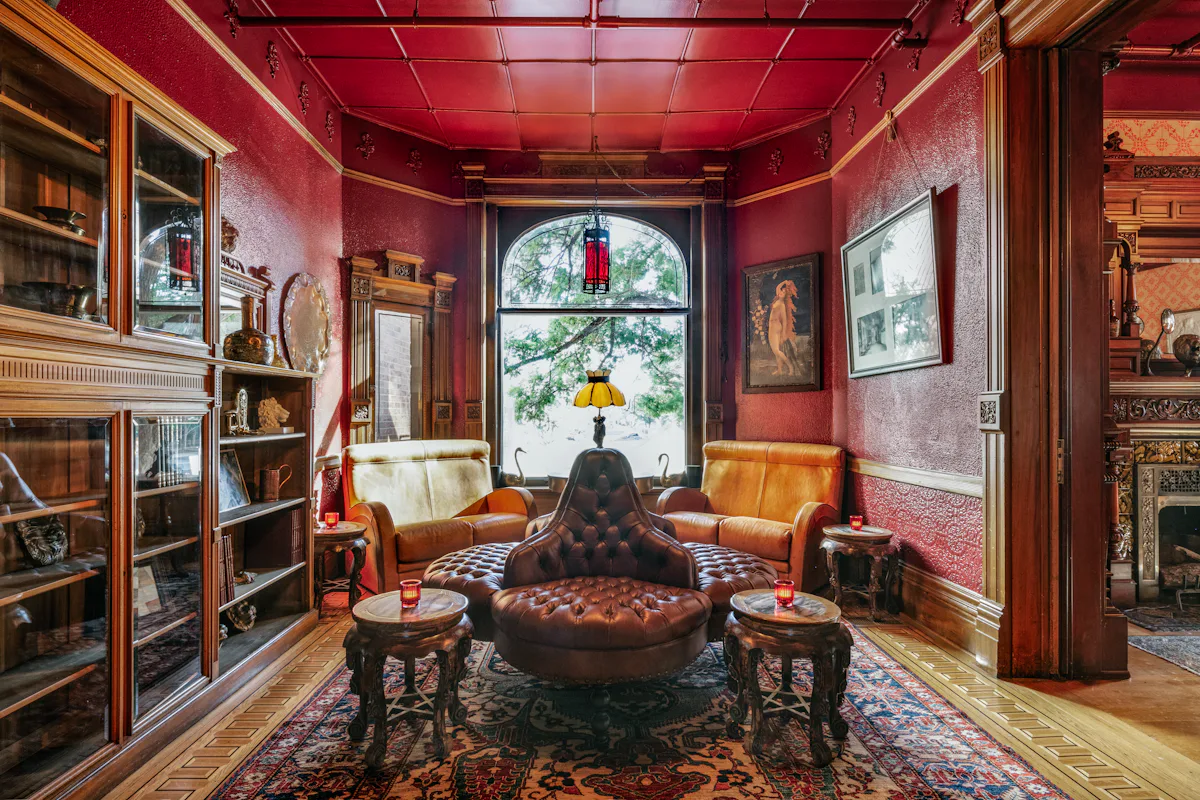
Despite the more-is-more decor, plethora of wallpapers, and original bones made of dark wood, the manse manages to feel more eye-opening than claustrophobic. Credit Banks for this magic trick. The co-owner, who heads the in-house creative team, has her hands all over the interior design — and quite an eye. She’s that girl who emerges from flea markets with the coolest things that no one else even noticed. It’s a maximalism that gives a sense of place and wonder. The property also just so happens to be spitting distance from some of the city’s best offerings.
The Rooms
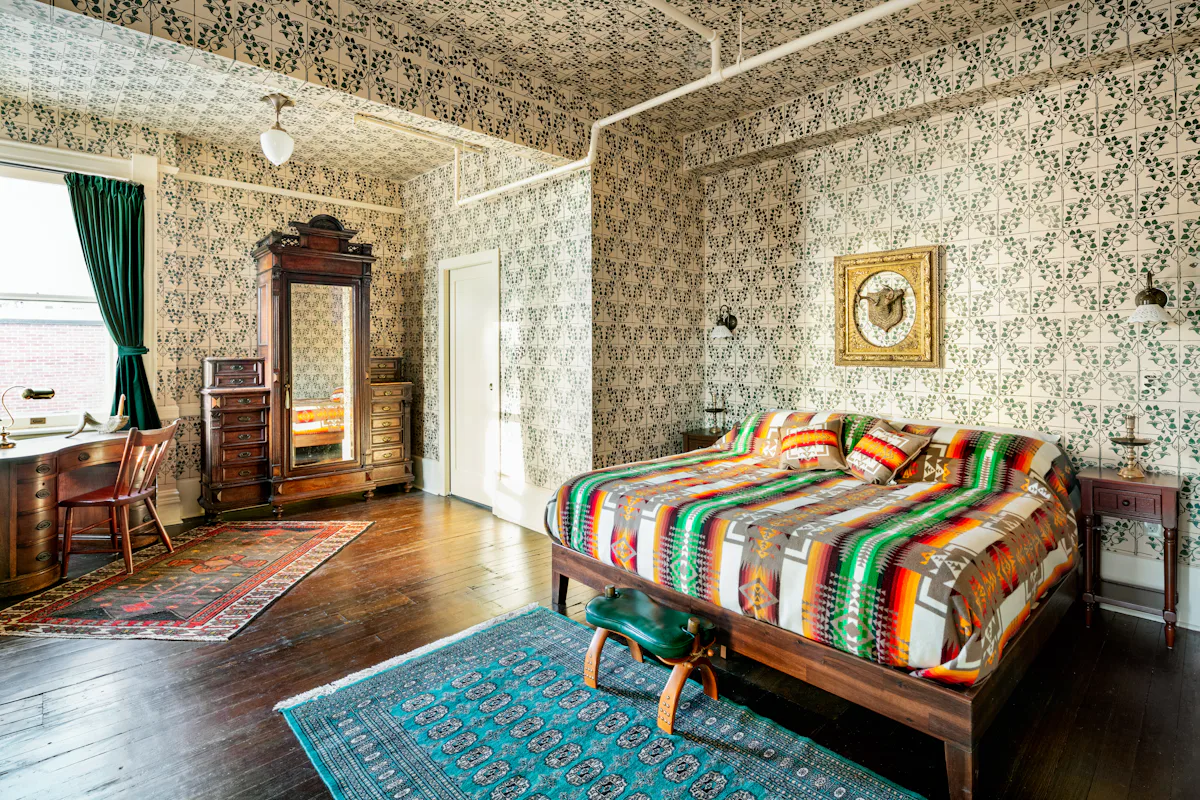
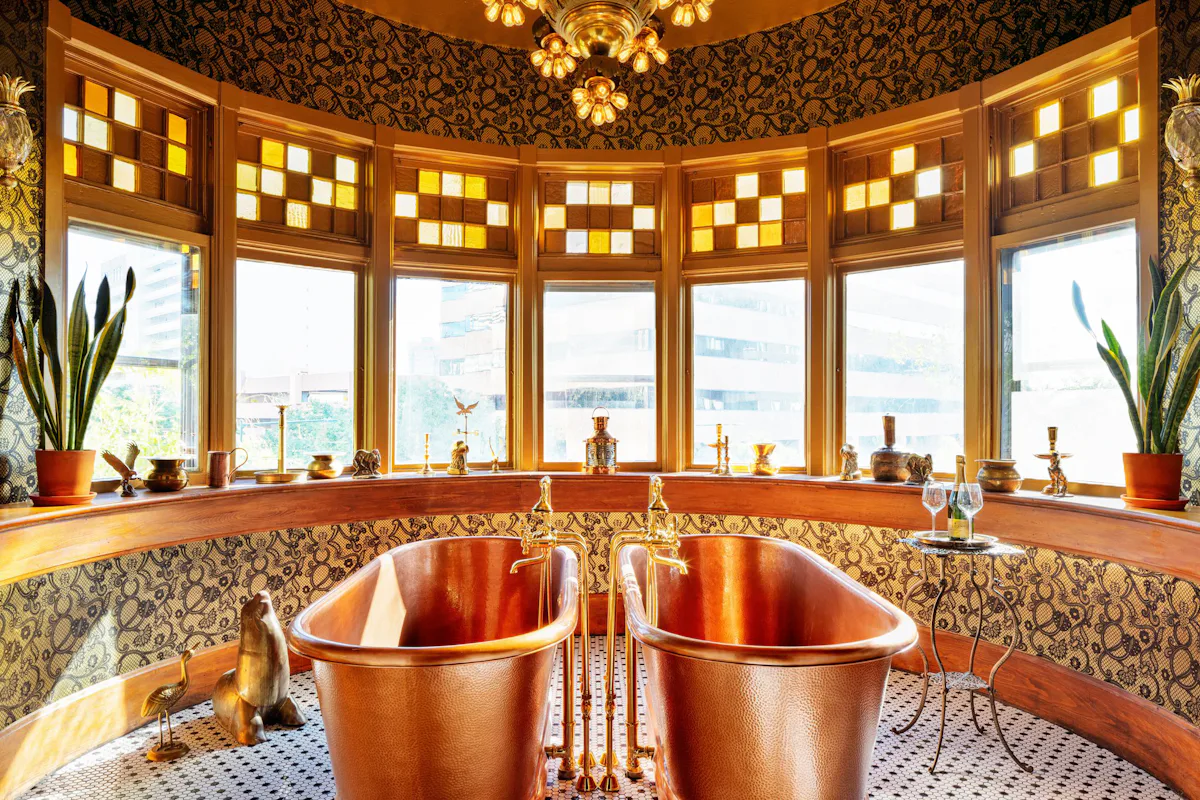
Each of the property’s 16 rooms is uniquely appointed — land the top-floor honeymoon suite and you’ll find a circular room dedicated to showcasing two parallel claw-foot tubs beneath a chandelier loaded with vintage Edison bulbs. Our room featured an elevated bed nestled in a round of bay windows; at its foot, a claw-foot, hammered-copper tub fit with brass fixtures and a hand-carved fireplace nearby. There are a few design elements that create a through line and modernity: Pendleton bedspreads and the most gorgeous block-printed wallpaper (each room has its own pattern) made in collaboration with a local artist.
The Amenities
Yes, there are the snuggliest of Pendleton robes available in every room, along with an excellently curated minibar that features local snacks. But it’s more about what you won’t get at Urban Cowboy that really enriches the experience: There are no TVs in the rooms to spoil the frontier-era vibe. We found this omission inspired actual relaxation — without a screen in the room, we were inclined to crack a book by the fire or in the tub instead. You also won’t get early-morning knocks from housekeeping (services are offered upon request). The choice to strip back in-room amenities is smart and one that encourages guests to ground out or socialize as needed. Feeling chatty? A trip downstairs to the moody parlor bar for a drink, game, or conversation delivers a sense of community (and smells great, thanks to ever-burning palo santo).
The Food
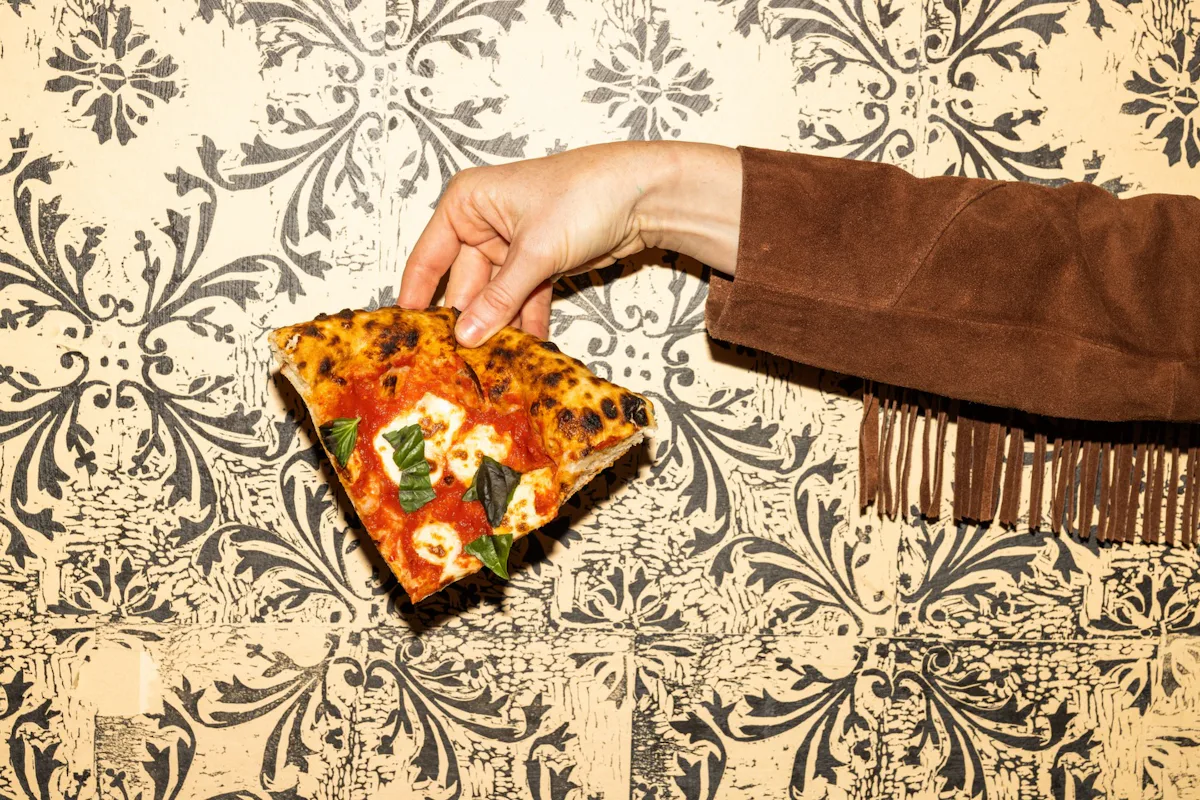
The property’s onetime carriage house has been refashioned into the lively Public House Bar and Little Johnny B.’s restaurant (from the team behind Denver favorites Dio Mio and Redeemer Pizza). While the design leans into the heritage of the neighborhood’s saloons in the 1880s, the offerings are entirely of the moment. The food (wood-fired pizzas, salads, and shared plates) is simple and excellently executed. But it’s the cocktail program that outpaces some of the biggest bars in New York and Los Angeles. Inventive pours (like a perfectly balanced mescal, red bell pepper, elote, cilantro, and lemon number, or a tequila, honey, lemon, beet, and lavender concoction) are served without pretension and at reasonable price points. I dined and drank my way all over the city, sampling tiny steak houses, buzzy French-Vietnamese restaurants, breweries, and, of course, Mexican cuisine, but nothing beat the Public House that sat just a stone’s throw from my room.
The Neighborhood
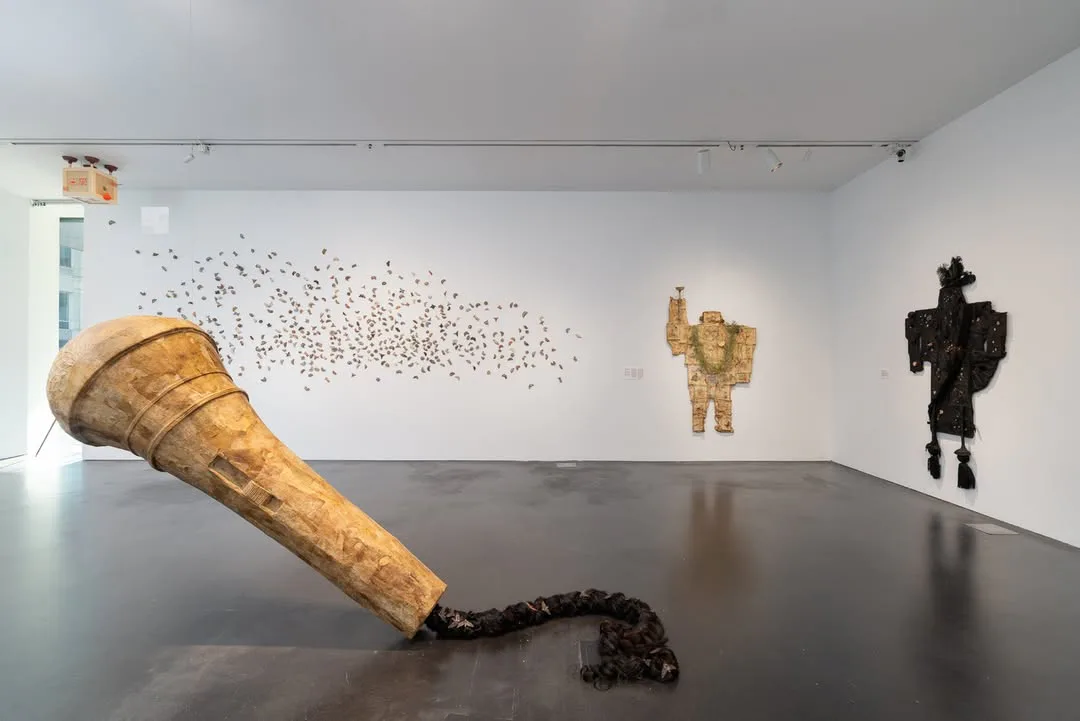
Denver may be most known for its excellent outdoorsy activities and absolute stunner of a concert venue, Red Rocks Park and Amphitheatre, but the city itself is also a hub of art and culture. Urban Cowboy, at the edge of Capitol Hill and the Civic Center, and Five Points, is close to plenty of it. A short walk from the hotel, you’ll find some of the city’s best art: abstract expressionist works at Clyfford Still Museum, fine and decorative art at the Kirkland, and boundary-pushing exhibits at Denver Art Museum (be sure to find top-floor balconies for city and Rocky Mountain views). Downtown Denver is also just a few blocks away. The property is also close to RiNo (River North Art District), the mural-covered neighborhood that put Denver on the international street art map. While there, pop in Denver Central Market for some of the city’s best eats, or grab a beer from Ratio Beerworks, known for its award-winning carrot elderflower saison.
Want to read more?
Check out the full article on the original site