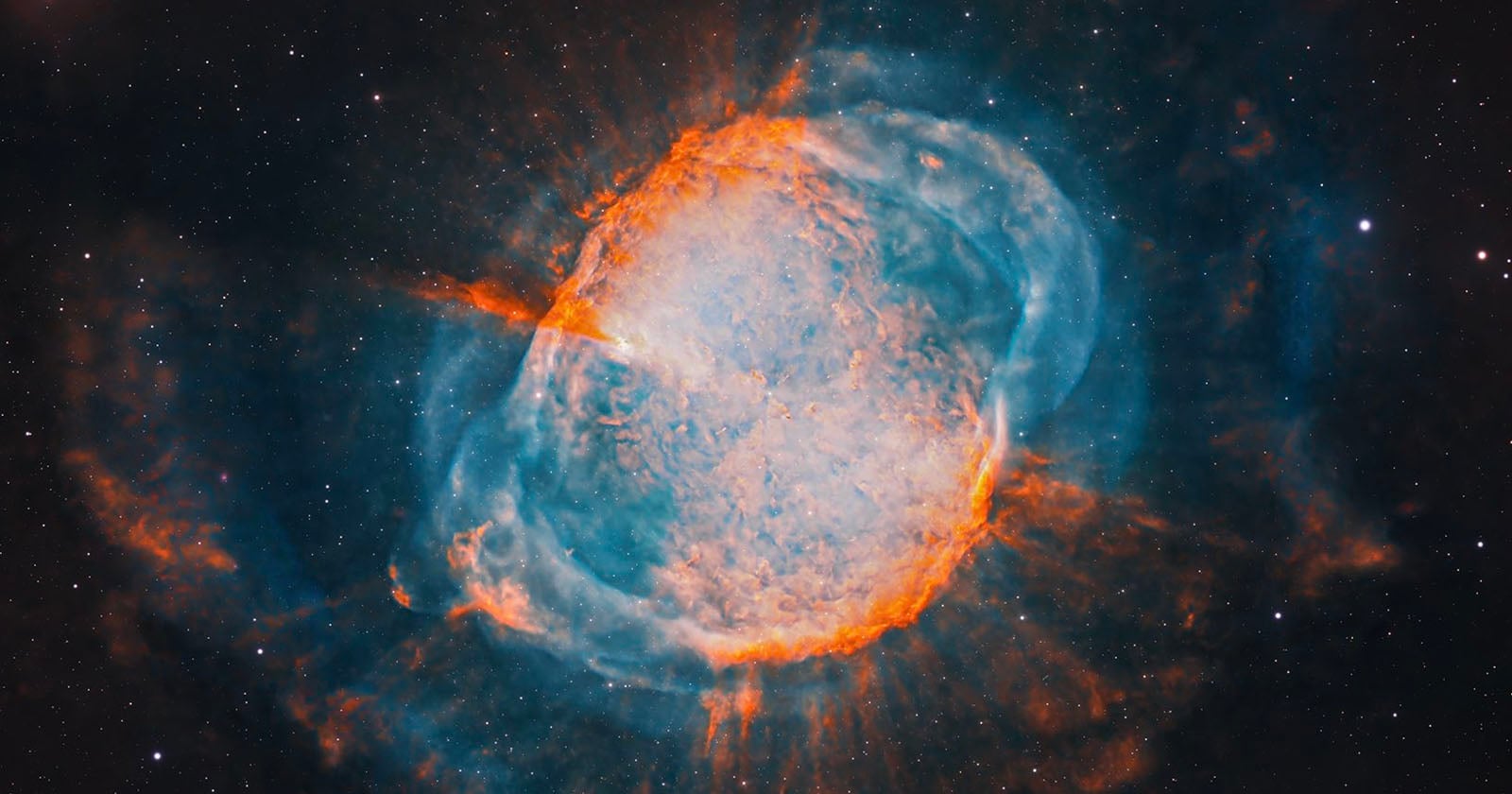
There is something quietly profound about choosing January, the year's most stripped-back month, to stare directly at the end of everything. Astrophotographer Andrew McCarthy, while assembling his cosmic calendars for 2027, gave the first page over to an unnerving glimpse of our Sun's distant, silent future. It is a bold editorial decision, and one that resonates far beyond the calendar grid. McCarthy is not simply selling dates and moon phases; he is inviting us to sit with the vast, humbling timeline that frames our smallest daily rituals. We think this is exactly the kind of honest, immersive storytelling that lifts a functional object into something worth keeping.
For readers who already appreciate how a carefully Capturing Cosmic Beauty: An Astrophotography Journey with Nikon can reframe a familiar sky, McCarthy's approach deepens the conversation. Where that journey celebrated the technical craft of capturing celestial beauty, this one uses the same tools to confront an inevitable cosmic quiet. And where A Year of Planning Yields an Immersive Solar Eclipse Moment in Spain rewarded patience with a momentary, spectacular alignment, McCarthy's January image asks us to consider an alignment that takes billions of years to complete. The contrast is striking: one photographer chases a fleeting event; another freezes a permanent endpoint. Both are acts of devotion, but McCarthy's feels more like a meditation.
The practical takeaway here is subtle but specific. A calendar is supposed to organize our months, yet McCarthy has used the format to disrupt how we experience time itself. January already carries a reputation for bleakness, short days, cold light, the quiet after celebration, and he leans into that mood rather than fighting it. For the creative and health-conscious audience that values both form and function, this is a reminder that utility and artistry are not opposites. A calendar can tell you when to train, when to rest, and also when to pause and look up. The image does not preach; it simply places our fleeting routines against a backdrop that will outlast every resolution, every playlist, every curated morning.
What stays with us is the quiet specificity of the choice. McCarthy did not lead with a dramatic supernova or a colorful nebula. He led with the end of our own star, rendered silent and cold. That takes nerve. It suggests that the most aspirational thing we can do is not to ignore the vast, indifferent cosmos, but to let it inform how we show up in the small, vibrant hours we have. We will be watching to see how the remaining eleven months of his 2027 calendar balance this opening note, and whether other photographers follow his lead into the long, slow burn of deep time.