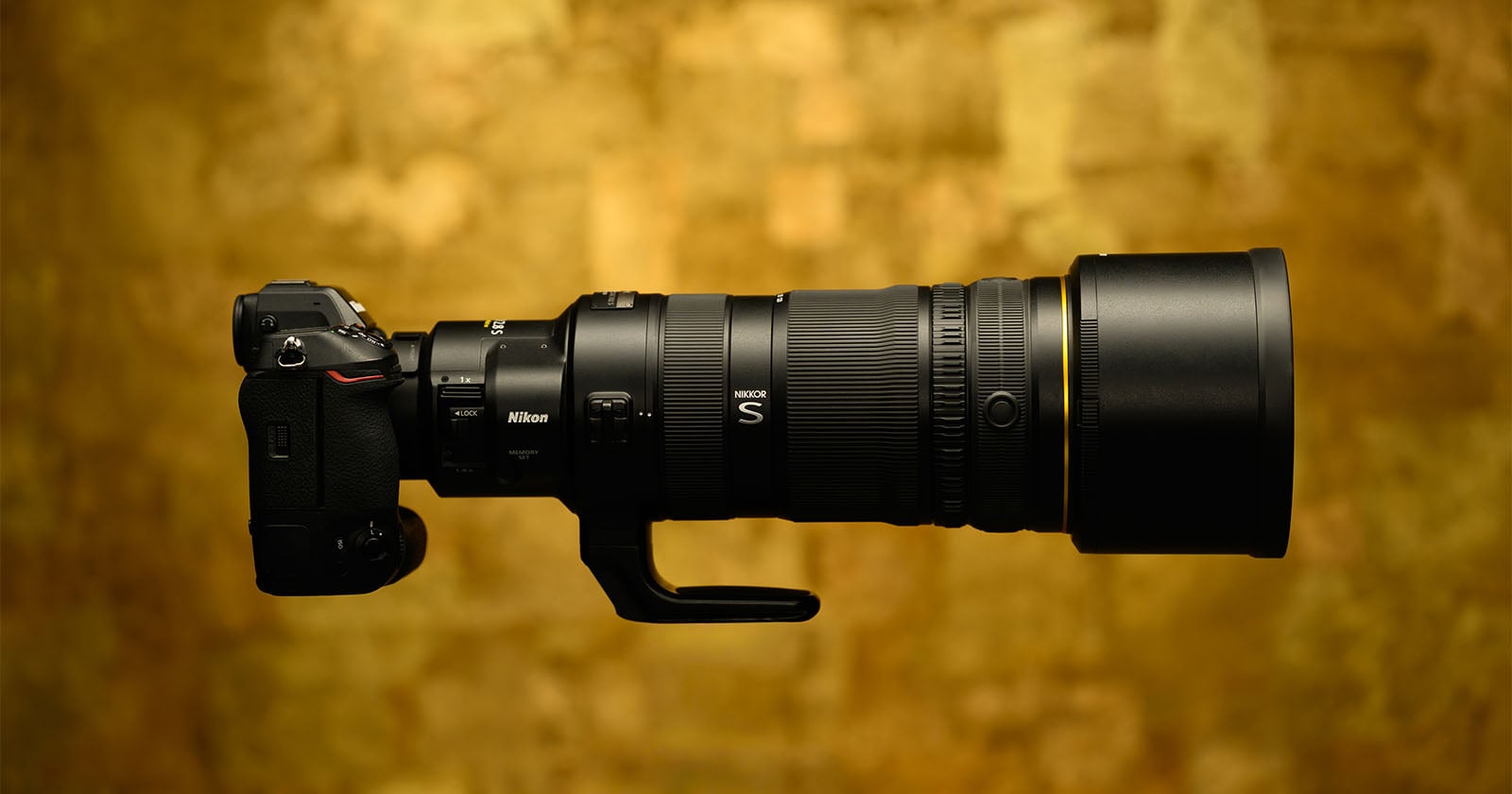
Nikon's new Nikkor Z 120-300mm f/2.8 TC VR S is not just another telephoto zoom. It is a deliberate statement of intent from a company that understands its most demanding creators want versatility without compromise. This lens, first teased back in early May and now fully realized, solves a problem that has long frustrated working photographers: the choice between a fast prime and a flexible zoom. Nikon has effectively erased that trade-off.
For the photographer who moves between studio portraits and sideline action, this lens offers f/2.8 light-gathering across a range that typically forces you into slower glass or a bag full of primes. The built-in teleconverter is the quiet revelation here, it turns a 120-300mm into a 168-420mm with the flip of a lever, maintaining autofocus and image stabilization. That is not a gimmick. It is a practical tool that reduces the gear you carry without reducing the images you can capture. We see a direct lineage to the philosophy behind the Reimagining the Nikon Z7 III for the Pure Photographer piece we published recently, the idea that Nikon's best work happens when it prioritizes the photographer's actual workflow over spec-sheet bragging. This lens feels like the hardware version of that same thinking.
What makes this release particularly compelling is how it fits into a broader moment for optical design. Just as Thypoch has shown with its featherlight For Fujifilm, a new AF prime lens that's featherlight and unexpectedly refined, the market is rewarding lenses that solve real problems rather than simply chasing numbers. Nikon's 120-300mm does exactly that: it gives you the reach and speed of a 300mm f/2.8 prime while letting you zoom back to 120mm when the action moves closer. For event photographers, wildlife shooters, and anyone covering unpredictable scenes, that flexibility is not a luxury, it is the difference between getting the frame and missing it.
The weight and cost will still matter. This is a professional tool aimed at those who already understand the value of a constant f/2.8 zoom. But the built-in teleconverter changes the calculus. Instead of buying a separate 1.4x or 2x TC and losing a stop of light, you get a seamless extension that preserves the lens's character. That is the kind of detail that rewards the patient creator who waits for the right tool rather than settling for the obvious one. The question now is whether Nikon will extend this integrated-TC approach to other focal lengths. If this lens sells well, we suspect the answer will come faster than expected.