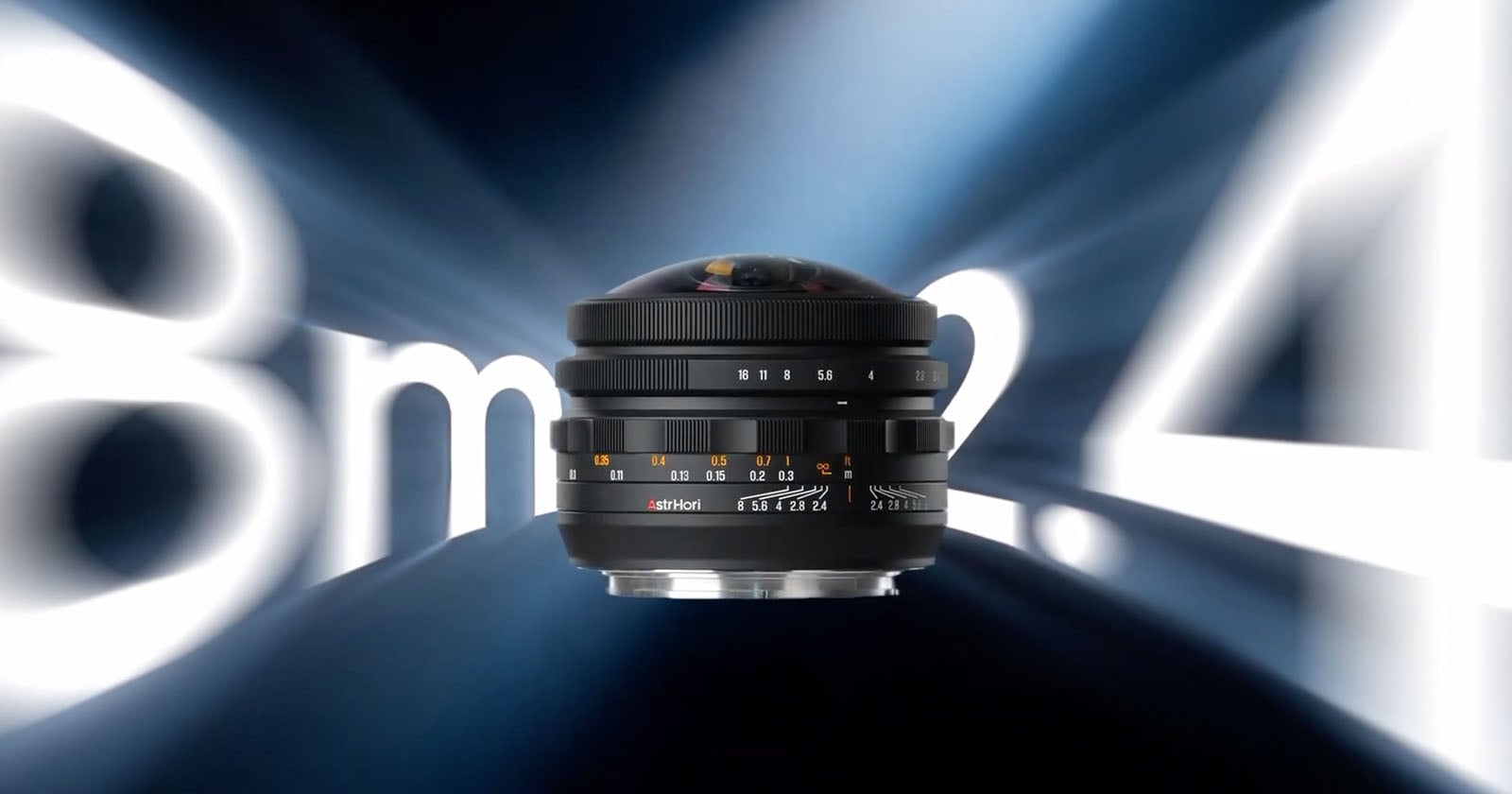
There is something quietly radical about a lens that refuses to see the world the way everyone else does. AstrHori's new MF 8mm f/2.4 Fisheye for Fujifilm GFX and Hasselblad XCD cameras is not merely another piece of glass, it is a deliberate invitation to abandon conventional framing. With a 220-degree field of view and a manual focus design, this circular fisheye does not ask you to compose a scene; it asks you to surrender to the entire horizon at once. For a community that has long prized the meticulous, controlled beauty of medium format, this feels like a gentle rebellion, and we are here for it.
This release arrives alongside a moment when other creators are refining their own relationships with image-making. Hipstamatic Curates a New Camera Club and Four Analog Apps for Winter reminds us that the appetite for deliberate, imperfect photography has never been stronger. Where Hipstamatic softens and textures the digital frame, AstrHori shatters it entirely. Meanwhile, The Vivo X Fold6 Frames Every Moment With Curated Precision takes a different path, wrapping computational polish around every shot. One can appreciate that kind of precision, but there is something more thrilling about a lens that refuses to crop, crop, crop your attention. AstrHori's offering is not for the photographer who wants everything in perfect alignment. It is for the one who wants everything, the light, the distortion, the unexpected corner of a room, in the frame at once.
Practically speaking, what does a 220-degree fisheye on medium format mean for you? It means the traditional rules of composition go out the window. Portraits become environmental narratives. Architecture bends into surreal geometry. And that wide-open f/2.4 aperture lets you capture those distorted worlds even in dim light, though you will need patience, manual focus on a fisheye is an exercise in trusting your eye over your camera's autofocus system. If you shoot with Fujifilm GFX or Hasselblad XCD bodies, you already value the richness that a larger sensor provides. This lens exploits that sensor in a way almost nothing else does, pulling in a view so wide that your peripheral vision starts to feel inadequate.
The real takeaway here is not about the tech specs. It is about the permission this lens gives you to stop trying to control everything. In a culture that often celebrates the perfectly edited, the tightly cropped, the meticulously curated (and we love a curated moment, as The Walkman Rewrites Its Legacy with an Exquisite New Chapter shows us), AstrHori has made something that demands looser hands and a more curious eye. The question worth watching is whether the medium-format community, so accustomed to precision, will embrace this kind of visual chaos, or whether it will remain a cult tool for the few who love seeing just a little bit more than the rest of us.