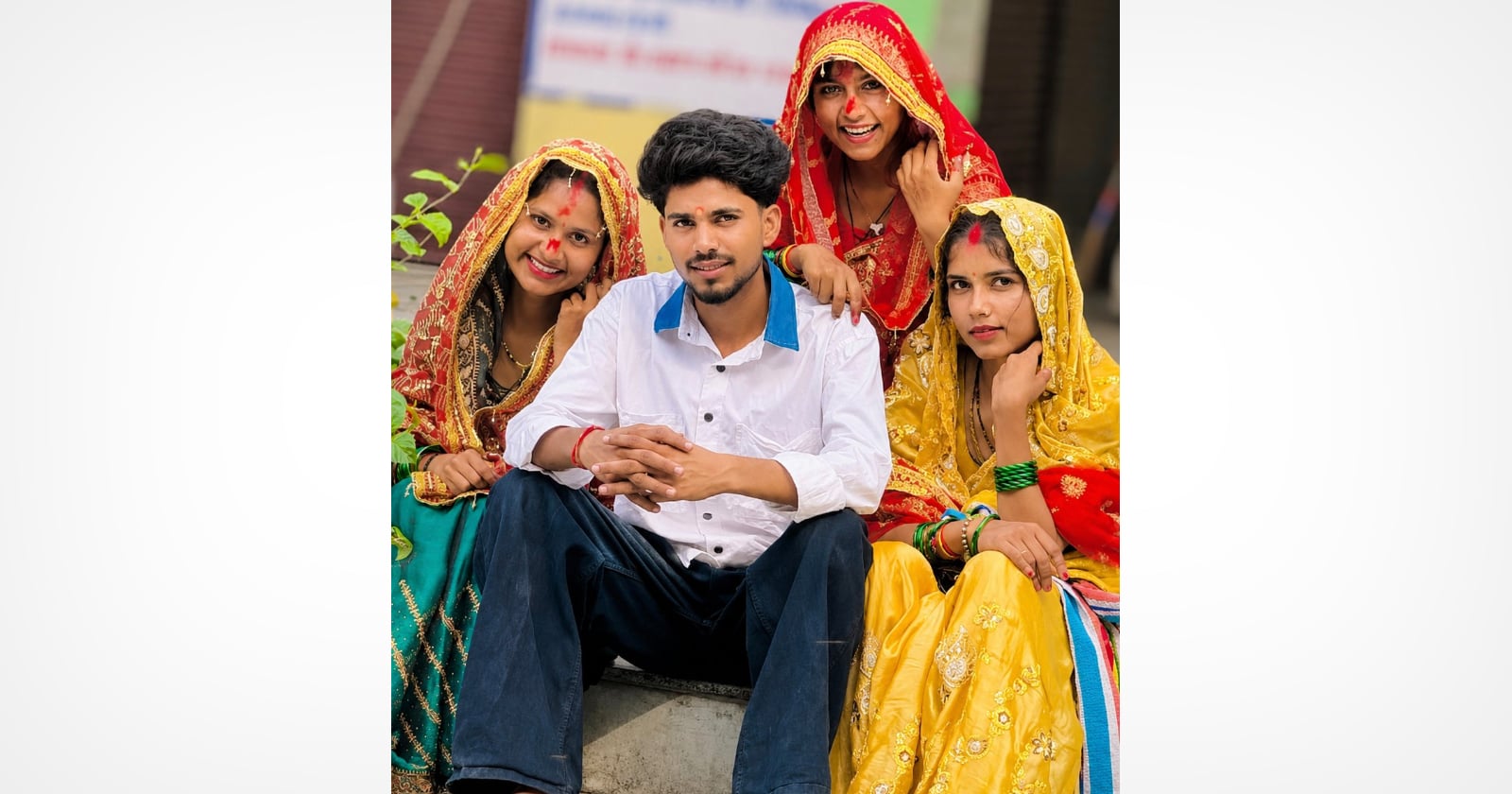
The photograph that launched this story is almost too perfect: a young man on the steps, three women in vivid veils beside him, all of them smiling as if the frame itself were a promise. The reality, as reported, is far more complicated. Indian police are now investigating allegations that this photographer married two sisters and their cousin, women who had also employed him. Whatever the investigation uncovers, the image forces us to sit with an uncomfortable truth about the power dynamics that can live inside a single portrait session. We often treat the camera as a neutral tool, but it is never just that. It is an invitation to trust, and trust, when it is broken, leaves scars that no retouching can smooth away.
For our readers, this is not a distant news item from another industry. It is a mirror held up to the very craft we practice. Every time we ask a subject to relax, to lean in, to trust us with their face and their story, we are asking for something real. The photographer in this case allegedly used that trust as a bridge to something far more intimate, and the fact that the women were also his employers blurs every boundary we rely on. We have written before about Cultivating Connection: Creating Comfortable Portrait Experiences, and that piece has never felt more urgent. Comfort is not just a courtesy; it is an ethical obligation. When the person in front of the lens holds professional power over you, a smile can be a mask, not a feeling. The practical takeaway is stark: if you cannot look your subject in the eye and feel certain the power is balanced, you have no business lifting the camera.
There is also a quieter lesson here about the stories we choose to tell. The related piece on Celestial Visions: A Nebula's Beauty Wins Astronomy Photographer of the Year reminds us that photography can reach for the sublime, capturing wonders that feel untouched by human mess. But the mess is always there, just outside the frame. And the rise of tools like the one covered in Unlock Your Best Angle: AI-Powered Posing for Every Moment suggests we are outsourcing even the act of directing trust, teaching machines to choreograph our bodies into pleasing shapes. That may produce flattering results, but it cannot teach us how to read a room, or a person, or the weight of a hand placed on a shoulder.
What we would tell any photographer who asks about this story is simple: you are not entitled to your subject's life just because they let you frame it. The investigation will run its course, and the facts will land where they land. But the open question that remains is for all of us: how do we build consent into every interaction so that it is not a one-time checkbox, but a living, breathing part of the work? Watch how the Indian police handle the women's accounts, not for the scandal, but for the precedent it sets about whose testimony we choose to believe. Because the next time someone says "trust me" behind a lens, we all have a responsibility to ask: says who?