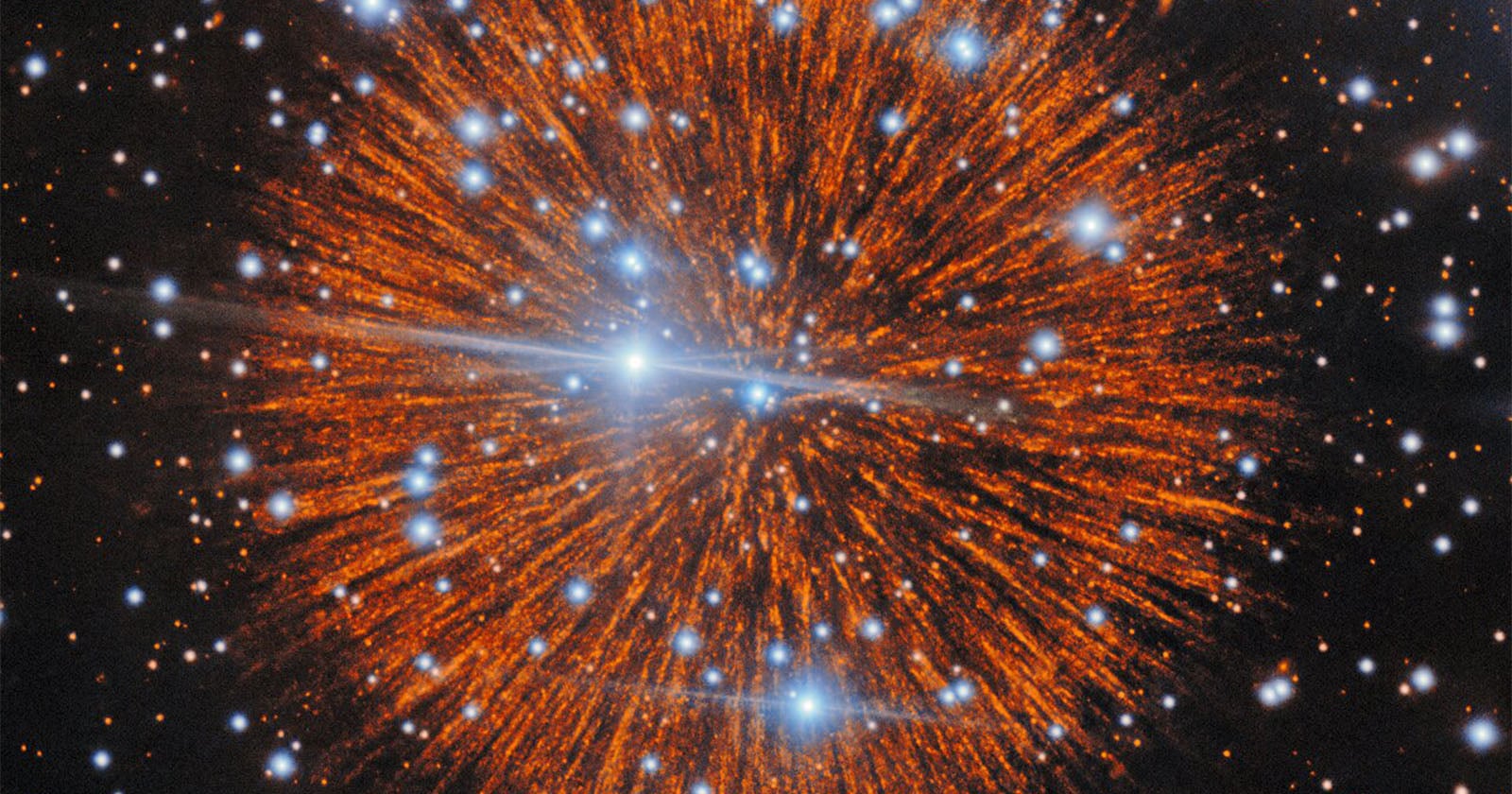
There is something quietly profound about an image of a supernova that people actually watched unfold 843 years ago. The Gemini North telescope in Hawai'i has captured a new photograph of Pa 30, a supernova remnant that scientists believe is the ghost of a stellar explosion witnessed in August 1181. We think this is a rare invitation to pause, not just for the science, but for the way it connects us, across centuries, to a moment of collective human witness. In an age where attention is fractured and the new vanishes by morning, a single event that lingers for 843 years feels like a quiet rebellion. It reminds us that some things are worth waiting for, and worth looking at again.
Astrophotographer Andrew McCarthy recently reminded us what patience can yield in A Cold Glimpse of Our Sun’s Distant, Silent End, where he captured our own star in a moment of stark, meditative stillness. The supernova remnant in Gemini North's image offers a different kind of stillness, the aftermath of a cataclysm so immense that it rearranged the sky for medieval observers in Japan, China, and Europe. That contrast matters. We look at the Sun and see the steady heartbeat of our days. We look at Pa 30 and see what happens when that heartbeat stops, violently, and the echo carries on for nearly a millennium. It is humbling in the most grounded way: not a vague cosmic awe, but a specific understanding that our own sun will one day go quietly, while other stars go out in fire and leave clouds that telescopes can still find.
What this means for readers who live at the intersection of art and lifestyle is that spectacle and authenticity are not opposites. The supernova of 1181 was a shared experience, people in different cities, under different rulers, all looked up and saw the same strange light. Today, we curate our experiences more deliberately, but the craving for something real remains. Consider the recent controversy surrounding Nikon's award-winning video, where questions about AI use forced a pause, as reported in Nikon Pauses Award-Winning Video Amid Questions Over AI Use. The camera can now lie, or at least embellish, in ways that the human eye cannot. Pa 30 offers the opposite: a telescope capturing light that has traveled for centuries, unedited, unenhanced, simply witnessed. That is the kind of authenticity that cannot be manufactured. It is the same impulse that makes us value a hand-thrown ceramic over a 3D print, or a live performance over a recording.
For the creative and health-conscious reader, the practical takeaway is this: seek the things that take time. Pa 30 did not reveal itself overnight, it took 843 years of expansion, plus telescope time and careful calibration, to make this image possible. When you choose a fitness practice, a skincare ritual, or a creative collaboration, the same patience applies. The results that feel like magic are usually just remnants of a long, steady fire. Watch the space. There will be more images, more insights, and perhaps a firmer date for the explosion itself. And when they arrive, they will be all the more beautiful for having waited.