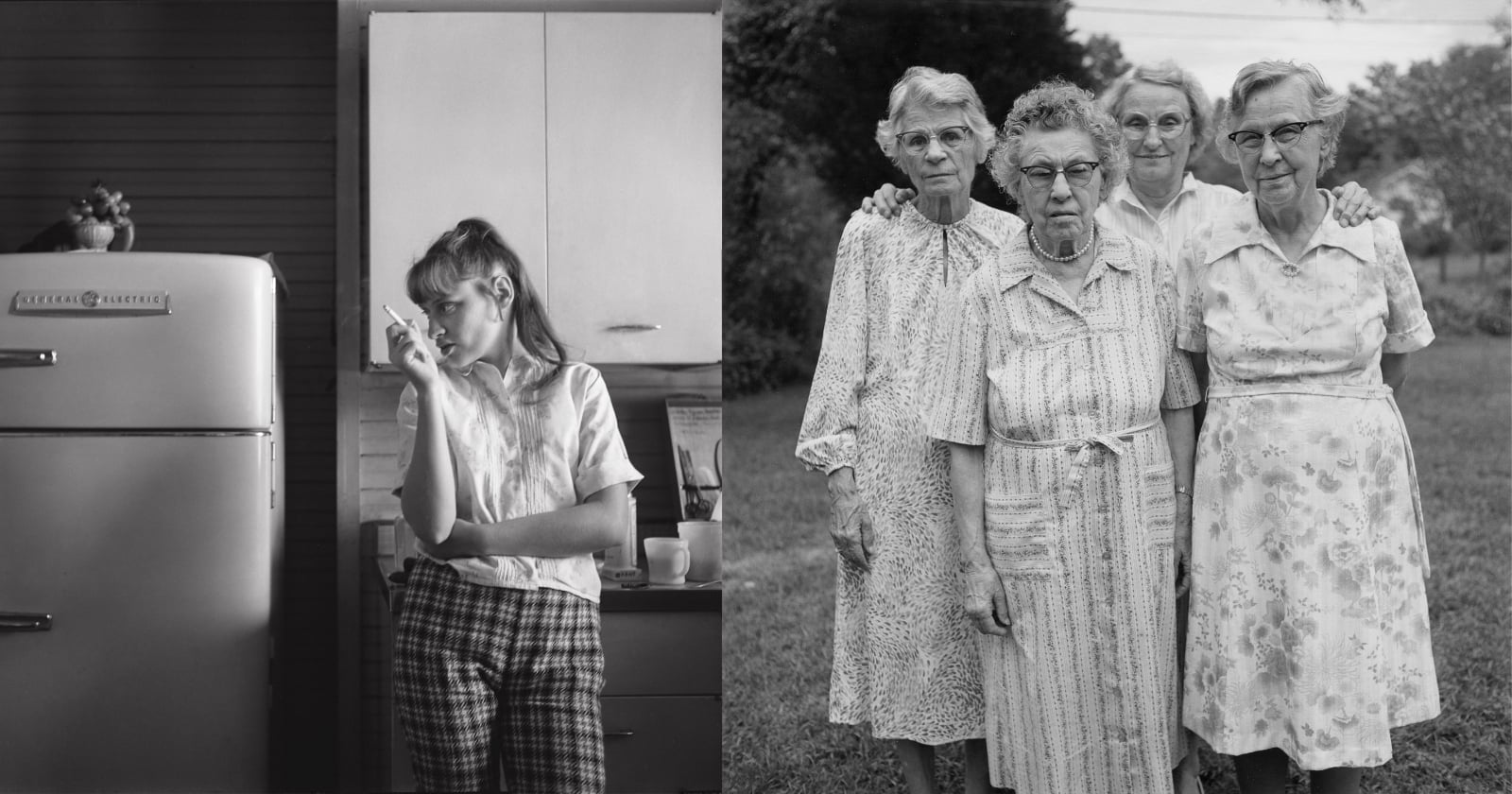
There is a particular kind of quiet that settles over a kitchen in the late afternoon, and Emmet Gowin has spent a lifetime honoring it. The news that his intimate portraits of his wife's family in small-town Virginia have finally been published is not just a milestone for photography; it is a reminder that the most profound art often lives in the corners we usually overlook. We are not talking about grand landscapes or staged portraits, but the honest geography of a life: a girl leaning against a refrigerator, four elderly women standing close in the grass. These are not moments that shout; they whisper, and that is precisely their power. For our readers, who understand that authenticity is the ultimate luxury, this book is a masterclass in presence, a chance to see how a legendary eye finds the eternal in the everyday. It echoes the same philosophy we explored in our piece on The Unspoken Dialogue Between Lens and Loom in Ancient Silk, where patience and craft transform the ordinary material of life into something transcendent.
What strikes us most is the deliberate act of waiting. In a world that demands we curate a highlight reel, Gowin offers us the unvarnished frame. He does not turn away from the complexities of family, the weight of time, or the subtle awkwardness of a shared space. Instead, he treats these elements with a reverence that feels both aspirational and deeply grounded. This is not the energy of a photographer dictating a scene; it is the energy of a collaborator, listening to the rhythm of a household. For the creative and the health-conscious alike, there is a lesson here about mindfulness, about being fully immersed in the present moment rather than rushing toward the next pose. Just as we found joy in the candid chaos of Finding Joy on the Streets, One Frame After Fashion, Gowin's work reminds us that beauty rarely announces itself. It simply waits to be seen, and the reward is for those who are willing to look.
But let us be clear about what makes this publication significant beyond the aesthetic. We live in an era of hyper-curation, where even our most private moments are staged for an invisible audience. Gowin's work stands as a quiet rebellion against that. It suggests that memory is not built in the grand gesture but in the accumulation of small, true moments. If a reader asked us whether this book is worth their time, we would say this: it is not an escape from your life; it is a return to it. It teaches us that the camera is not a barrier between us and the world, but a permission slip to engage more deeply with the people we love. It asks us to consider what we are paying attention to, and more importantly, what we are choosing to ignore. This is the same thread we pulled in Capturing Cosmic Beauty: An Astrophotography Journey with Nikon, where the vastness of space brings us back to the preciousness of our own small sphere.
The true takeaway here is a call to action for the way we see our own lives. We do not need a legendary career to practice this kind of attention. We simply need to put down the phone, look across the room, and let the moment find us. The question this book leaves us with is not about technique or fame, but about legacy: what will your photographs, or your memories, reveal about the life you actually lived? We would tell you to keep an eye on this release, not just for the images, but for the invitation it extends to each of us to find the extraordinary in our own Virginia, wherever that may be. It is a specific, open-ended question that lingers long after the page turns: what are you waiting for?