Astronaut’s Before-and-After Photos Show How Cities Switched From Orange to White Light
Our take
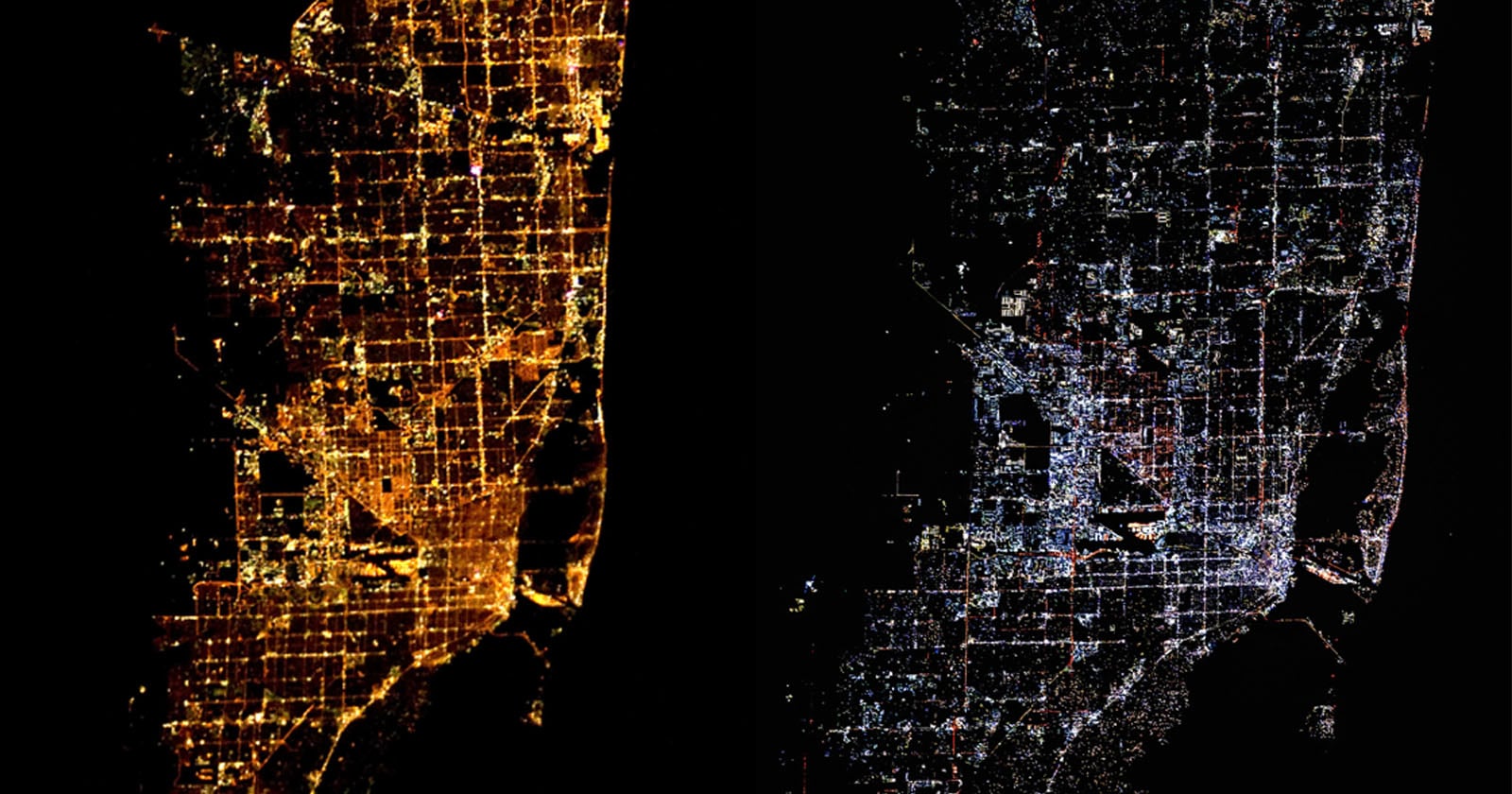
The shift in urban illumination from the familiar amber glow of sodium vapor lights to the starker, whiter hues of LEDs is more than a mere aesthetic change; it’s a visual record of technological advancement and a poignant illustration of our evolving relationship with the night sky. Recent before-and-after photographs captured by astronauts, starkly highlighting this transformation, serve as a powerful reminder of the unintended consequences of progress. The scale of this change is difficult to grasp until presented side-by-side, demonstrating how rapidly our cities have been re-lit. This phenomenon underscores a larger conversation about light pollution, a concern explored in detail by DarkSky International, whose recent photo contest, 31 Award-Winning Photos Celebrate the Beauty of the World’s Darkest Skies, showcased the dwindling opportunities to witness truly dark skies, and the efforts being made to preserve them. The shift isn’t solely about aesthetics; the brighter, bluer light emitted by many LEDs scatters more readily in the atmosphere, exacerbating light pollution and impacting both human health and wildlife behavior.
The reasons behind this transition are multifaceted. LEDs are significantly more energy-efficient than sodium vapor lights, a compelling factor for municipalities seeking to reduce energy consumption and carbon emissions. They also offer greater control over light direction and intensity, theoretically allowing for more targeted illumination. However, the widespread adoption of LEDs, often without careful consideration of spectral output, has resulted in a dramatic increase in skyglow – the diffuse brightening of the night sky over inhabited areas. Furthermore, the concerns surrounding the impact of giant reflecting satellites on astronomical observation, as detailed in Astronomers Could Be Permanently Blinded by Giant Reflecting Satellites, highlight a broader trend of technological advancements inadvertently interfering with our ability to observe the cosmos. The irony is palpable: we pursue efficiency and innovation, yet risk diminishing our connection to the very universe that inspires so much of our creativity. Even the recent controversies surrounding photo contests like Another Photo Contest Falls Victim to a Controversy of its Own Making demonstrate the growing awareness and debate surrounding responsible nighttime photography and the preservation of dark skies.
The impact extends beyond the purely scientific. The loss of dark skies diminishes our cultural heritage, severing a connection to millennia of human history where the stars served as navigational tools, calendars, and sources of myth and inspiration. The aesthetic experience of a truly dark sky, teeming with stars, is profoundly moving, fostering a sense of wonder and perspective that is increasingly rare in our urbanized world. The shift to white LEDs, while driven by practical considerations, has subtly eroded this experience, contributing to a sense of disconnection from the natural world. The quality of light, it turns out, is not merely a functional consideration but a crucial element of our psychological and emotional well-being, impacting our circadian rhythms and potentially contributing to a range of health issues.
Looking ahead, the challenge lies in finding a balance between energy efficiency, public safety, and the preservation of dark skies. This requires a more nuanced approach to urban lighting design, incorporating warmer-toned LEDs with shielded fixtures that direct light downwards, minimizing upward light pollution. Furthermore, increased public awareness and advocacy are essential to encourage municipalities to adopt responsible lighting practices. Will we recognize the value of darkness before it disappears entirely, or will we continue down a path of ever-increasing illumination, sacrificing the beauty and wonder of the night sky for the sake of perceived efficiency and aesthetic modernity? The astronaut’s photographs offer a stark visual reminder of what we stand to lose, and a compelling call to action to reclaim our connection to the cosmos.
Over the past 15 years, cities at night around the world have undergone a transformation: instead of being bathed in warm, orange sodium vapor light, they're now lit up by brighter, white LED lights.
Read on the original site
Open the publisher's page for the full experience