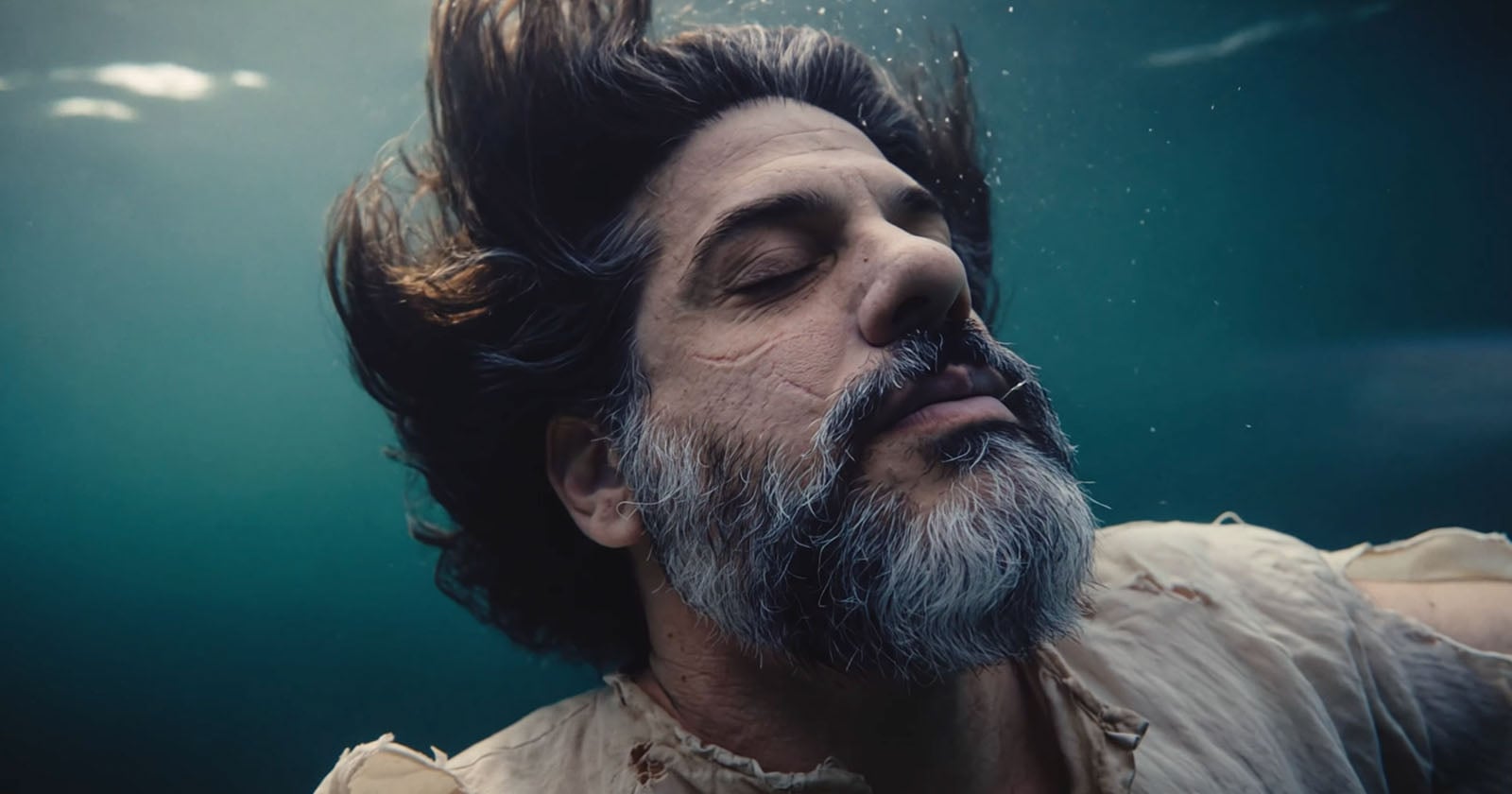
Christopher Nolan's *The Odyssey* promises sweeping IMAX frames and a cast of living, breathing actors. It is the kind of cinematic event that feels designed to remind us why we watch human beings tell stories. And then there is the other *Odyssey*, an AI-generated adaptation, arriving alongside it, bereft of the very thing that makes Homer's epic endure: a soul. The question posed by the piece we read is blunt: what are we doing?
It is a fair question, and one that resonates beyond this single film. We recently wrote about a CEO who posted an AI-edited photo of herself and her family, only to find herself leaving her company shortly after, a cautionary tale about the gap between Aspirational Image, Unexpected Exit: CEO Departs After AI Photo and authentic representation. Meanwhile, Adobe announced it is embedding its creative tools inside Google's Gemini platform, promising to Unlock Creative Power: Lightroom and Photoshop Now Within Gemini. That move is genuinely useful for editing a landscape or retouching a portrait. But using AI to reconstruct Odysseus's decade-long journey home, the grief, the rage, the longing, is a different category entirely. It assumes that pattern recognition can substitute for lived experience.
Here is our honest take: the AI *Odyssey* may produce images that resemble the epic, but it cannot understand why the epic matters. Homer's poem is about what it means to be human, to endure loss, to crave connection, to test the limits of loyalty and cunning. An algorithm can simulate the syntax of a hero's return, but it has never waited for a loved one. It has never wept. The result is a polished surface with nothing underneath. For our readers, creative collaborators and health-conscious enthusiasts who value both form and function, this raises a practical concern. If we outsource the telling of our oldest stories to machines, we risk losing the very imperfections that make art feel true. The AI *Odyssey* is technically impressive, but technical impressiveness is not the same as meaning.
What would we tell a reader who asked us about this? Do not confuse novelty with depth. The AI version will likely be faster, cheaper, and perhaps even visually arresting. But speed and cost are not the metrics by which we measure a story that has survived for nearly three thousand years. The specific takeaway here is this: an AI can replicate the plot of *The Odyssey*, but it cannot replicate the act of telling it. That act requires a person who has felt something, who chooses a word or a pause or a glance because they know what it means. Nolan's film, for all its IMAX spectacle, is still a human endeavor. The competitor is a mirror reflecting our own impatience back at us.
We should watch what happens when audiences encounter both versions. Will they sense the difference? Or will we become so accustomed to the polished, soulless image that we forget what we are missing? The answer will tell us less about AI and more about ourselves.