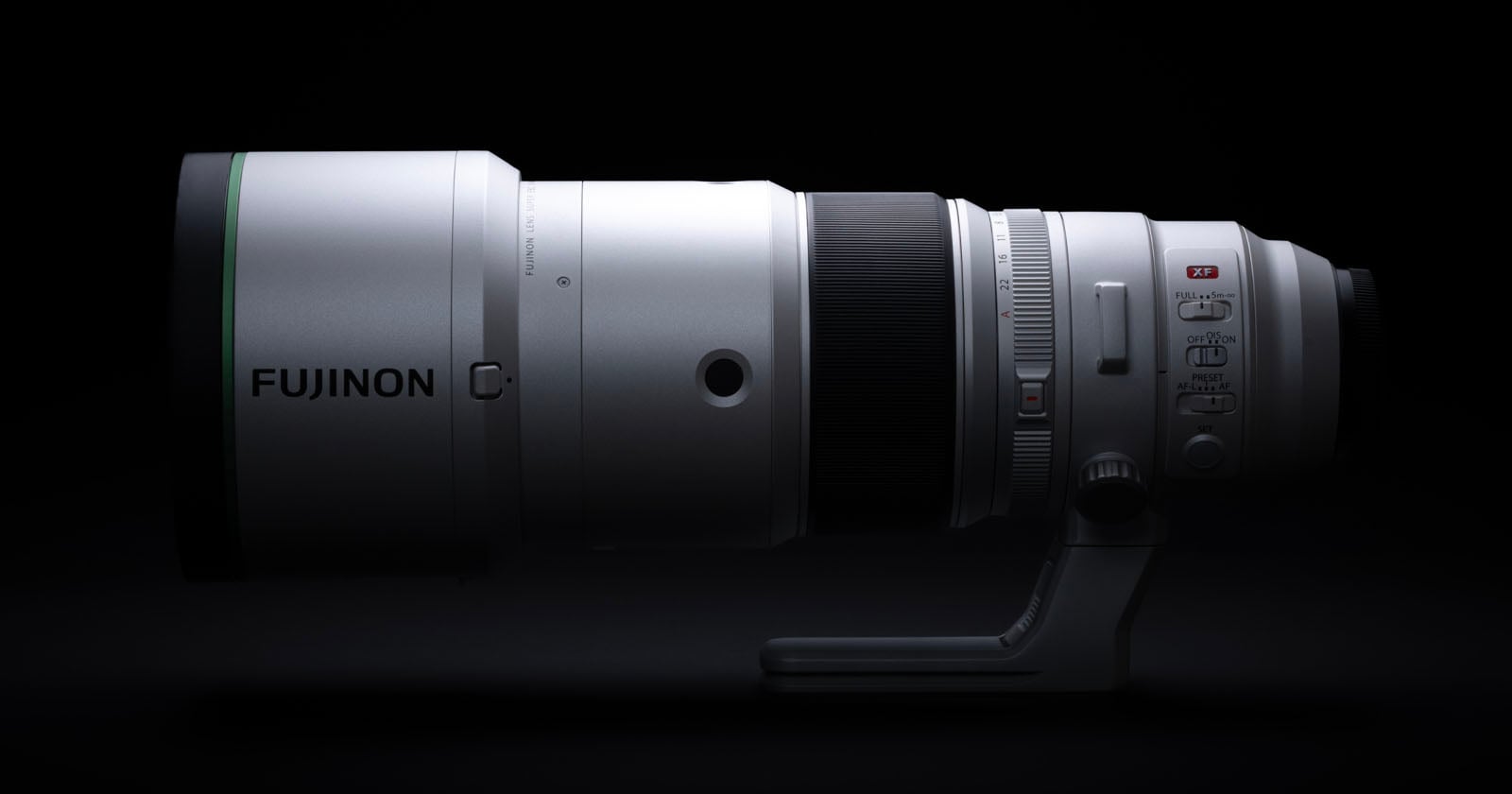
There is a particular kind of silence that settles over a photographer when a lens simply disappears. Not the silence of a quiet street, but the silence of a scene that suddenly feels incomplete without the right tool in hand. Fujifilm's announcement of the Fujinon XF400mm f/4.5 R LM OIS WR, with its full-frame equivalent of 609mm, is not just another piece of glass. It is an invitation to reconsider what we ask of our cameras and, more importantly, what we expect from ourselves when the moment is far away.
This is a lens for the patient eye, the one that waits for the light to shift or the subject to turn. It speaks to the same desire for intimacy that drives the Collaborate & Create: Boudoir Sessions Offered Across Florida's Coast, where the distance between lens and subject is a matter of trust rather than inches. And yet, there is a paradox here. While a boudoir session thrives on proximity, a 400mm lens thrives on separation. It compresses space, isolates detail, and flattens the world into a curated frame that feels almost painterly. This is not a tool for the casual shooter; it is a statement of intent for the one who understands that some stories require you to stand back to see them clearly.
We would tell any reader considering this lens to think about what they are really chasing. The promise of "highest optical performance" is seductive, but it is the creative constraint that matters more. A super-telephoto prime forces a specific kind of discipline. You cannot zoom with your feet when you are already 500 yards from the action. You learn to anticipate, to pre-visualize, and to trust that the decisive moment will arrive within your frame. This is the same ethos behind Leica Lux 2.0: Crafting iPhone Photography with Artistic Vision, where the tool becomes secondary to the eye behind it. The Leica update is about software refining a familiar sensor; this Fujinon is about optics refining a familiar scene. Both are exercises in subtraction, stripping away the unnecessary to reveal what matters.
What we appreciate most is the quiet confidence in the design. The optical stabilization and weather resistance are not headline-grabbing features; they are the unglamorous foundations that make the lens usable in the real world. This is not a piece of equipment that screams for attention. It simply delivers, frame after frame, with a consistency that borders on the meditative. For the photographer who has been shooting Celebrating Portraits: Photography Honoring the Spectrum of Skin Tones, the idea of reaching across a crowded room or a sunlit field to capture a genuine expression without intrusion is not just appealing; it is essential. The lens becomes a bridge, not a barrier.
The open question we are left with is whether this level of reach justifies the investment for the average enthusiast. For the working professional, the answer is likely a confident yes. For the rest of us, the real takeaway is simpler: the distance between you and your subject is not a limitation; it is a choice. This lens asks you to make that choice deliberately. Watch how the rendering handles the edges at dusk, or how the focus breathes during a burst. That is where the truth of this optic will reveal itself. The press release promises performance; the proof will be in the silence of a perfectly sharp frame, captured from so far away that the moment feels like a secret you were trusted to keep.