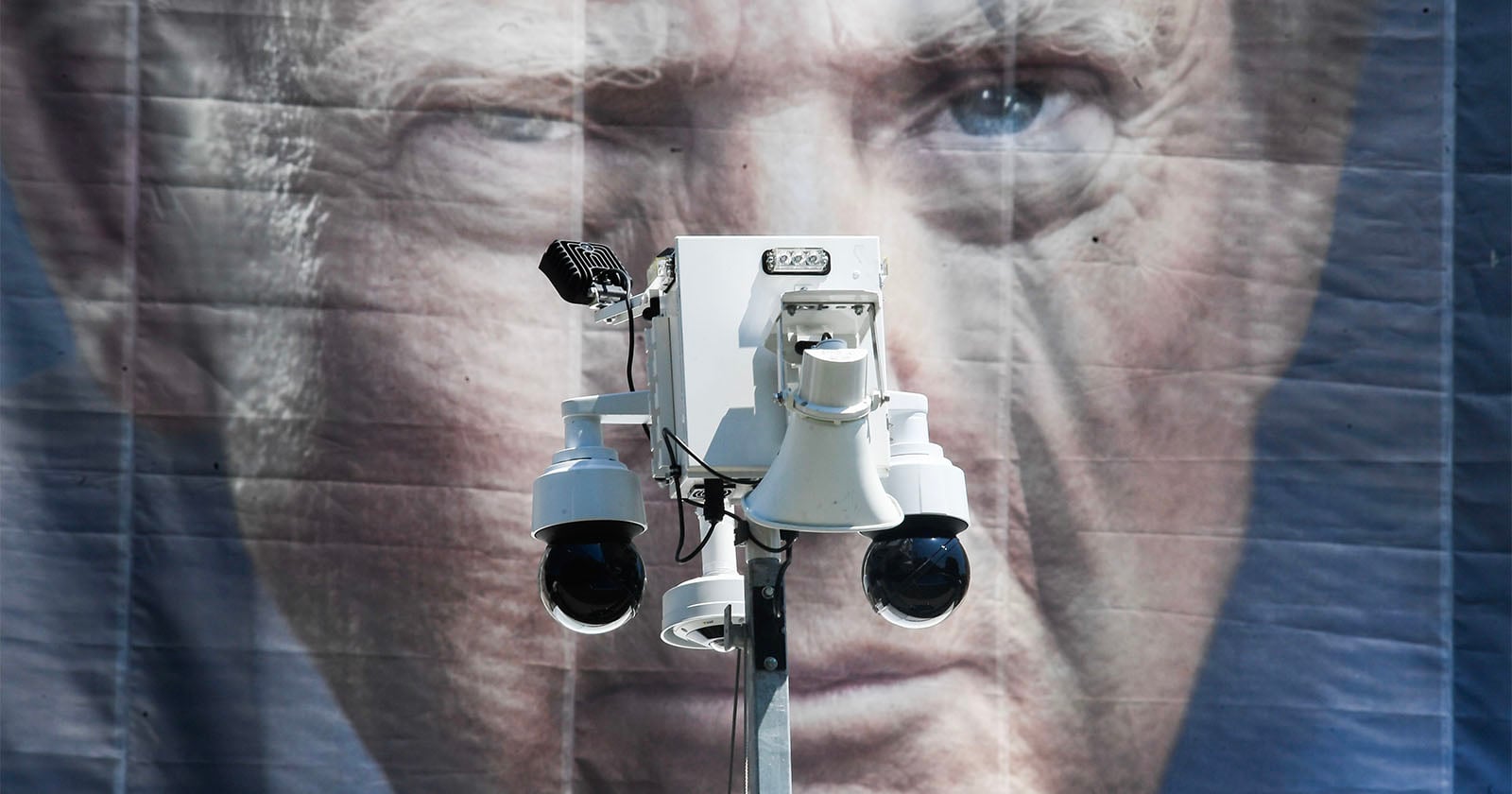
The photographer in Philadelphia has taken on a task that feels both simple and impossible: to point his lens at the countless cameras already pointing at us. It is a curious project, one that turns the act of seeing back onto itself. In a culture that loves to capture everything, from the grandest gallery wall to the most mundane moment of daily life, he is asking us to consider who is watching the watchers. The resulting images are not paranoid, but they are pointed, and they carry a quiet charge that deserves our full attention.
This work exists in a fascinating tension with the other stories we have recently shared. Consider the photographer’s fall from grace, a cautionary tale about a lens wielded for deception and personal gain. That story is about the abuse of a camera's power, while this one is about its simple, documentary truth. There is also a certain poetry in the unspoken dialogue between lens and loom in ancient silk, where the eye is trained on beauty and craft. Here, the lens is turned toward the functional, the watchful, and the often-ignored infrastructure of our cities. The contrast is stark: one artist captures the soul of a tradition, while another captures the machinery of modern control. Both are acts of seeing, but they could not be more different in their subject or their intent.
For our readers, this is more than a story about civic technology or privacy policy. It is about the environment we have built for ourselves and the one we are learning to inhabit. We move through our days under the gaze of these devices, often forgetting they are there. This project is a reminder that we are not just passive subjects in a system of observation; we are participants in a culture that has accepted this trade-off. The practical takeaway is to start looking up, to notice the architecture of surveillance that frames our daily commutes and our moments of leisure. It is a call to be more observant of the spaces we occupy, to see the scaffolding of the modern world for what it is.
What we would tell a reader who asked about this story is to pay attention to the aesthetic choices the photographer is making. The image of a white camera unit against a blurry banner of a man's face is not an accident. It is a composition that speaks to a specific kind of power, one that is both impersonal and deeply human. The question we should all be asking is not simply whether we are being watched, but what the act of watching does to us. It changes the way we move, the way we speak, and the way we treat one another in public. The real story here is not the technology itself, but how quickly we have normalized it, and what we might be losing in the process. The final frame of this project has yet to be shot, and the most important detail will be how we choose to react to what it reveals.