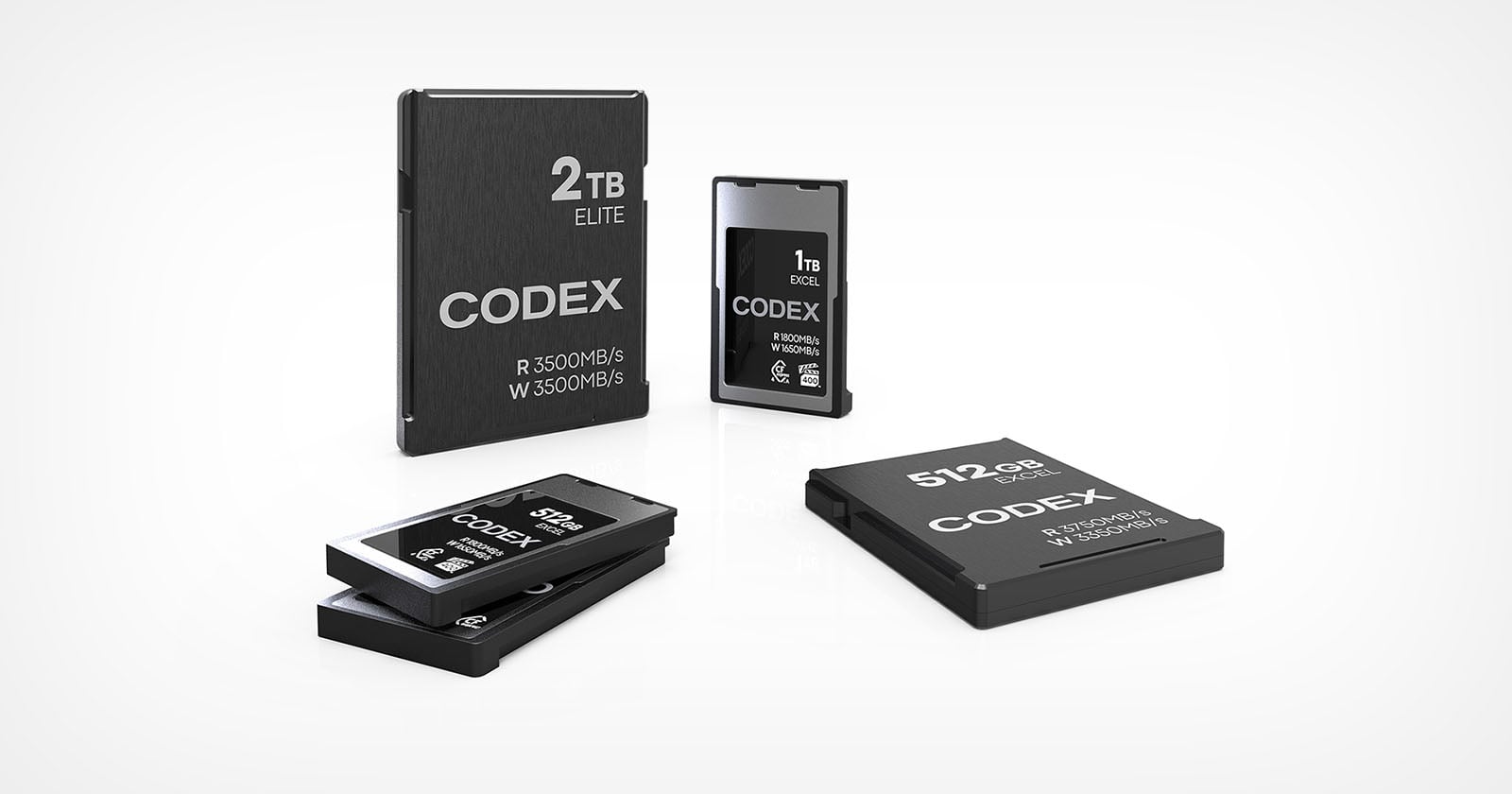
There is a quiet confidence to the way Codex moves. For years, this is the name that has sat inside the camera bodies of working cinematographers, the specialized media that feels less like a product and more like a handshake with the machine. Now, with the introduction of their first CFexpress 4.0 Type A and Type B cards, the company is stepping out of the custom bayonet mount and into the broader, messier world of interchangeable media. The instinct here is not to chase the consumer market, but to bring a cinema-grade standard to a format that has long been treated as a compromise. That is a meaningful distinction.
We have seen what happens when the industry drifts toward chaos. The recent scrum outside the White House, where photographers from different camps collided in a moment of tension, was a reminder that the tools we carry matter less than the discipline we bring to them. Meanwhile, the theft of camera gear at a Hamptons fashion event, a $10,000 loss in a space that thrives on polished imagery, shows how quickly the physical side of this craft can unravel. Codex is not solving those problems, but there is something quietly reassuring about a company that insists on reliability as a form of respect. In a week where A Moment of Tension: Photographers Converge Outside the White House and Hamptons Fashion Event Disrupted by Camera Gear Theft dominated our feeds, the arrival of a card that simply works feels like a small act of defiance.
What makes this move interesting is not the specifications, though the 4.0 interface is certainly welcome. It is the cultural signal. Codex has always been the gatekeeper for Arri's proprietary formats, the quiet sibling to the camera manufacturer's loud sensor. By entering the CFexpress space, they are acknowledging that the workflow is shifting toward a more open, modular approach. For the working professional, this means the end of the adapter dongle dance, the removal of one more layer of friction between the moment and the edit. It is a practical acknowledgment that the future is not a single locked format, but a family of interoperable tools. The creative director who trusts a card that records 8K without a second thought is the same person who appreciates the curation of a well-styled set. This is that energy.
The question we would leave with our readers is not whether these cards are fast enough, because they are. It is whether the industry is ready to trust a cinema brand that now wants to live in your mirrorless camera. We would tell you this: if you are someone who has been holding onto a stack of older media out of loyalty, or hesitation, this is the moment to test the waters. The takeaway is simple. When a company known for building the most demanding storage on earth decides to play in the open market, it is worth paying attention to what they are not saying. They are not selling speed. They are selling the idea that your next project does not have to be a compromise. And in a world where A Moment of Solidarity: News Outlets Limit Trump Imagery reminds us how much of our visual record is a matter of trust, having a card you can swear by is a small but real form of integrity. Watch the durability tests. That is where the truth lives.