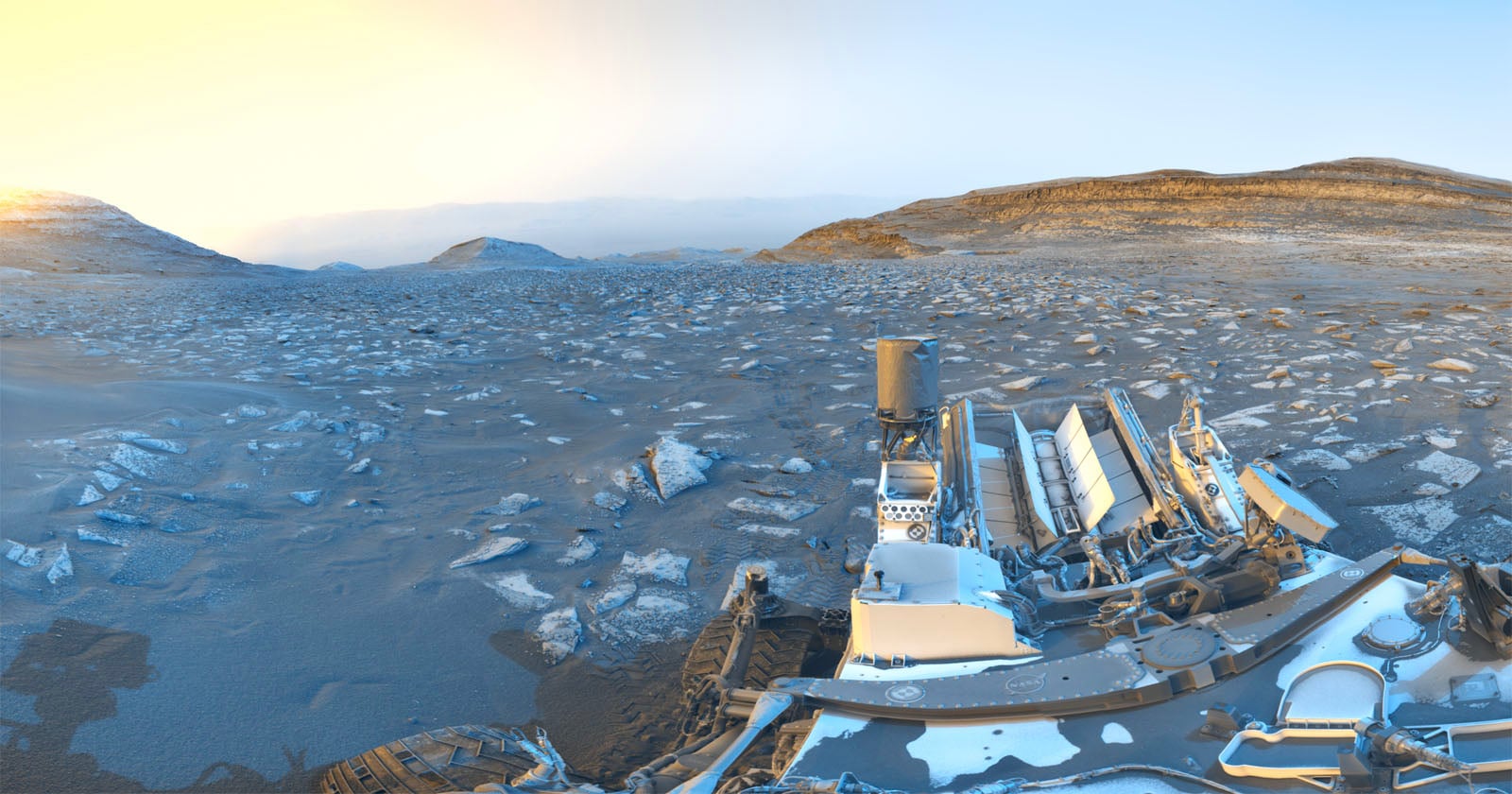
There is something quietly profound about a machine pausing to admire a landscape it has been traveling for more than a dozen years. NASA's Curiosity rover has now spent 5,000 Martian days on the Red Planet, and its latest gift to us is a panorama captured from a sandy ridge called "Chocolatal", a name that feels less like a scientific designation and more like an invitation to taste the view. The image reveals a ridge of rust-hued beauty, layered and textured, carved by winds we will never feel. This is not merely a technical milestone. It is a reminder that exploration, at its best, is a curatorial act, choosing where to look, what to frame, and how to share the wonder.
Curiosity's longevity reshapes how we experience space. The rover has become a kind of traveling companion, sending back dispatches from a world we cannot visit. This latest panorama, set against the backdrop of a 5,000-sol odyssey, feels less like raw data and more like a postcard from a patient artist. It deepens a conversation we have been following closely in our own pages, how the tools we send into the void become extensions of human curiosity and aesthetic longing. We saw this same sensibility in the celestial compositions captured by the James Webb Space Telescope, as we explored in Webb's Lens Unveils a Masterpiece of Cosmic Beauty, where infrared light rendered nebulae as painterly abstractions. And we recognized it again when a photographer's lone vision won top honors in astronomy's most prestigious competition, a story we shared in Celestial Visions: A Nebula's Beauty Wins Astronomy Photographer of the Year. Each of these moments, a rover on Mars, a telescope in deep space, a camera on Earth, affirms that we do not just record the cosmos. We interpret it.
For our readers, the truly compelling detail is not the number 5,000, but the place itself: Chocolatal Ridge. Curiosity chose this vantage intentionally, climbing a slope that offers layered views of sedimentary rock formed when Mars was wetter and warmer. The ridge's hues, burnt umber, ochre, dusted with pale sediment, are not random aesthetics. They are geological archives written in iron oxide and ancient clay. This is where the artistic and the authentic converge. The landscape is beautiful, yes, but that beauty is grounded in a story of planetary change. It offers a specific, tangible takeaway: the same ridge that delights our eyes today may hold clues about whether Mars ever supported microbial life. Curiosity is not just sending pretty pictures. It is building a case for what happened to a world that once had water, air, and time.
What we watch for now is where the rover moves next. The ridge is a viewpoint, not a destination. Curiosity will eventually descend into the broader terrain of the Gediz Vallis channel, where the mineral signatures grow stranger and the geological questions multiply. Every image we receive from now on carries the weight of an approaching deadline, the rover's power fades, its wheels wear, and Martian dust continues to settle on its solar panels. There will be a last panorama, and we will not know it at the time. So let this 5,000th day be what it is: a moment to appreciate the art of staying curious, ridge by ridge, sol by sol, until the machine falls silent and the human conversation it started continues without it.