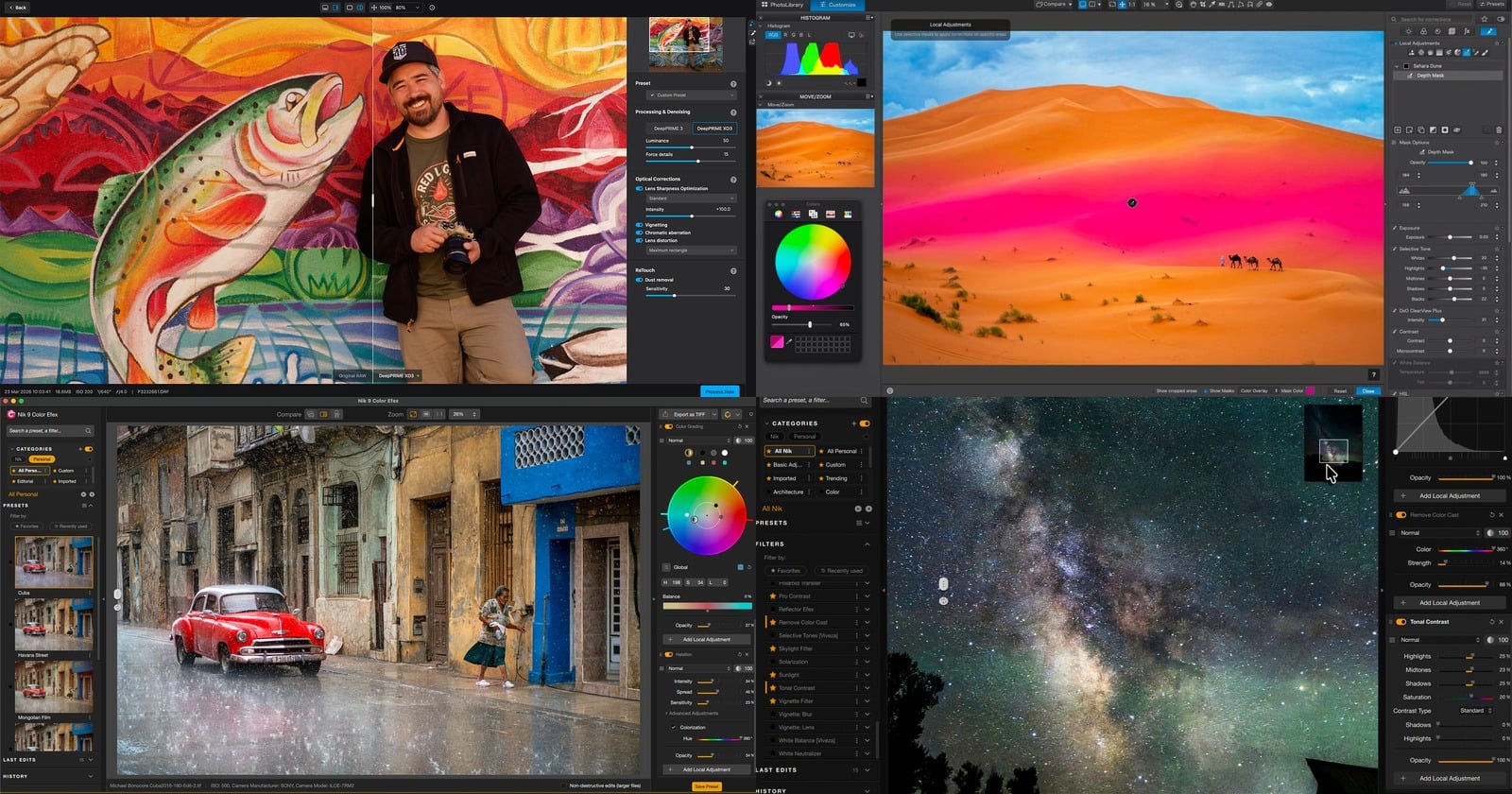
There is something quietly radical about an edit that understands not just what is in a frame, but who is in it, and how far away they stand. DxO's 2026 updates do exactly that, and it matters because the best tools do not just make your work faster; they change what you feel you can attempt. Masks that can now identify each person in a photograph and map the depth behind them without a single brushstroke are not a convenience. They are an invitation to compose with a level of intention that previously required a studio and a patient assistant. When you pair that with the arrival of a single filter that replicates the glow of film around a streetlight, something that used to demand a careful stack of layers and a good deal of guesswork, the message becomes clear: the gap between what you imagine and what you can execute is narrowing.
This is a toolset built for the kind of creator who reads about a Fisheye Lens That Challenges Your Frame of Seeing and feels a spark of curiosity rather than confusion. It assumes you want to push an image past technical correctness into something atmospheric, something that carries a mood. The noise reduction, now extended to far more cameras, is the quiet backbone here. It lets you shoot in the kind of low light that gives a scene texture and shadow, without worrying that the file will fall apart in post. That is freedom. And when you combine that latitude with a mask that can isolate a subject by distance, you are no longer editing a photograph. You are lighting a scene after the fact, shaping depth the way a cinematographer shapes focus.
What makes this update feel different from the usual annual refresh is that it acknowledges a truth many editing suites ignore: the most satisfying edits are the ones that feel like discovery, not labor. The film glow filter is a perfect example. It is not a preset that applies a generic haze; it is a single stroke that understands how light wraps around a source in a physical space. That is the difference between a filter and a tool. And it arrives in a year when we have also seen an artist like Jon McCormack, the visionary behind Apple's camera software, step away from his role. In The Artist Behind Apple’s Lens Steps Into a New Frame, we explored what it means when a photographer who shaped how millions capture their lives decides to move on. The DxO update feels like a quiet answer to that moment: the tools themselves are becoming more thoughtful, more intuitive, more willing to meet the artist halfway.
The specific takeaway here is direct: if you have ever hesitated to shoot a portrait in a dimly lit room because you dreaded the masking work later, that hesitation is now obsolete. The mask knows who is who. It knows what is foreground and what is background. And the glow you used to chase through layers is now a single click away. The question that lingers is whether this kind of power makes us better editors or simply faster ones. We suspect the answer depends on what you do with the time it gives back.