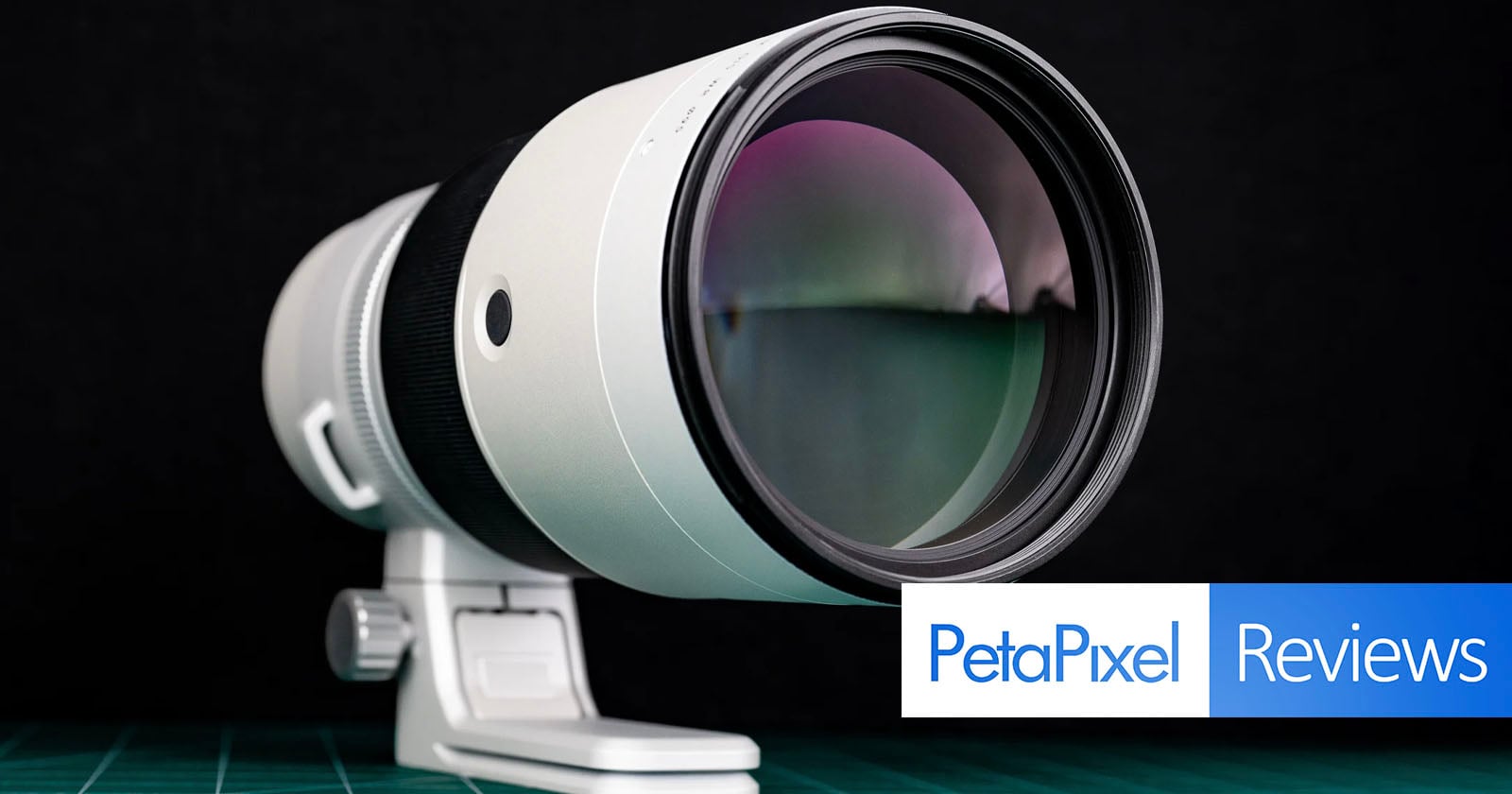
There is something quietly thrilling about a brand that refuses to stay where you left it. For years, the conversation around Fujifilm has been about character, about color science, about cameras that feel like they were designed by people who actually love photography. But when the talk turned to wildlife and sports, the tone shifted. The autofocus was the elephant in the room, the thing no one wanted to say out loud but everyone felt. So when a new super telephoto lens arrives, the question is not whether it is sharp or well-built, because the glass has always been the easy part. The real question is whether the system's heart has finally caught up to its eyes.
The honest admission that the reviewer does not have a ton of faith in Fujifilm for demanding action work is exactly the kind of candor we appreciate around here. It is refreshing to see a reviewer lead with doubt rather than hype, because it makes the praise that follows feel earned. And praise there is, at least for the lens itself. The XF 400mm f/4.5 is being called top-tier, which is no small thing in a world full of excellent optics from every corner. But the deeper story is about trust. You cannot buy a lens in isolation; you buy into a system, a way of seeing, a belief that when the moment breaks, the camera will find focus and hold it. That is the gap Fujifilm has been circling, and it is the gap this lens is meant to close. It reminds us of the way Collaborate & Create: Boudoir Sessions Offered Across Florida's Coast speaks to a different kind of trust, the one between a photographer and their subject, where comfort is the real technical skill. And just as Cultivating Connection: Creating Comfortable Portrait Experiences reminds us that a portrait is built on ease, not gear, this lens reminds us that action photography is built on confidence, not just reach.
What we would tell a reader asking for advice is this: do not buy the lens because it is new. Buy it because you already believe in the system, or because you are willing to test that belief in the field. The optical quality is not in question, and the build is clearly there. But a super telephoto is a commitment, a heavy, expensive, often single-purpose tool. If you are a working photographer who has been waiting for Fujifilm to be a viable option for birds in flight or sideline work, this lens is the strongest argument yet that the company is listening. The autofocus gap may still be real, but it is narrowing, and glass like this is what pushes a system forward. It is also worth remembering that gear is only half the equation, a lesson that echoes in Leica Lux 2.0: Crafting iPhone Photography with Artistic Vision, where the tool is just the starting point for a creative vision.
The takeaway here is not that Fujifilm has won the wildlife crown, because they have not, at least not yet. The takeaway is that they are finally playing the game seriously, and that is a win for everyone who values choice in a market that often feels locked into a single brand's rhythm. The concrete thing to watch is how the autofocus performs in real-world conditions, not in a lab, but in the mud, the cold, the fleeting seconds of a chase. Because the lens can be perfect, and the camera can still be the bottleneck. But for the first time in a while, we are genuinely curious to see how this story ends. That is the kind of anticipation worth investing in.