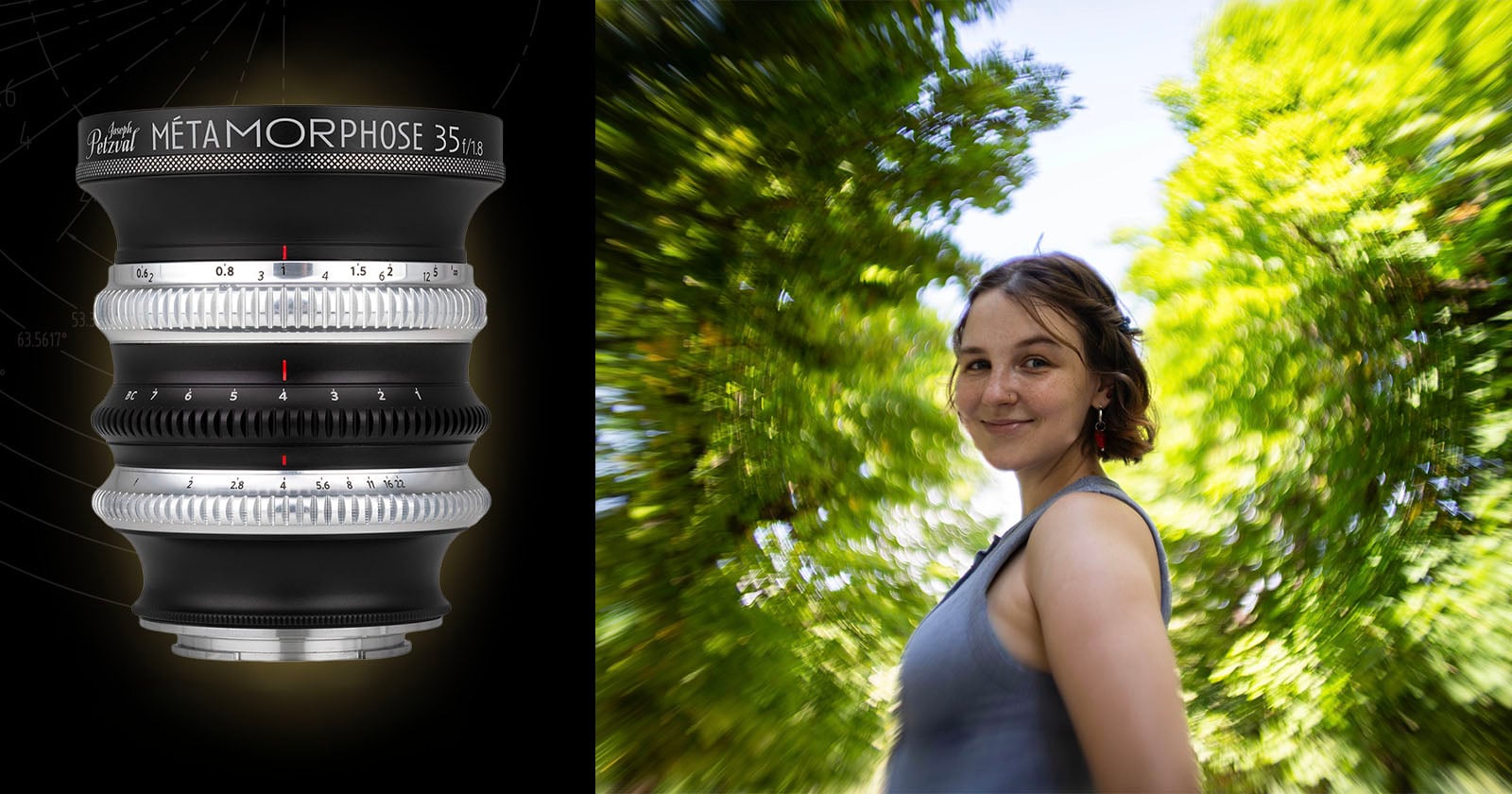
The Joseph Petzval Métamorphose 35mm f/1.8 is not another lens announcement; it is a quiet rebellion against the clinical perfection that has come to define modern photography. Lomography has taken the historic Petzval formula, famous for its swirling, dreamlike bokeh, and grafted it onto a contemporary optic with focus-coupled bokeh control. This is not a gimmick. It is a declaration that imperfection, when curated with intention, becomes a tool for storytelling rather than a flaw to be corrected. We think this is the most exciting thing to happen to portrait photography since someone first realized that a wide aperture could flatter a face.
What makes this announcement resonate is the marriage of two seemingly opposing desires: the artistic chaos of vintage optics and the modern need for precision. The seven levels of bokeh control are not just a technical checkbox; they are a creative dial that lets you dial the swirl up or down, depending on whether you want your subject to emerge from a dream or anchor the frame with quiet clarity. This is where we see a direct conversation with the philosophy behind Benro MiniMax: Revolutionizing Stability in a Featherlight Monopod. Just as Benro proves that stability does not have to mean bulk, Lomography is proving that character does not have to mean unpredictability. Both products ask you to trust the tool, then give you the control to make it your own. That is the kind of practical innovation we can get behind.
For the working photographer, this lens is not about nostalgia for its own sake. It is about expanding the visual vocabulary available in a single frame. The focus-coupled mechanism means that as you adjust focus, the bokeh behavior shifts in a way that feels intuitive, not mechanical. This is a lens that rewards patience and play, much like the approach championed in Beyond the Lens: Finding Connection in Street Photography, where the gear is secondary to the moment. But here, the gear becomes a co-conspirator, adding a layer of texture that a flat, clinically sharp image simply cannot convey. It is a reminder that photography is not just about what you see, but how you choose to render it.
The takeaway is simple: this lens is a tool for those who want their images to feel alive, not just accurate. The question we are left with is not whether the bokeh is "good enough" but whether you are willing to embrace the happy accidents that come with a lens that has a personality. In a world where every new camera body promises more megapixels and less noise, Lomography is betting that character still matters. We are inclined to agree. The real test will be in the hands of photographers who are not afraid to let their backgrounds swirl and their edges melt, because that is where the art lives.