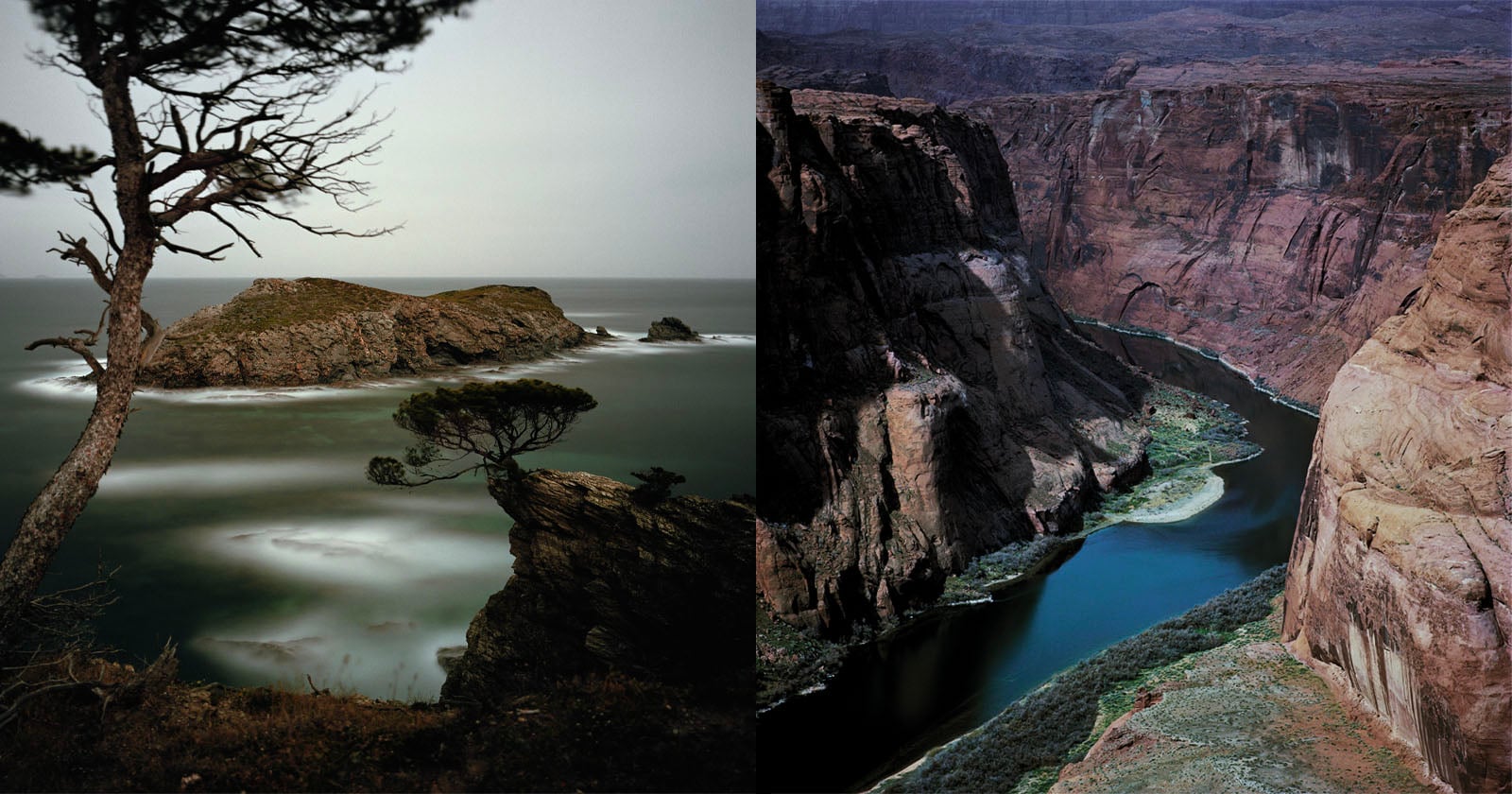
There is a particular kind of quiet that settles over the world when the moon takes the lead, and Darren Almond has built a career on surrendering to it. While most photographers would not dare to use moonlight as their key light, Almond steps into the night and lets it paint the landscape with an ethereal, almost haunting clarity. His work does not simply document a scene; it invites us to reconsider what we think we know about light, shadow, and the hours we usually sleep through. It is a bold, artistic surrender to a source we often take for granted, and the results feel less like photographs and more like memories of a dream you did not know you had.
This deliberate act of patience and vision reminds us of the conversations we have previously explored in our own pages, where the medium becomes secondary to the message. Just as The Unspoken Dialogue Between Lens and Loom in Ancient Silk reveals the deep narrative woven into a tactile craft, Almond's moonlit scenes are a study in trusting the process over the instant gratification of a flash. Similarly, there is a parallel to be drawn with the spontaneous energy captured in Finding Joy on the Streets, One Frame After Fashion, where the magic is not in controlling the environment but in being present enough to receive it. Almond does not control the moon; he waits for it, and in that waiting, he finds a version of the world that is both foreign and intimately familiar.
Our take is that this is a masterclass in intention. In a world obsessed with high-ISO capabilities and noise reduction, Almond's approach is a refreshing rejection of the technical crutch. He works with the limitations of his environment, not against them, and the resulting images carry a weight that feels both monumental and fragile. For the photographer looking to break out of a creative rut, this is a reminder that the most powerful tool is not the gear in your bag, but the willingness to wait for the right moment. We would tell a reader that if you are tired of the same sun-drenched landscapes, look up at the night sky and ask yourself what it would take to trust it. The answer might just be a longer exposure and a lot more patience.
The practical consequence of Almond's vision is a challenge to our perception of time. He is not merely freezing a moment; he is stretching it out until the night feels like a single, breathless second. As we move forward, we will be watching how this aesthetic influences not just fine art, but the broader visual language of luxury and lifestyle. If you are seeking authenticity, it is not found in the glare of a studio light, but in the honest, silver-blue glow of a full moon. The question we are left with is simple: what are you willing to wait for, when the sun goes down?