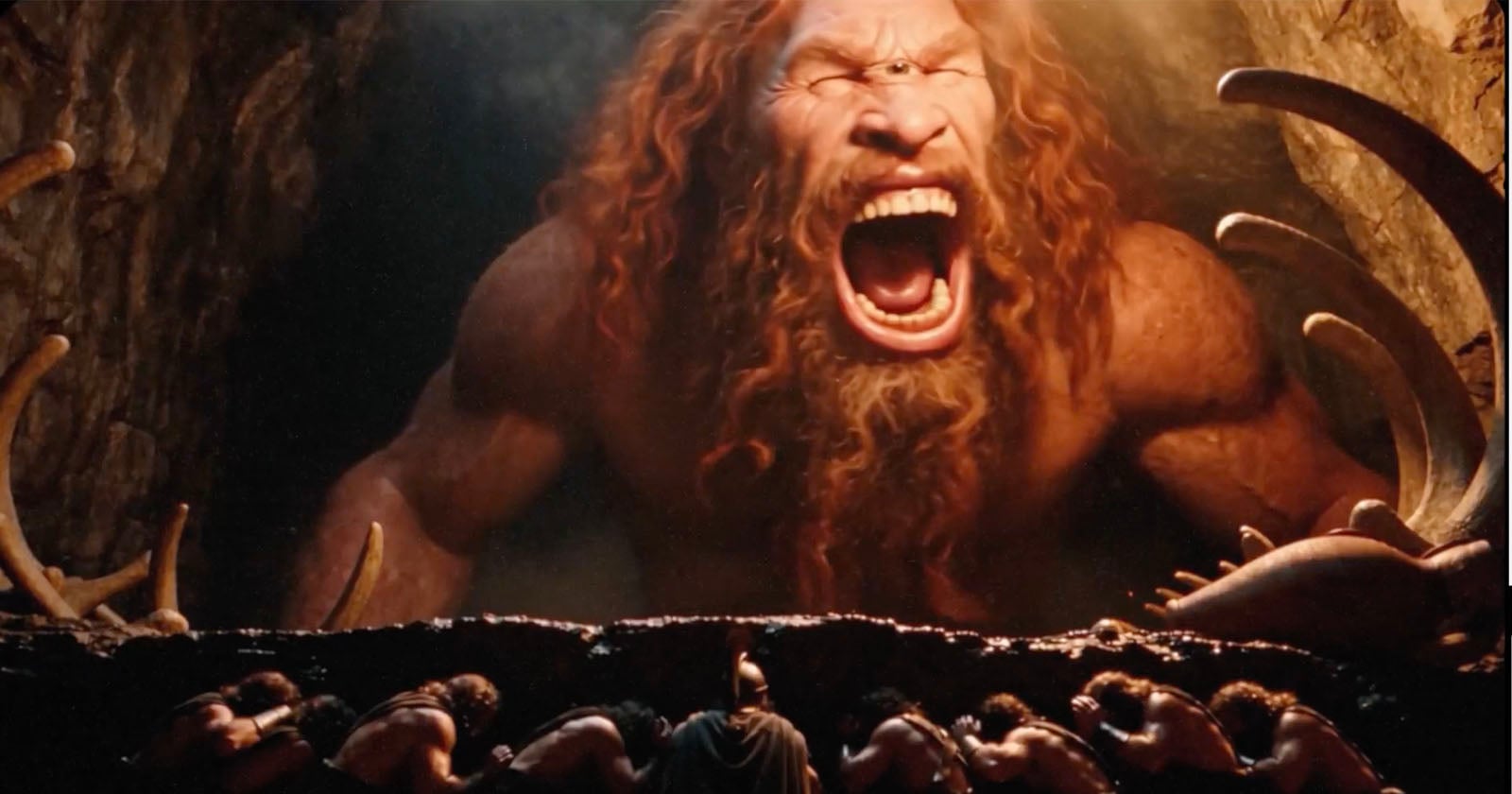
There is something almost poetic about the world's most famous technologist looking at a $100,000 AI-generated vision of a red-bearded cyclops and declaring it a more compelling Odyssey than Christopher Nolan's record-breaking epic. Elon Musk has made his feelings clear, repeatedly, and the internet has responded with the usual mix of glee, eye-rolls, and spirited debate. But beneath the spectacle of a billionaire picking a fight with a celebrated filmmaker lies a more interesting question: what are we actually arguing about when we argue about art and technology? For our readers, who navigate both the creative and the curated, this is not a trivial squabble. It is a reflection of a tension that touches everything from the tools we use to the stories we choose to tell.
We have to admit, there is a certain irony in Musk championing an AI contest winner while dismissing Nolan's painstakingly crafted practical effects. Nolan's films are, at their core, celebrations of the physical world: real ships, real explosions, real locations that make you feel the weight of every frame. The AI-generated imagery, on the other hand, is a pure distillation of algorithmic desire, unburdened by physics or budget. It is a fascinating contrast, and it resonates with a broader cultural moment we have been tracking closely. Consider how Unlock Creative Power: Lightroom and Photoshop Now Within Gemini signals a future where the line between photographer and prompt engineer blurs further. Or how Aspirational Image, Unexpected Exit: CEO Departs After AI Photo shows the very real human consequences when we can't tell the difference between a curated fantasy and a lived reality. The tools are getting better, but the questions they raise are getting sharper.
Our take is this: Musk is not wrong because he prefers the AI version. He is wrong to frame it as a contest. Art is not a zero-sum game where a cyclops with perfect teeth invalidates a seven-year production odyssey. Nolan's work is a testament to human endurance and vision, a collaborative effort that took years and millions of dollars to bring to the screen. The AI contest winner is a party trick, a delightful party trick, but a party trick nonetheless. It has no subtext, no history, no directorial voice. It is a mirror reflecting our own prompts back at us, which is interesting, but it is not the same as a story that has been shaped by a singular human perspective. For our readers, the practical takeaway is simple: do not confuse novelty with depth. The same way Unlock New Perspectives: AI-Powered Telescope Transforms Smartphone Bird Photography might make bird photography more accessible, it will not make you a better photographer. It just gives you a different tool.
So what do we tell a reader who asks us if Musk has a point? We tell them that he does, but only in the narrowest sense: yes, the AI image is technically impressive, and yes, it took seconds to create. But the conversation should not end there. It should begin with why we value art in the first place. Is it the final image, or is it the journey of the person who made it? If we answer that question honestly, we realize that the most important part of any creative work is not the tool that made it, but the intent behind it. And in that regard, Nolan's flawed, human, and deeply personal Odyssey will always win. The detail to watch, then, is not which version gets more likes, but how we, as a creative community, choose to define value in an age of infinite, instant generation. That is the real story.