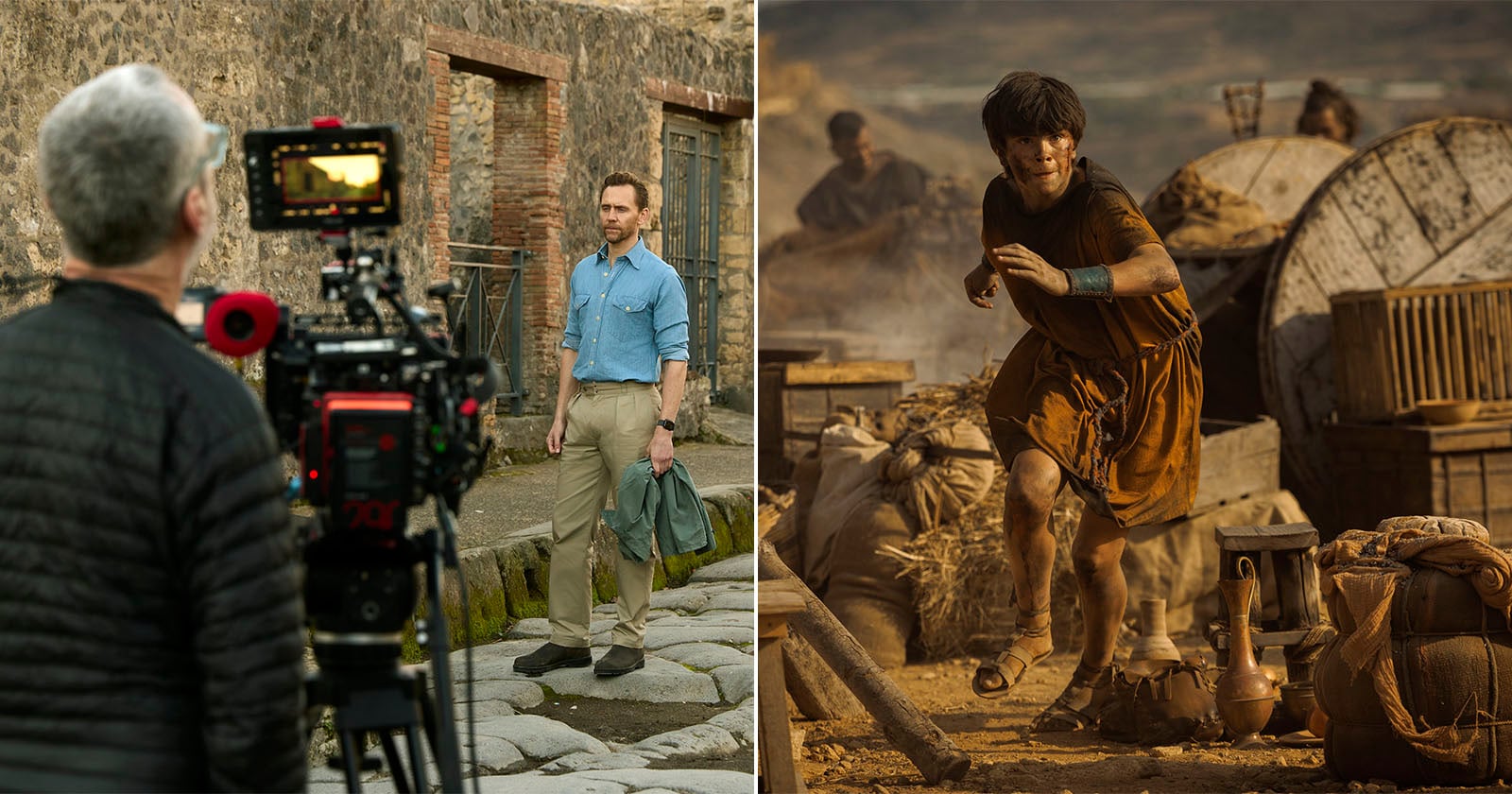
Time has a way of flattening history into dates and dust, but National Geographic's *Pompeii: Out of Time* refuses that quiet erasure. The three-part docudrama, fronted by Tom Hiddleston's unmistakable charm, does more than replay the final hours of 79 A.D.; it makes you feel the heat of the ash and the weight of a city that never got to say goodbye. That is no small feat. We have seen this story told in spectacle and shadow, but the series leans into a cinematic intimacy that feels closer to a curated gallery walk than a textbook lecture. It is the kind of storytelling that reminds us why we look back at all: not to mourn the past, but to feel its pulse.
For our readers, who move between the worlds of fitness, beauty, and the artistic life, this series lands with a particular resonance. The same impulse that draws us to a well-composed frame or a carefully crafted routine draws us to Hiddleston's guided walk through Pompeii's cobbled streets. It is about finding the extraordinary in the everyday, a theme we explored when A Descent Into Darkness: Witnessing the Chilean Mine Rescue showed how a trapped community turned survival into an art form. Both stories share a tension between human fragility and human resolve, but where the Chilean miners gave us a slow burn of hope, Pompeii offers a sudden, violent stop. The contrast is humbling. It asks us to hold beauty and catastrophe in the same hand, much like Capturing the Himalayas: A Photographer’s Journey Through Climate and Culture does when it frames glaciers as both majestic and melting. The natural world does not care about our narratives, yet we cannot stop shaping them.
What makes *Pompeii: Out of Time* worth your evening is not just the production value, though the split-screen imagery of modern crews and ancient actors is a clever visual handshake. It is the honesty of the approach. Hiddleston does not pretend to be a historian in a lab coat; he moves like a curious guest, inviting us to wonder alongside him. That authenticity is rare in a genre that often leans into bombast. We would tell you this: do not watch it for the spectacle alone. Watch it for the small moments, the pottery scattered mid-run, the plaster casts of bodies frozen in a last gesture. They are not artifacts; they are arguments for paying attention to the present. In a world that constantly asks for your next move, this series quietly insists that the past is not a distant country. It is a mirror.
The practical takeaway here is simple: let this docudrama change how you consume history, and by extension, how you curate your own daily rituals. If a city can be preserved in a single breath of ash, what are you holding onto that deserves a closer look? That is the open question we are left with, and it is worth sitting with. The final image of Pompeii is not one of destruction, but of preservation, a city caught mid-life, waiting for someone to tell its story properly. Hiddleston and company have done that, and the next time you lace up your shoes or frame a photograph, you might just feel the ground beneath you a little more deliberately. That is the gift of this series: it does not just show you the past, it hands it to you, still warm.