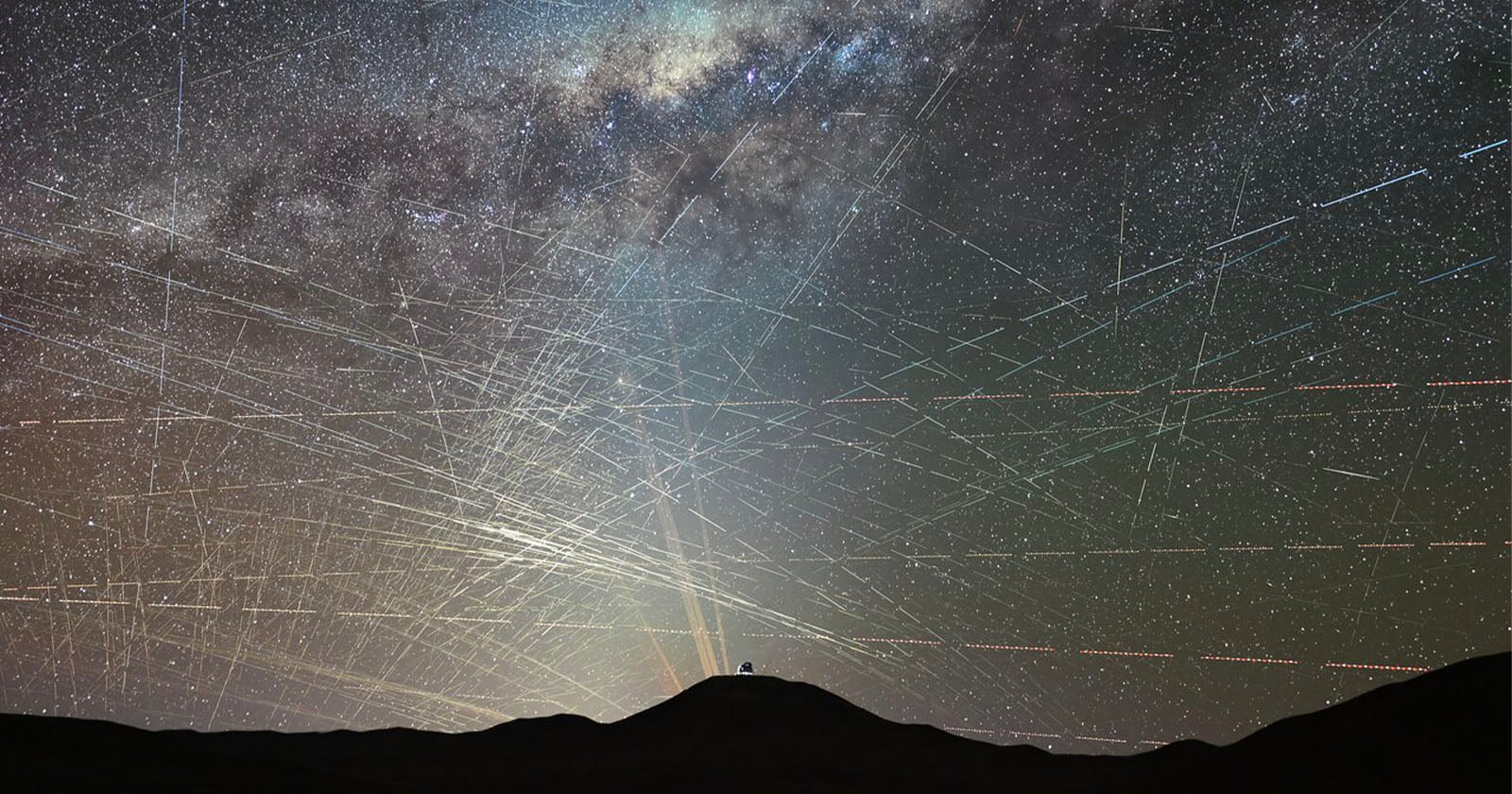
The night sky has always been our most honest mirror, reflecting not just the cosmos but our own ambitions, anxieties, and sense of scale. So when an astronomer warns that the proposed deployment of 1.7 million satellites, some of them incredibly bright, will have "devastating consequences" for our view of the Universe, we have to stop and listen. This is not a distant, abstract debate for those of us who find beauty in a dark horizon. It is the quiet erasure of a shared inheritance. We've written before about the lengths we go to in order to capture cosmic beauty, whether through a dedicated Capturing Cosmic Beauty: An Astrophotography Journey with Nikon or by adapting everyday tech to see further, as seen in the Unlock New Perspectives: AI-Powered Telescope Transforms Smartphone Bird Photography. But what happens when the very canvas we seek to capture is painted over before we even look up?
This is not a niche concern for professional observatories alone, though they will bear the brunt of the damage. It is a profoundly human one. We are talking about trading a pristine, awe-inspiring view of the Milky Way for a sky crisscrossed with artificial constellations, a kind of light pollution on a global scale. It reminds us of the shift documented in From Orange Glow to Brilliant White: How City Lights Have Changed, where our cities have already transformed the night into a washed-out, sodium-hued veil. The proposal for 1.7 million satellites is not an evolution of that problem; it is a fundamental escalation. We are not just adding more light, but adding moving, metallic light that can outshine stars and ruin a long-exposure photograph in a matter of seconds.
Our honest take is this: the convenience of global connectivity cannot come at the cost of our collective connection to the Universe. The astronomer's call for a limit of no more than 100,000 satellites is not anti-progress; it is a plea for perspective. For the reader, the practical takeaway is immediate and personal. When you look up from your backyard, are you looking at the cosmos, or are you looking at a construction site? We would tell you that this is a moment to choose what we value. The question is not whether we can put these objects in orbit, but whether we should, knowing full well that we are building a permanent, artificial ceiling over our own heads. The concrete point to watch is the reaction from the companies involved. Will they work with the astronomical community to find a balance, or will they treat the night sky as yet another open resource to be claimed? The next few years will tell us whether we are curating a future of discovery or curating a very expensive, very bright cage. For now, the stars are still there, but we are running out of time to decide if they will remain for our children to see.