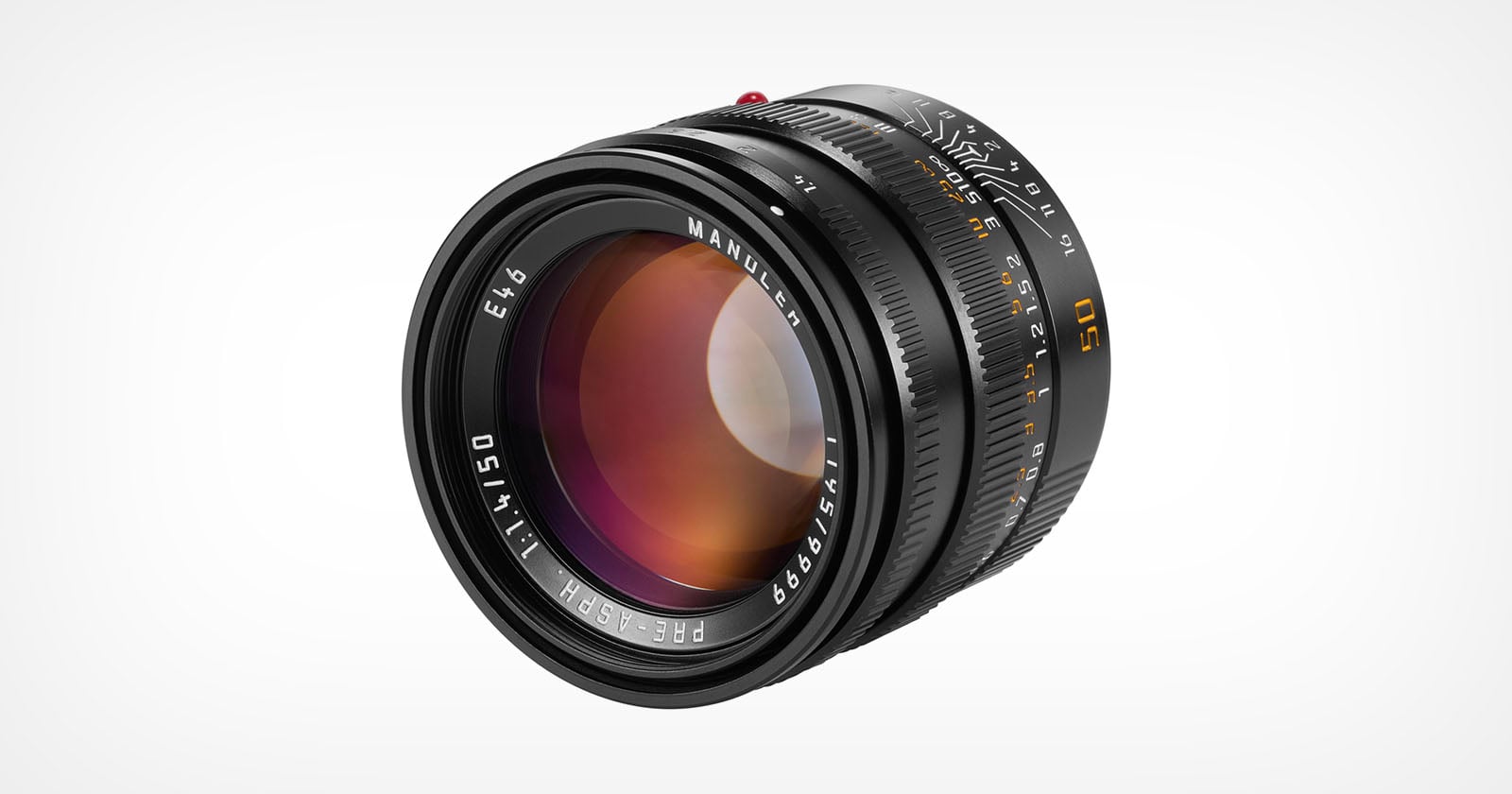
There is something quietly radical about a company that refuses to play the exclusivity game. Mandler, the Chinese lens maker that turned heads earlier this year with its Leica 35mm f/2 facsimile, is back with the 50mm f/1.4 E46 Pre-A. On the surface, it is another copycat play, a lens that looks like a Leica but costs a fraction of the price. Yet the deeper story is not about imitation. It is about who gets to participate in the art of photography.
For years, the 50mm f/1.4 focal length has been a holy grail for street photographers and portraitists alike. The classic Leica rendering, that particular blend of contrast, micro-contrast, and fall-off, has been reserved for those with the budget to match the name. Mandler is quietly challenging that premise. Their approach mirrors the philosophy behind Refining the 907X: Eight Curated Upgrades for a Modern Icon, where thoughtful refinement matters more than reinvention. Mandler is not trying to out-engineer Wetzlar; they are curating a visual experience and making it accessible. The result is a tool that invites creativity without demanding a second mortgage.
What makes this lens worth watching is not the technical specs, but the cultural signal it sends. Photography has long been a world of gatekeepers, where the best glass is locked behind the highest price tags. Mandler is part of a broader wave of brands asking whether that model still makes sense. Consider the spirit behind Brightin Star's Tri-Sight Lens Lets You Shape the Light, Frame by Frame, a lens that prioritizes creative control over convention. Mandler offers a similar ethos: a classic optical formula, stripped of digital frills, available to anyone who values the art of seeing over the status of the nameplate.
Our honest take is this: the Mandler 50mm f/1.4 matters because it forces a conversation about value. Not price, but value. What is a lens worth when it delivers the same visual character as a legendary optic, minus the brand premium? For the working photographer, the enthusiast, or the creative who would rather spend their budget on travel than gear, this lens represents a genuine choice. It is not a compromise. It is an alternative.
If a reader asked us whether to buy it, we would say this: look at the images it produces, not the name on the barrel. The specific takeaway here is that Mandler is proving that classic design can be both beautiful and democratic. The real question is whether the photography community is ready to value the art over the artifact. Watch how the second-hand market reacts to this lens in the next year, that will tell us whether accessible luxury is a trend, or a lasting shift.