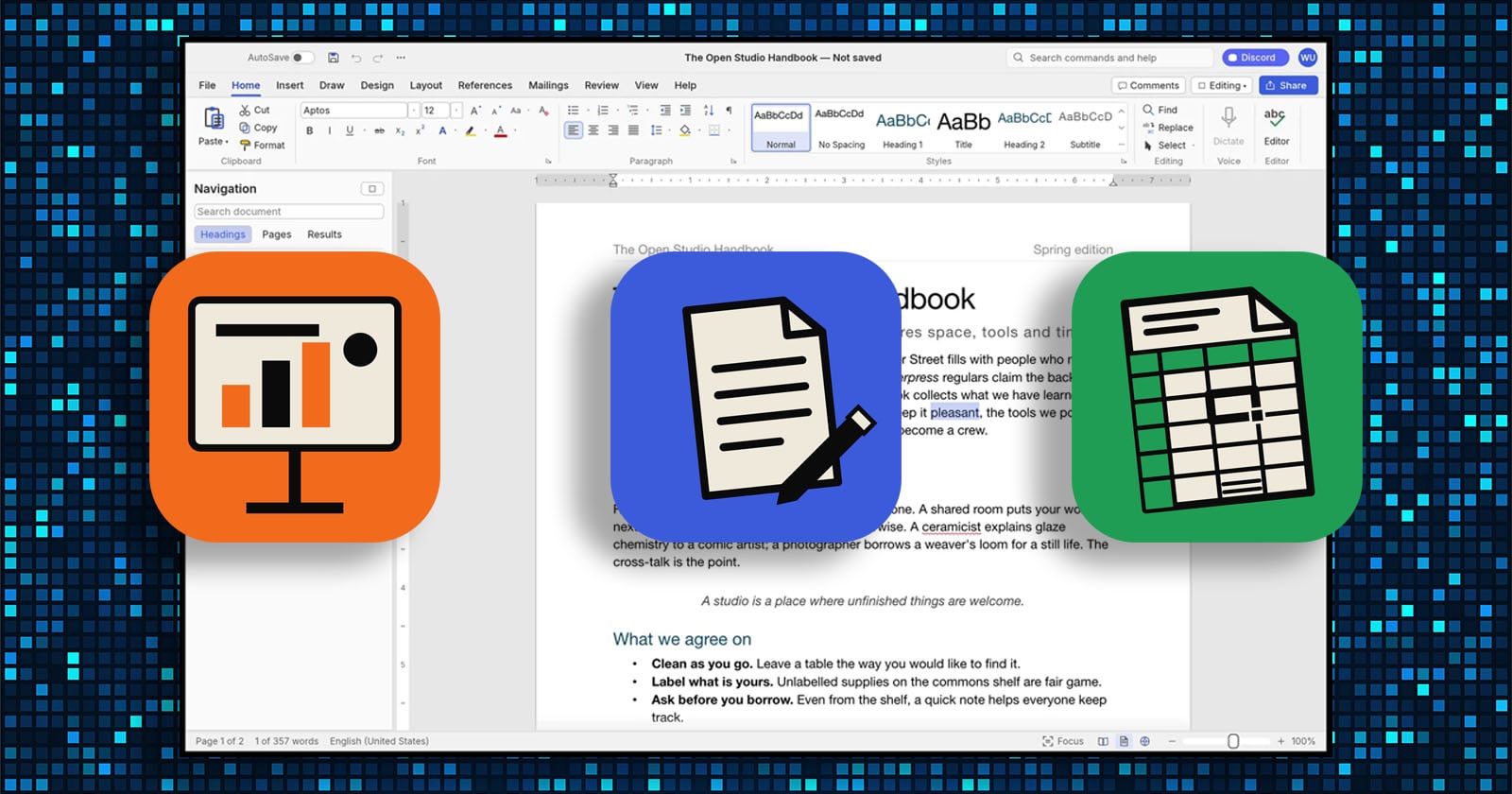
There is something quietly radical about treating software as an art form, and Brandon Thomas understands this better than most. After rebuilding Adobe's Creative Suite as an open-source alternative, he is now turning his attention to Microsoft Office, and we think this is exactly the kind of disciplined, almost poetic rebellion the digital world needs. For creators who have grown tired of subscription walls and feature bloat, this is not just a technical project; it is a statement that the tools we use daily deserve the same care and precision as the work they help us produce.
Thomas's approach, using AI-assisted reverse engineering to reconstruct familiar applications, feels less like hacking and more like restoration. It echoes the spirit of his earlier work, which we celebrated in Rebuilding Adobe's creative suite as an open-source artful rebellion, where the goal was never to copy but to reimagine. Now, with Office in his sights, he is taking on the quiet backbone of modern productivity. That is a different kind of challenge. Photoshop and Premiere are tools of expression; Word and Excel are tools of structure. Rebuilding them requires not only technical skill but a philosophical clarity about what these programs should do: simplify, not complicate; empower, not frustrate. For our readers, many of whom juggle creative projects and professional demands, this matters deeply. An open-source Office alternative could mean fewer compromises, more control, and a workspace that respects your workflow rather than dictating it.
What makes this effort compelling is how it aligns with a broader movement toward intentional digital living. We recently highlighted Three Essential Cameras That Capture Light With Artistic Brilliance, tools that reward patience and precision. In the same way, Thomas's work asks us to consider what we truly need from our software. Do we need endless features we never touch, or do we need reliable, elegant tools that get out of the way? His open-source approach also invites a community of contributors, meaning the software can evolve with real user input rather than corporate roadmaps. That is an aspirational model, one that treats users as collaborators, not consumers. It is also a practical one: when you can inspect and modify the code, you are no longer at the mercy of a company's decisions.
The specific question to watch is how far Thomas can push this methodology. Reverse engineering Adobe's creative suite was ambitious, but Office is a labyrinth of interconnected features, from formatting engines to collaboration tools. If he succeeds, the implications extend beyond cost savings. It would prove that even the most entrenched software can be rebuilt with transparency and intention. For those of us who value authenticity in every curated detail of our lives, that is a compelling promise. The next release from this project will tell us whether Thomas can turn a bold idea into a daily reality, and we will be watching closely.