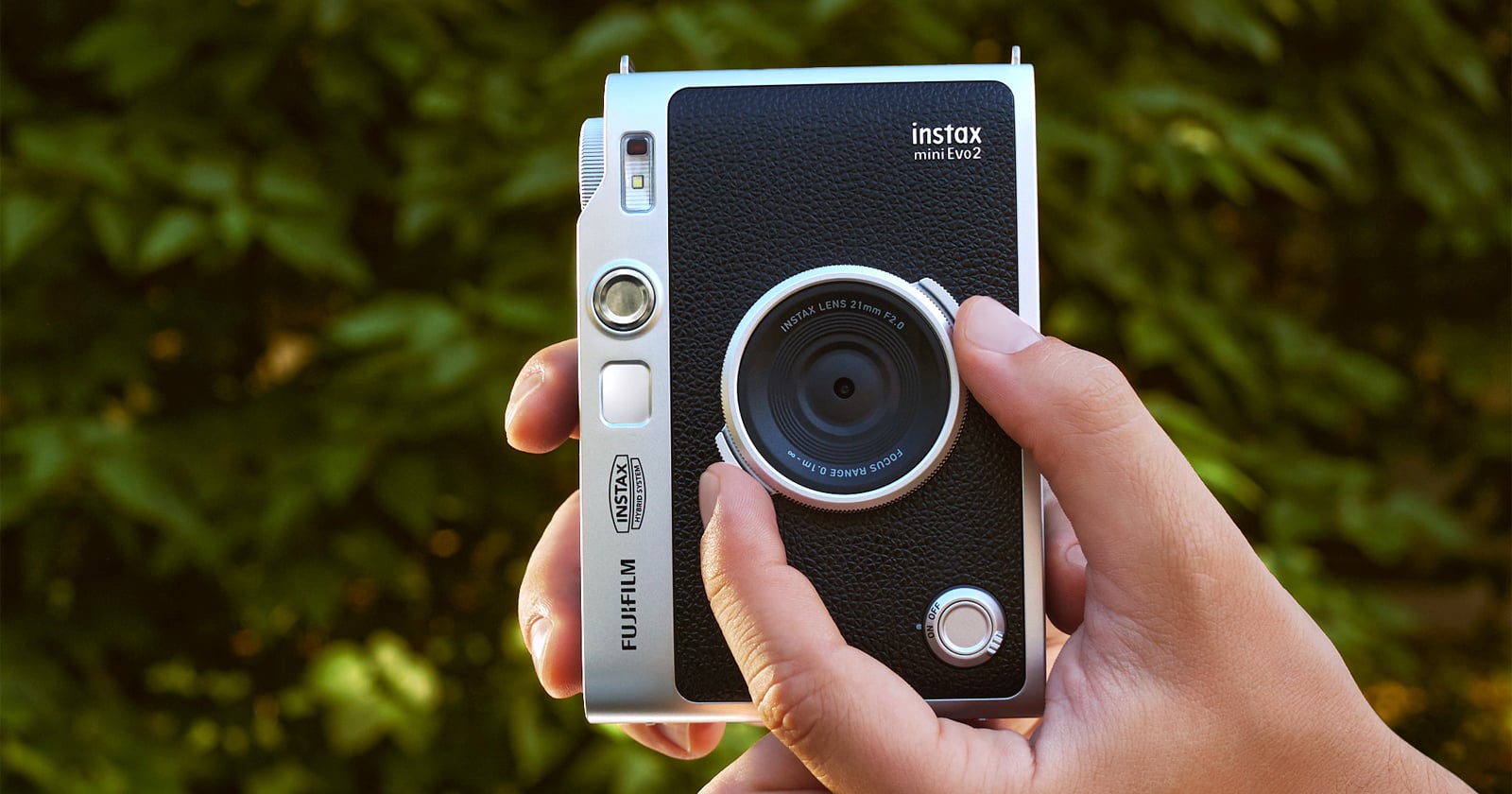
Fujifilm's latest Instax Mini Evo 2 is not just an incremental update, it is a deliberate reframing of what instant photography can feel like. By adding an "Expanded View" framing feature and an "Immersive Movie" option that captures up to four seconds before the shutter, the company has quietly shifted the camera's purpose from documentation to anticipation. For a device rooted in spontaneity, this is a surprisingly thoughtful pivot, and one that speaks directly to anyone who has ever wished their Instax shot could hold just a little more context.
The new rear LCD is a welcome upgrade, but the real story is how these features change the act of shooting. Expanded View lets you see beyond the frame before you commit, a tool that rewards the kind of deliberate composition we often associate with more serious gear. It is reminiscent of the bold software territory explored by Oppo's Find X10 Pro Max Pushes Past Triple Cameras Into Bold New Software Territory, where computational thinking reshapes what a camera can offer without changing its hardware. Here, Fujifilm is doing something similar: giving the photographer a wider canvas to consider, not just a tighter crop to accept. Meanwhile, the Immersive Movie mode pulls from the same instinct that drives photographers to hack their gear for more control, it captures the moment before the moment, turning the fraction of a second you missed into part of the final memory. That is not a gimmick; it is a quiet acknowledgment that the best instant often happens just outside the frame.
For our readers, this matters in a very practical way. The Instax Mini Evo 2 does not try to compete with the resolution or versatility of a system like the one enabled by the compact flash that bridges creativity across nearly every camera system. Instead, it carves out its own space by making the act of waiting, for the right expression, the right light, the right beat, part of the creative process. The four-second pre-capture window is a small but meaningful invitation to slow down, to trust that the image you are about to take is worth preserving even before you see it. It is an antidote to the endless scroll, a deliberate pause in a culture that rewards speed.
The specific detail to watch is how users actually adopt the Immersive Movie feature. Will it become a default, or a special-occasion tool? If Fujifilm has read the room correctly, this could redefine what we expect from instant cameras: not just a print, but a story with a beginning. The Mini Evo 2 does not need to be the most powerful camera in your bag. It just needs to be the one that makes you look twice before you press the button, and that is exactly what it delivers.