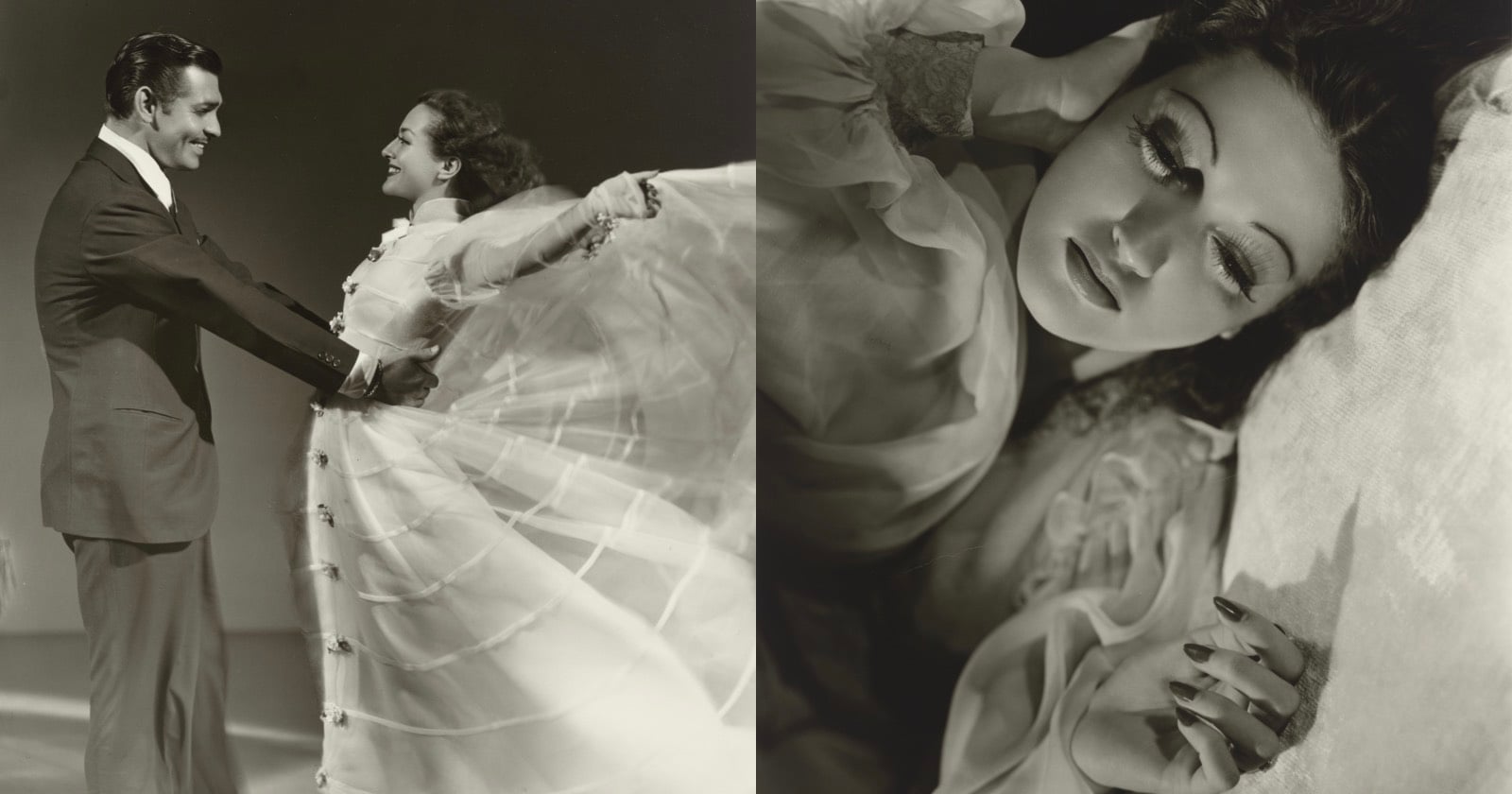
Hollywood's golden-age glow was never a happy accident of sunlight and film stock. It was sculpted, frame by frame, by a single visionary: George Hurrell. A new exhibition now celebrates his work, and it reminds us that the glamour we still romanticize today was not discovered but deliberately, artistically constructed. Our take is simple: Hurrell's lens taught us that true allure is an immersive craft, not a casual afterthought. For anyone curating their own image, whether through fashion, fitness, or a personal brand, his legacy offers a masterclass in intentionality.
Hurrell photographed the icons of the 1930s and early 1940s: Clark Gable, Joan Crawford, Greta Garbo. He did not merely document them; he collaborated with them to create a heightened version of reality. His lighting was dramatic, his shadows deep, his subjects often reclined in poses that felt both intimate and untouchable. This is the same artistic sensibility that resonates in A Vibrant Legacy: Exploring the Art of Mexican Photography, where photographers shaped national identity through connection and composition. Hurrell, too, understood that a portrait is never just a face, it is a story, a mood, a curated world. For the modern reader, the takeaway is clear: how you present yourself, in person or online, is a creative act. Lighting, posture, and context are not superficial details; they are the architecture of presence.
What makes Hurrell's work feel so current is its refusal to settle for the ordinary. In an era of filtered selfies and disposable content, his photographs demand that we slow down. They ask us to consider what we are actually communicating. This is not about mimicking old-Hollywood aesthetics; it is about adopting the same rigor. Every choice, the angle of a jaw, the fall of a shadow, the texture of a gown, was deliberate. Hurrell's images are aspirational not because they are unattainable, but because they prove that effort and artistry elevate any form. For the health-conscious enthusiast, this translates directly: the discipline you bring to your body and your movement can be just as expressive as a studio portrait. For the creative, it is a reminder that your medium, whether camera, brush, or voice, deserves the same curated attention.
The exhibition does not merely look backward; it challenges us to ask who is shaping our visual culture today. Hurrell worked within the studio system, yet his personal vision broke through. That tension between commercial constraints and authentic artistry is still alive. Watch for how contemporary photographers and influencers navigate it. Hurrell's legacy is not a relic; it is a standard. The specific question his work leaves us with is this: in your own life, are you the subject of your image, or are you actively sculpting it?