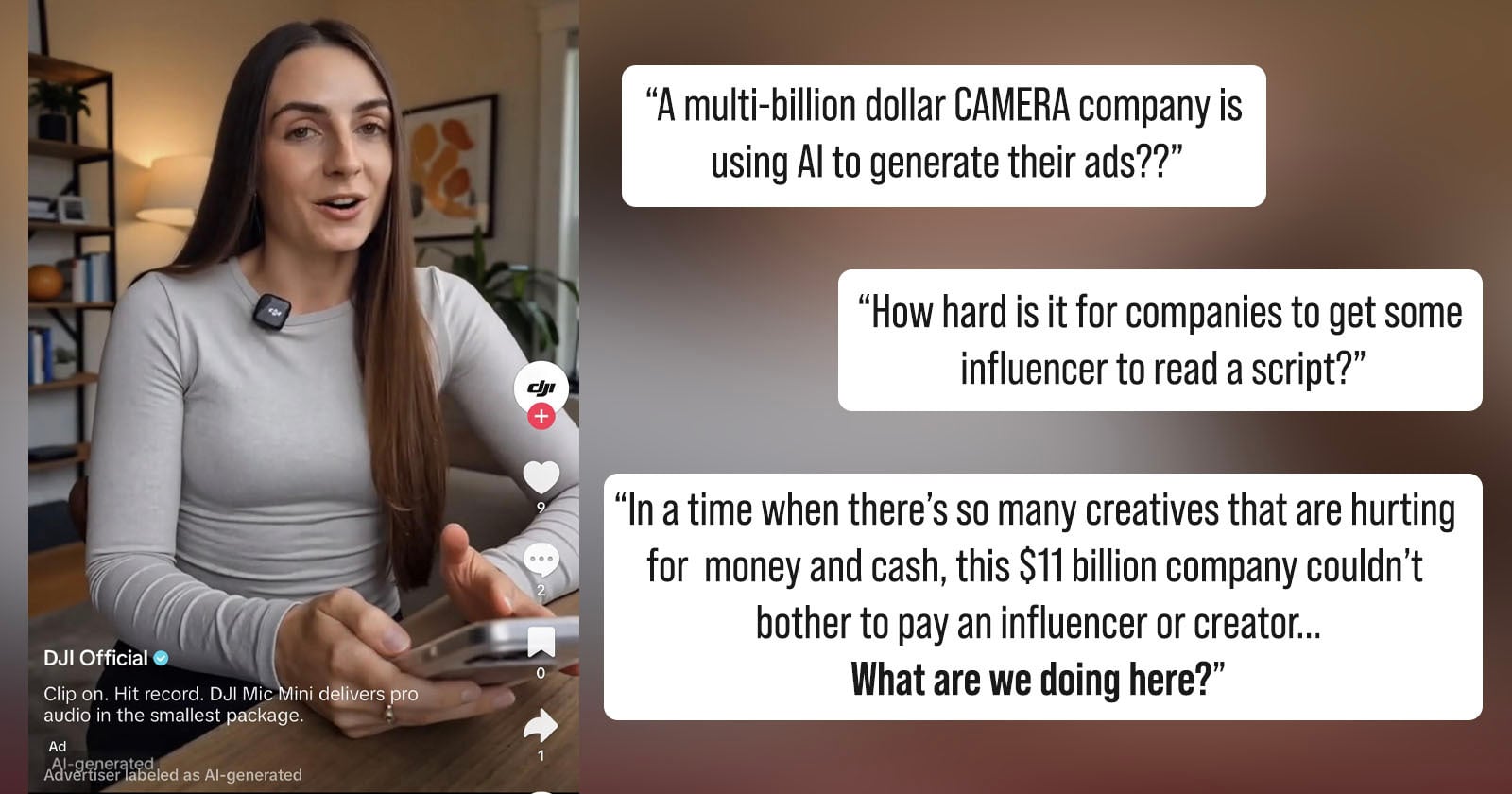
The discovery that DJI used an AI-generated avatar in a TikTok advertisement, rather than hiring an actual human creator, feels less like a simple misstep and more like a revealing choice. The company has since deleted the ad, but the damage to its credibility with the very audience it hopes to reach, creative professionals and discerning enthusiasts, is done. This is not a story about a technical error; it is a story about a failure of philosophy. When a brand that builds tools for human artistry decides to replace the artist with a simulation, it sends a clear signal about where it believes value resides. For our readers, who navigate the intersection of technology and authentic expression, this raises a practical question: can you trust a company that does not trust its own customers?
This incident lands in a fascinating context, especially when compared to recent industry moves. Consider the tensions explored in Aspirational Image, Unexpected Exit: CEO Departs After AI Photo, where a leader faced consequences for presenting a curated, AI-enhanced image of family life. Both stories reveal a cultural discomfort with the artificial masquerading as the real, yet DJI's case is arguably more damaging because it involves a commercial transaction. The CEO's photo was a personal lapse in judgment; DJI's ad was a corporate decision to substitute a real person for a digital phantom. Meanwhile, the promise of tools like those described in Unlock Creative Power: Lightroom and Photoshop Now Within Gemini suggests a future where AI enhances human creativity, not replaces it. DJI chose the wrong side of that equation, using AI to cut out the very collaborators, influencers, photographers, filmmakers, who build their brand's cultural currency.
Our take is direct: authenticity is not a marketing filter you can apply in post-production. It is a practice. For a company like DJI, whose drones capture real moments from real perspectives, using a synthetic face to sell those tools undermines the entire value proposition. If the goal is to inspire people to create, you must first demonstrate that you value the creator. The practical consequence for our readers is a heightened need for discernment. When you see a brand's advertisement, ask yourself who is being paid, and who is being erased. The line between real and AI is not just a technical boundary; it is an ethical one.
The specific detail to watch now is how DJI responds to the backlash. Will they issue a policy committing to human-first marketing, or will they treat this as a one-off "learning experience"? The answer will tell us whether they see their community as partners or as data points. For now, the takeaway is simple: a brand that cannot tell the difference between an authentic human and a convincing pixel has lost sight of its own purpose.