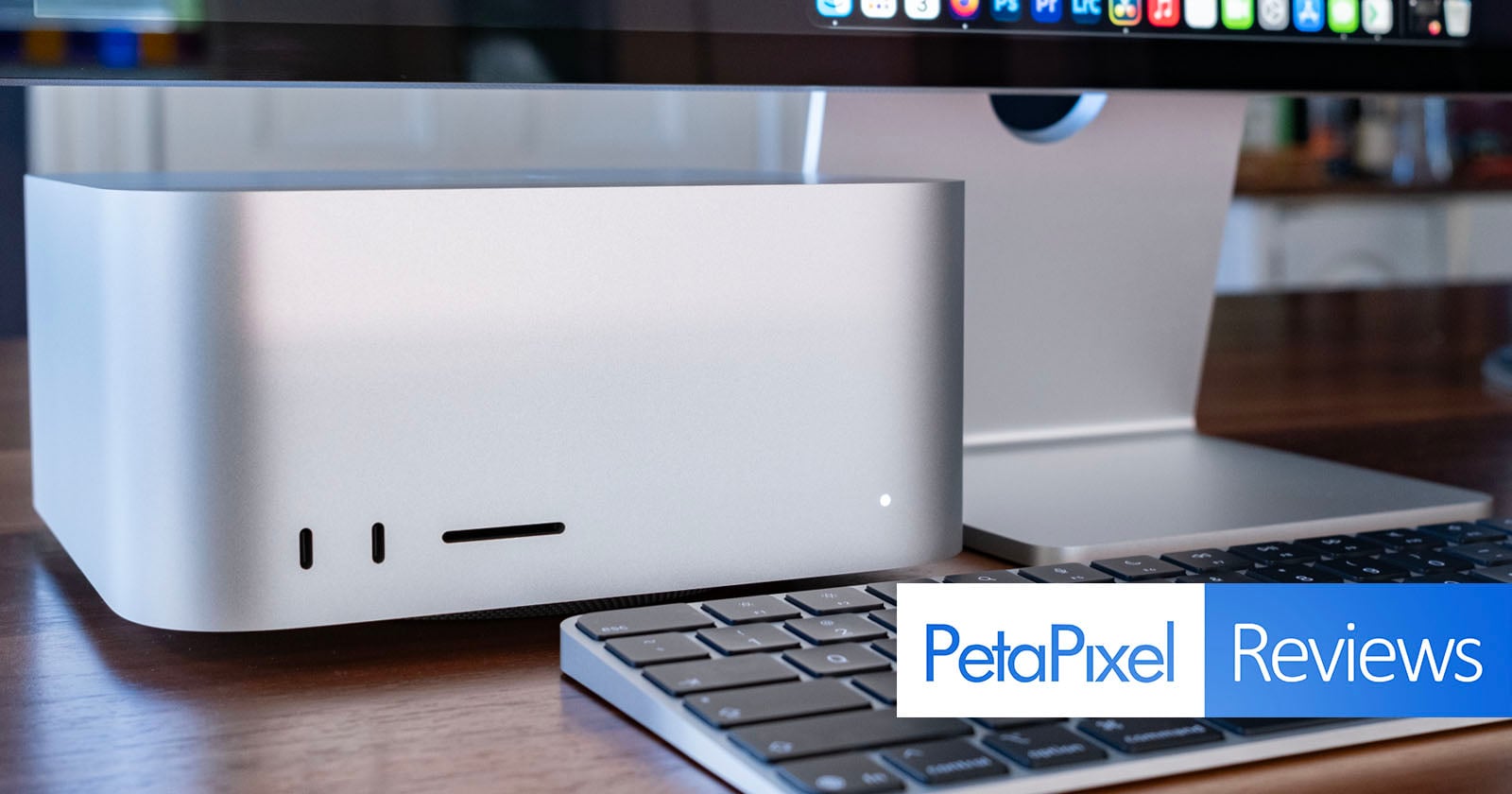
The Mac Pro is dead. Long live the Mac Pro. When Apple quietly discontinued the tower in March, ending the short-lived experiment of stuffing Mac Studio internals into a massive, cheese-grater housing, many mourned the loss of a flagship. But the spirit of that machine never left the building. It simply moved into a smaller, more refined silhouette. The real news isn't that Apple killed the Mac Pro; it's that the Mac Pro's soul now lives inside the new M5 Ultra Studio, and for the creative community, that evolution matters far more than the name on the chassis.
Consider what the Mac Pro actually was in its final form. It was a machine that offered raw power for workflows that demanded it, video editors, 3D artists, sound designers. Yet it also carried a certain weight, a physical presence that felt almost ceremonial. Apple's decision to streamline that power into the Studio form factor isn't a retreat; it's a refinement. The audience that needs that horsepower never needed the tower's bulk. They needed the architecture. And now they get it in a chassis that sits quietly on a desk, leaving more room for the tools that actually matter. This shift mirrors a broader conversation we see in creative tools right now. Just look at how Aperty's Curated Exit: Skylum Closes Its AI Portrait Chapter Early unfolded, a promising niche product pulled before its time, a reminder that even the most focused creative software can vanish when the market moves on. The Mac Pro, in contrast, isn't vanishing. Its DNA is being folded into a more sustainable, everyday form.
What does this mean for the photographer, the filmmaker, or the designer who once looked at the Mac Pro as the ultimate destination? It means the barrier to entry for workstation-class performance just got lower, both in cost and in footprint. The M5 Ultra Studio is not a consolation prize. It is the logical end point of a philosophy that values function over formality. Apple is betting that the people who once bought the tower will now buy the Studio, and they are likely right. The power user doesn't need a handle on the case or a cavernous interior for expansion cards they stopped using years ago. They need speed, thermal efficiency, and ports that actually connect to their gear. This is a practical victory, not a symbolic loss. It also echoes a tension we saw play out in a very different arena: Haaland's Image, Airline's Edits: A Lawsuit Over Style, where a brand's attempt to reshape an image for its own purposes backfired spectacularly. Apple, by contrast, is reshaping its own product line with surgical precision, removing what no longer serves the workflow while keeping the engine intact.
The specific takeaway here is clear: if you were waiting for a next-generation Mac Pro to upgrade your studio, stop waiting. The M5 Ultra Studio is that machine. It offers the same core promise, uncompromising compute for demanding creative work, without the theatrical packaging. The question Apple leaves unanswered is whether the Mac Pro name will ever return, perhaps for a future chip generation that truly demands a larger thermal envelope. For now, the studio is the studio, and the Pro lives on inside it. Watch how quickly the used Mac Pro market adjusts in the coming months; that will tell you everything about whether the audience agrees.