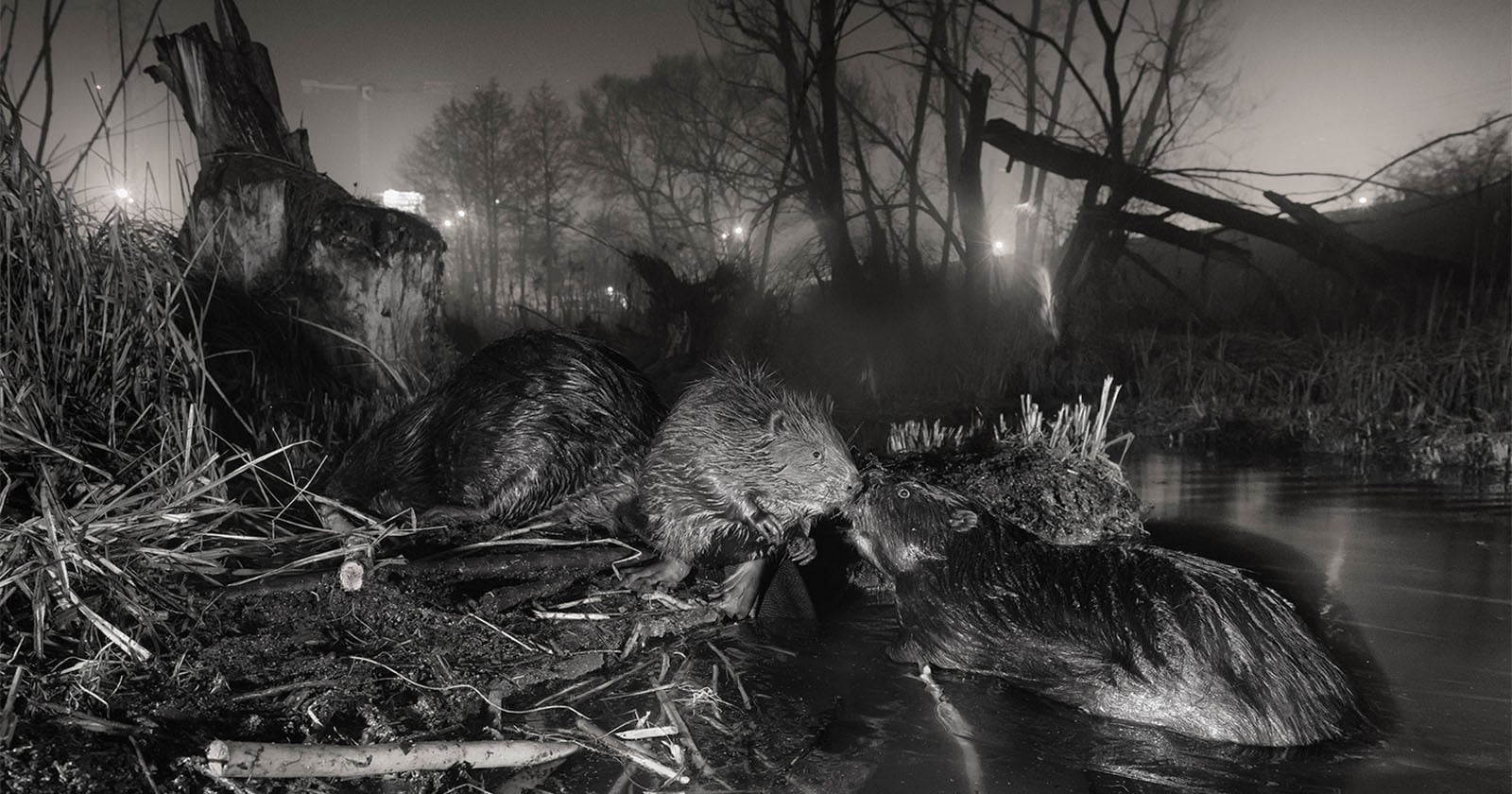
There is something quietly revolutionary about a black-and-white photograph of beavers in a city pond winning a major European rewilding award. It is not the shot that screams for attention, no predator mid-leap, no dramatic sunset silhouette. And that is precisely why it matters. Jan Wieczorek's "Urban Beavers" captures a truth we too often forget: wildness does not require wilderness. It can take root in the shadow of streetlights, along the edge of a canal, in the stubborn return of a creature that refuses to leave. For our readers, who balance a curated aesthetic with a genuine hunger for the authentic, this image is a reminder that the most compelling beauty often emerges where we least expect it.
This year's Rewilding Europe Award celebrates resilience over rarity, presence over perfection. The beavers are not exotic; they are familiar urban dwellers. Yet their quiet persistence in a human-dominated landscape speaks to something deeper than novelty. It echoes the same spirit that drives the unexpected rediscovery of the Ghana Cuckooshrike, a bird filmed for the first time in 13 years in After 13 Years, the Elusive Ghana Cuckooshrike Steps Into the Light. Both stories challenge the assumption that nature's most important moments happen far from our daily lives. The beaver and the cuckooshrike, one urban, one elusive, demand that we look closer at the life already around us. Meanwhile, the legal consequence faced by an influencer couple in Oman for sitting on a protected sea turtle, detailed in Oman's Legal Wrath Meets a Vacation Pose on a Protected Sea Turtle, offers a stark contrast: the line between engagement and exploitation is thin, and our relationship with wildlife requires intention, not spectacle.
What does this mean for a reader who curates a life around fitness, beauty, fashion, and wellness? It means that sustainability is not a trend to be worn lightly, it is a practice rooted in observation and respect. Wieczorek's photograph does not preach; it invites. The beavers are not posed or romanticized. They are simply there, doing what beavers do, in a place where we might not have thought to look. That is the kind of authenticity that resonates beyond a gallery wall. It asks us to bring the same awareness to our own environments: the park we jog through, the river we walk beside, the small green spaces we pass without notice. The wild within our cities is not a consolation prize; it is a living, breathing argument that coexistence is possible.
The concrete takeaway is this: the next time you step outside, pay attention to the margins. The beaver in the pond, the bird in the undergrowth, the legal boundary that protects a creature from a careless selfie, these are not separate stories. They are threads in the same fabric. The question Wieczorek's award-winning frame leaves us with is not whether nature can survive in the city, but whether we are willing to share the frame.