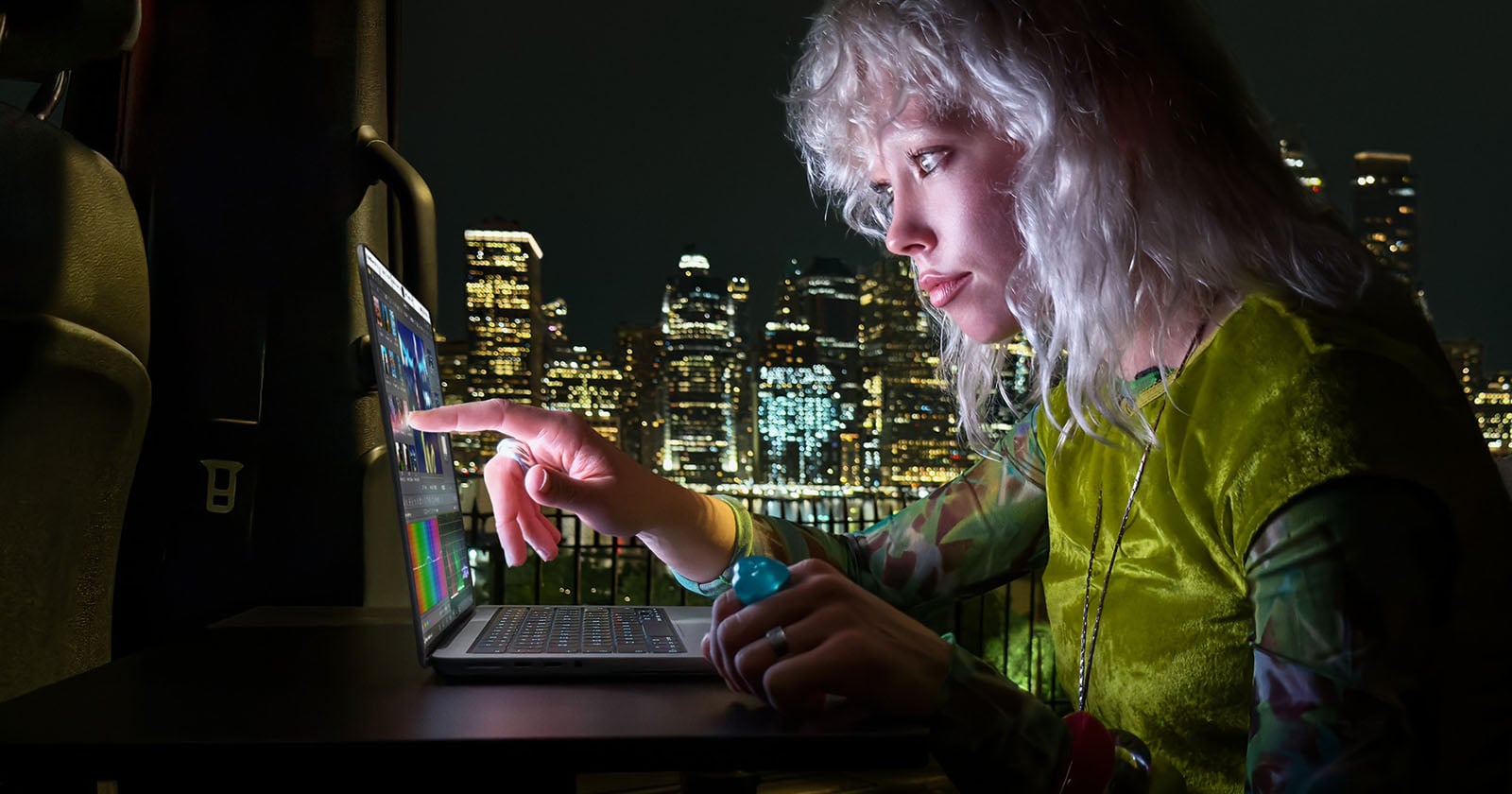
For years, the idea of touching a Mac screen felt like a forbidden gesture, a line Apple itself drew in the sand. Today, that line dissolves, and we believe this isn't just a hardware update; it's a fundamental shift in how creative work can feel. The new MacBook Pro with its PROLED XDR display finally invites direct touch, and Blackmagic Design has already aligned DaVinci Resolve 21 to meet it. This convergence is the kind of moment where the tool stops being an obstacle and starts becoming an extension of instinct.
What does this mean for the editor who lives in timelines and color wheels? It means the tactile precision of grading a skin tone with a fingertip, or scrubbing through a sequence with a swipe, becomes as natural as adjusting a physical fader. This is not about replacing a mouse or a stylus, it is about adding a layer of immediacy that only touch can provide. We have long admired how the HOA A1 Camera Captures the Art of an Authentic Gaze because it prioritizes the human moment over technical clutter. DaVinci Resolve on a touchscreen Mac carries that same philosophy: remove the friction, keep the craft. And when you consider how the M6 iMac Refines Its Craft Without Redesigning the Canvas, it becomes clear that Apple is not chasing novelty for its own sake. The touchscreen arrives not as a gimmick but as a deliberate refinement for workflows that already demand speed and nuance.
Of course, the real test will be in the muscle memory of professionals who have spent years with keyboard shortcuts and trackpad gestures. We are curious whether Apple's implementation respects that muscle memory or forces a re-learning curve. The PROLED XDR display promises color accuracy that matters to anyone who exports for broadcast or cinema, and pairing that with touch could make the grading suite feel more like a painter's studio than a control room. This is where the convergence of fitness, beauty, and fashion we often celebrate finds its digital parallel: the body engages with the screen, the eye judges the image, and the result is a creation that feels both intentional and alive.
The concrete takeaway is this: if you are a colorist, editor, or motion designer who has ever wished you could simply pinch a waveform or drag a node with your finger, the waiting period is over. The question now is whether third-party developers will follow Blackmagic's lead and treat the touchscreen as a primary interface rather than an afterthought. We will be watching how the industry adapts, because a tool this responsive deserves software that thinks in gestures, not menus.