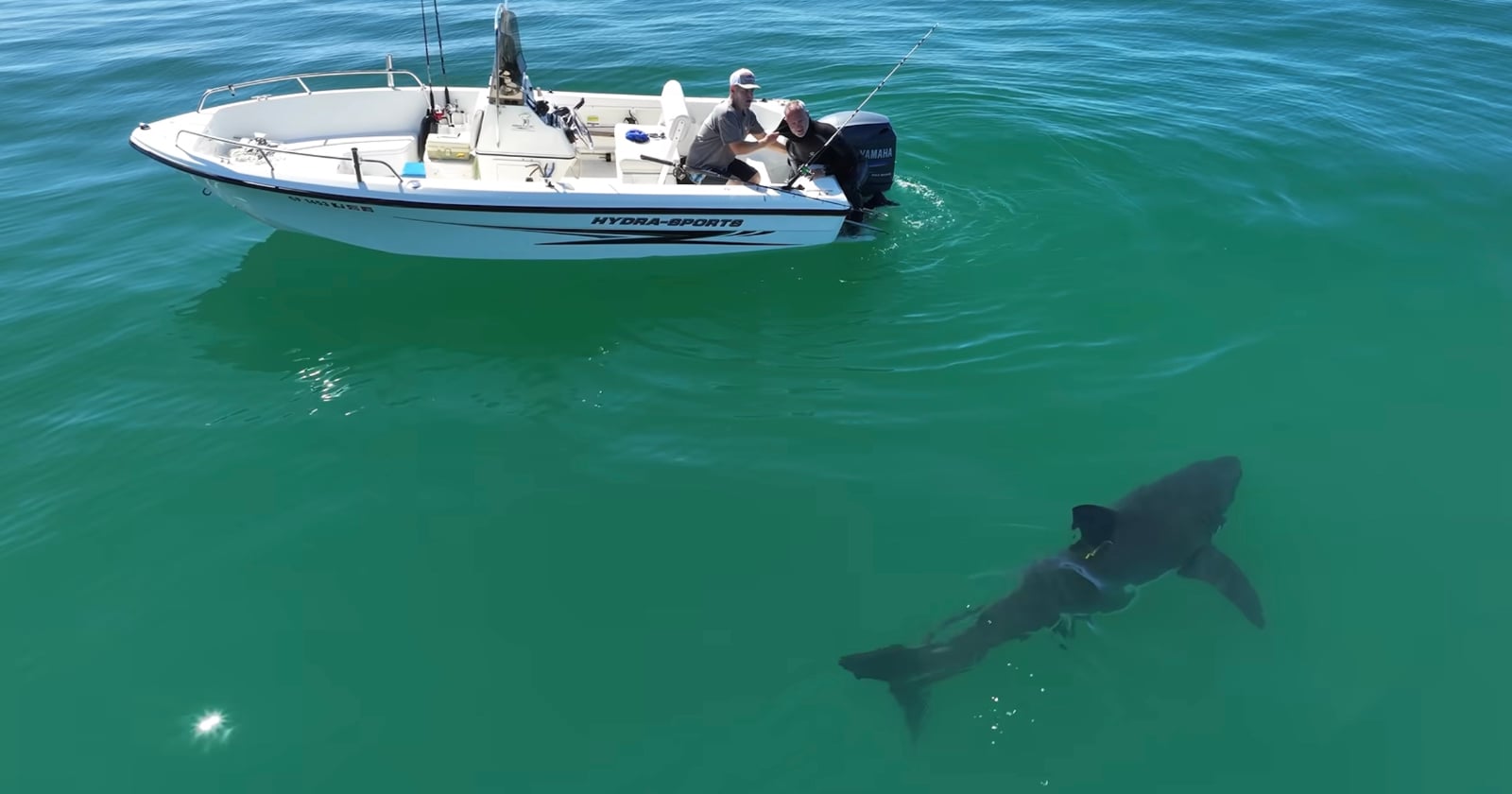
We are used to thinking of drones as instruments of surveillance, as privacy intruders, as the buzzing eyes that watch us from above. And in many cases, that concern is valid, as the Dutch Data Protection Authority recently warned about smart glasses, the line between observation and invasion grows thinner by the day. But a recent incident off the Californian coast reframes the conversation entirely. A photographer, flying his drone for a routine coastal shot, spotted a large shark closing in on an unsuspecting fisherman. The drone did not capture a crime; it prevented one. By swooping low and drawing the fisherman's attention, it turned a potential tragedy into a story of intervention. This is not a contradiction of the privacy debate, it is a reminder that the same tool can be a menace or a guardian, depending entirely on the hand that holds the controller.
This moment matters because it strips away abstraction. We often debate technology in terms of rights and regulations, which is necessary work, but it can leave us cold. Then comes a real-world scene: a man alone in the water, a predator approaching silently, and a stranger with a camera who saw what no one else could. For our readers, who move between artistic creation and active, health-conscious living, this story lands with particular force. You know the value of a sharp eye and a steady hand. The photographer was not a lifeguard or a scientist; he was a creative professional doing what creatives do: looking closely at the world. And in that look, he found a way to act. It echoes the kind of resourcefulness we admire in Two Old Canon Cameras, One Artist's Vision for the Perfect Rangefinder, where a photographer built a bespoke tool from salvaged parts to achieve a specific vision. Here, the tool was off-the-shelf, but the vision was no less precise: see clearly, then act decisively.
The practical takeaway is sharp and specific. If you fly a drone, whether for art, fitness documentation, or coastal exploration, you are not just a creator. You are a lookout. The photographer did not need special training or a rescue certification. He needed only to notice, to care, and to use what he had. That is an invitation to every one of us who carries a lens or a sensor into the wild. It asks us to stay present, to keep our eyes open not just for the perfect composition but for the person who might need a warning. This is the same grounded authenticity we champion in The Art of Influence: David Yarrow on Finding Inspiration in the Unlikely, where a fine-art photographer finds his stories in unexpected, unglamorous places. The shark story is not about the shark. It is about the choice to look up from the frame and see the human inside it.
So what do we watch for next? The question is not whether drones can be used for good or ill, they can, and they will be. The question is whether we, as a community of makers and observers, will cultivate the instinct to intervene. The photographer did not hesitate. He did not weigh the odds or check his insurance. He saw danger, and he moved. That is the standard now. The next time you power up a drone, ask yourself: are you ready to see what is really there?