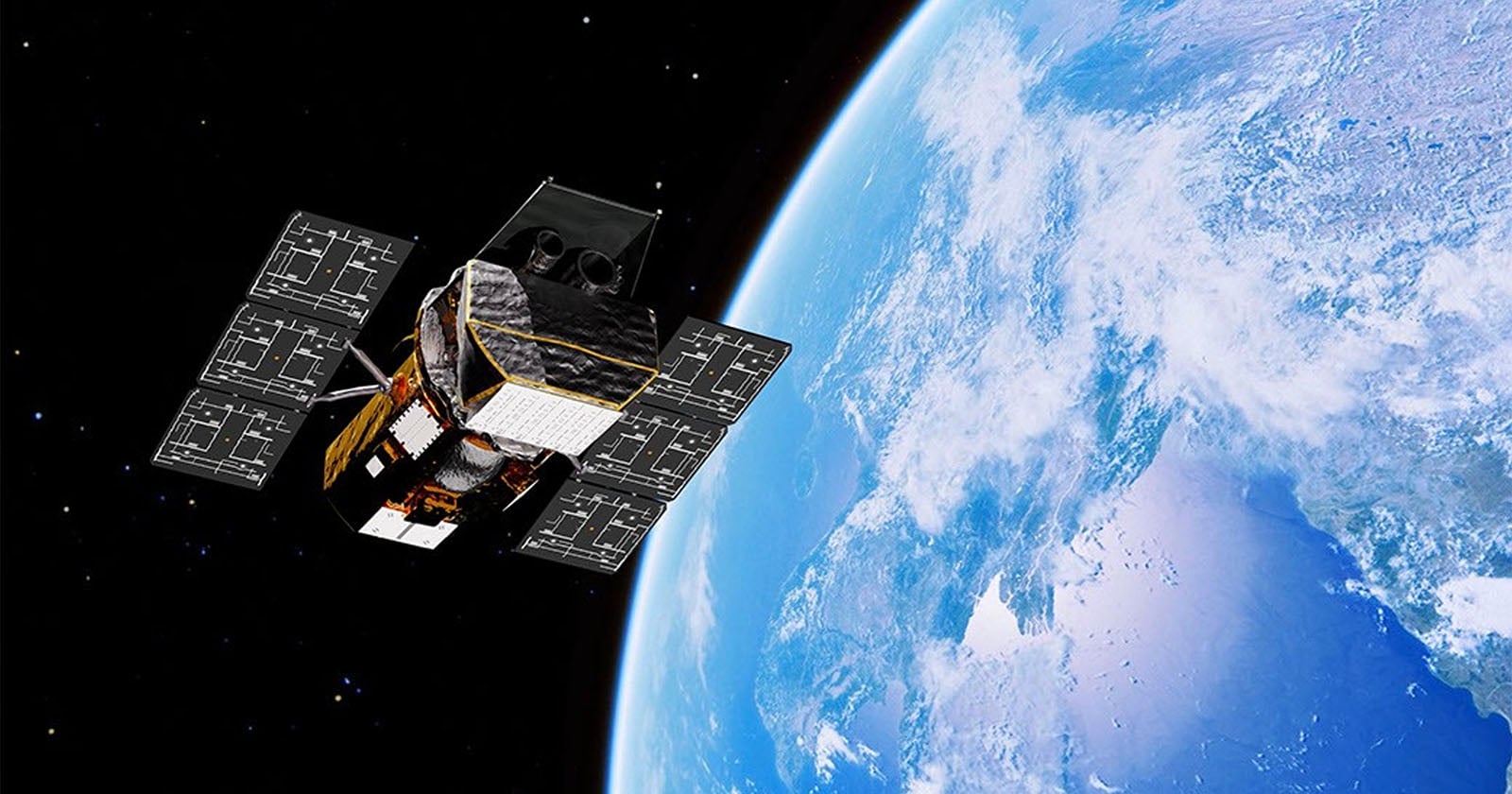
There is something quietly profound about the end of a mission that has spent two decades watching the violent, beautiful death of stars. Tomorrow, when NASA's Neil Gehrels Swift Observatory re-enters Earth's atmosphere, most of it will burn away, yet a few pieces may survive the fall. That collision of cosmic ambition and earthly physics feels less like a failure and more like a final, honest frame in a long exposure. We think it is worth pausing over, not because the risk is real (it is vanishingly small), but because the story reminds us that even our most elegant tools are temporary.
Swift was never a household name in the way Hubble was, yet its work was deeply artistic in its own right. It chased gamma-ray bursts, the most energetic explosions in the universe, and turned raw data into the first images of phenomena that had, until then, only existed in theory. That act of translation, from invisible radiation to visible light, is not so different from the work of a photographer who captures a fleeting autumn palette. In a recent piece, A Hand in the Frame Elevates Autumn's iPhone Palette, we saw how a simple compositional choice can transform a seasonal cliché into something intimate. Swift did the same on a cosmic scale: it took raw, chaotic energy and gave it form. Meanwhile, as OM Executives Reflect on Micro Four Thirds and the Case for Larger Sensors, they argued for systems that balance portability with purpose, a reminder that the best tools are not the ones that last forever, but the ones that fit the moment. Swift fit its moment exquisitely.
The practical takeaway for us, as readers who care about craft and intention, is this: nothing we build outlasts the atmosphere. Not a telescope, not a camera, not a curated collection of winners. The curated gaze into Britain's 2026 photography winners celebrates images that freeze a single instant, but that instant is already gone. Swift's re-entry is a concrete lesson in the beauty of impermanence. It forces a question we rarely ask of our own gear: What will survive of what we make? For the observatory, a few hardened components may reach the ground. For the rest of us, the answer is the work itself, the images, the bursts of light caught and shared.
So we are not mourning Swift. We are watching it return to the elements it spent a lifetime studying. The specific detail to watch tomorrow is not where the fragments land, but whether we notice the silence after the signal stops. That quiet, we think, is the real story: a celestial chapter ending not with a bang, but with the slow, certain burn of re-entry. It is a reminder to look up while the looking is good.