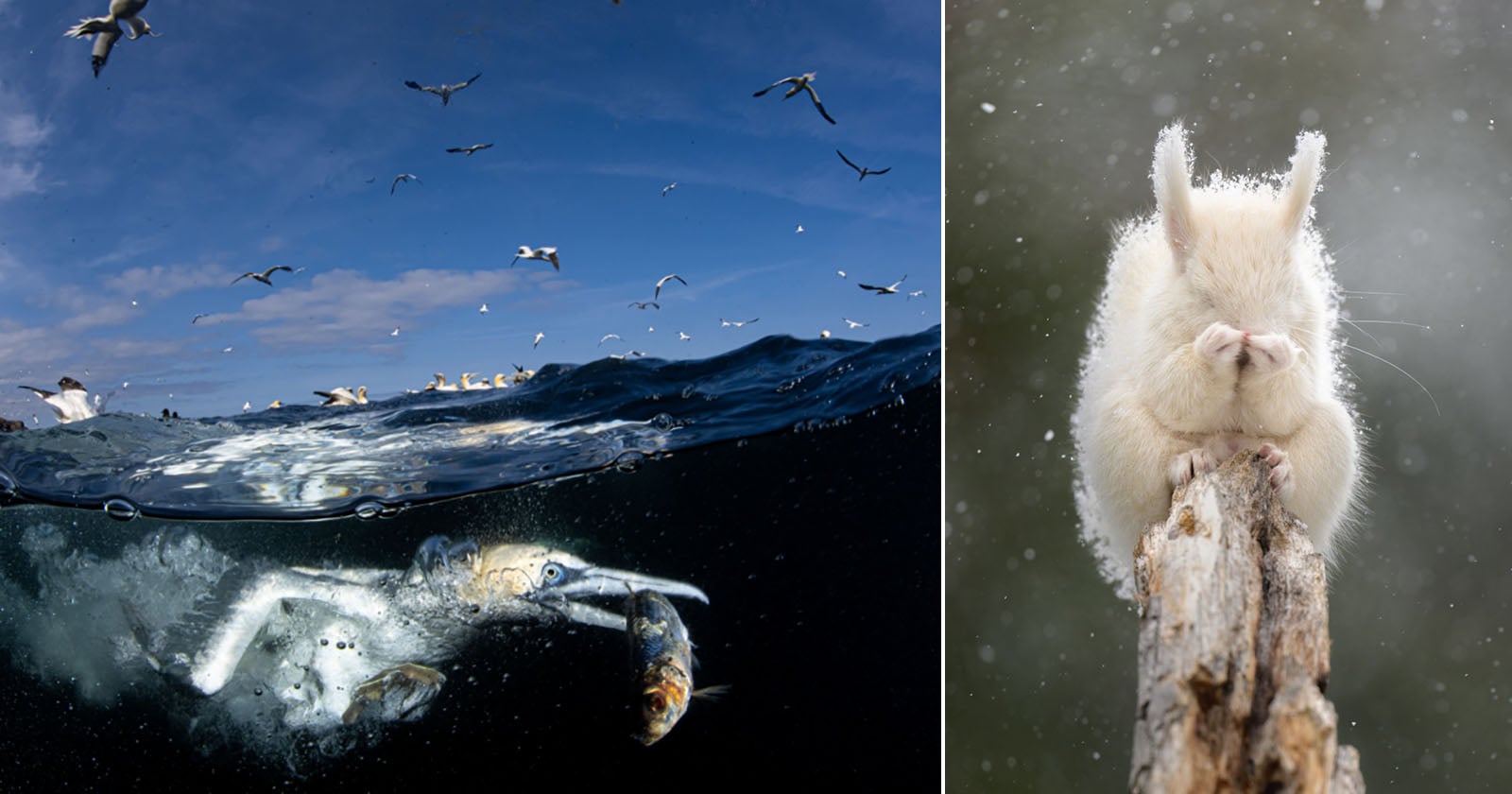
What begins as a curious novelty, an underwater photograph of a bird, quickly reveals itself as something far more profound. The grand prize winner of the 74th annual Nikkor Photo Contest, announced alongside the 52nd Nikon Small World Photomicrography winners, is a quiet challenge to how we categorize art and nature. It is an image that asks us to reconsider where beauty lives, and we believe that is exactly the kind of provocation our community should lean into.
The winning shot captures a bird in motion beneath the surface, trading air for water, visibility for mystery. It is not a sharp, clinical wildlife portrait. It is immersive, textured, and slightly disorienting, a moment that feels more like a painting than a photograph. This aligns with a broader shift we have been watching in visual culture, where the line between documentation and artistic expression continues to blur. Our recent coverage of the Fujifilm Deepens Its Commitment to Instax With a Curated $19 Million Expansion touched on how even instant photography is being positioned as an aesthetic choice, not just a functional one. The underwater bird image does something similar: it privileges feeling over fidelity. For the photographer, this required patience and a willingness to embrace the unpredictable. For the viewer, it offers a rare chance to see something familiar rendered strange and beautiful.
We also connected this news to our look at the Wide-Open Vistas: The 2026 Pano Awards Celebrate a New Vision, which honored vast, sweeping landscapes. Where the Pano winners reached outward, this Nikon winner turns inward and downward, into a small, temporary world. It is a reminder that ambition in photography is not measured by scale alone. There is equal merit in the precise, curated frame of a single unexpected encounter. This matters for anyone who picks up a camera, whether you are a working creative or a weekend enthusiast: you do not need an epic vista to make a striking image. You need an instinct for the moment.
The practical takeaway here is direct. If this image teaches us anything, it is that the rules of engagement are looser than we think. A bird does not have to be in the sky. A prize-winning photograph does not have to be immediately legible. And a tool like a Nikkor lens, often associated with crisp, perfect landscapes or fashion campaigns, can just as easily capture a half-submerged, dreamlike flutter. The question this leaves us with is whether more competitions will follow Nikon's lead in rewarding the unexpected, or if this remains an elegant outlier. Either way, one image has already expanded our sense of what a winning frame can hold.