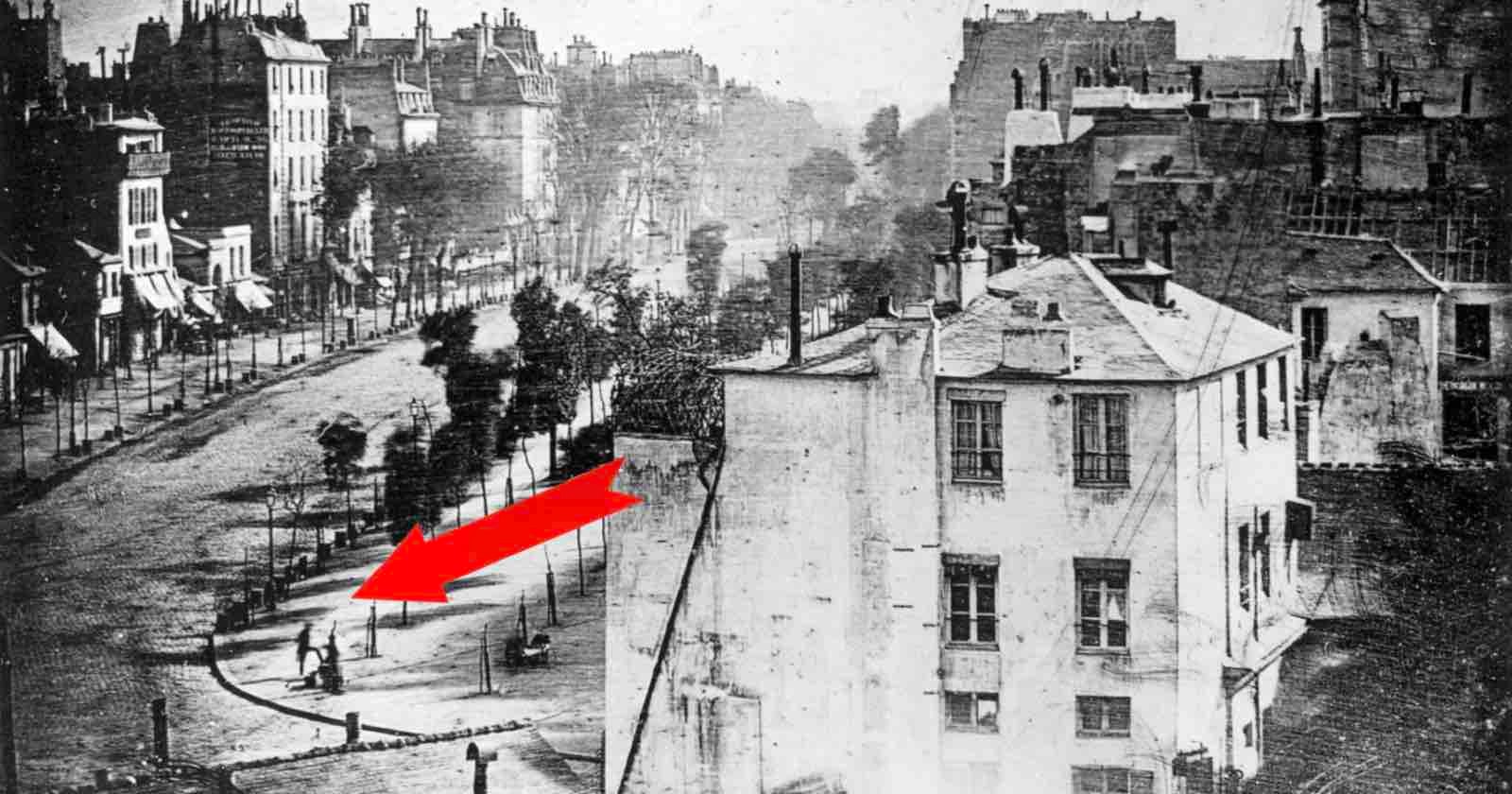
There is something quietly radical about knowing exactly where Louis Daguerre stood in 1838 to capture the first photograph of a human being. This is not merely a trivia point for historians; it is a tangible thread connecting us to the very moment photography became a witness to life. Researchers have now pinpointed the precise location of *View of the Boulevard du Temple*, and in doing so, they have given us a fixed point in space where art, time, and humanity first converged through a lens. For anyone who has ever felt the weight of a single frame, this discovery is a reminder that every photograph is a negotiation between the photographer and a specific, irreplaceable place. It echoes the themes in our recent exploration of how The Art of Aging: How a Single Photo Reveals So Much More uses modern AI to read biological time from faces, both stories ask us to see what a photograph holds beyond its surface. And just as Revisiting the Authentic Soul of Micro Four Thirds argues for stripping back modern complexity to find the essence of image-making, this discovery strips back nearly two centuries to find the origin of that essence.
Our take is this: the location matters because it humanizes the origin story. Daguerre's image of a man having his boots shined on a busy Parisian boulevard is often celebrated as the first accidental human portrait, but knowing the exact spot, the angle of the sun, the geometry of the buildings, the flow of the street, turns that accident into an invitation. It asks us to consider that every iconic image begins with a decision about where to stand. For the creative collaborators and health-conscious enthusiasts in our community, this is a practical lesson in intentionality. Whether you are composing a shot for a campaign or capturing a moment of stillness after a morning run, the frame you choose is a curated act. The researchers have not just solved a historical puzzle; they have given us a case study in how location dictates narrative. The man in the photograph was anonymous, but his place in history was sealed by the precise coordinates Daguerre selected.
This revelation also reframes how we think about the passage of time in photography. The Boulevard du Temple still exists, altered but continuous, and that continuity is a quiet challenge. As we noted in The Art of Seeing: A Pacific Island Tree Fooled Earhart's Searchers, pictures can deceive, and location can mislead. Here, the deception is reversed: the photograph told the truth about a moment, and now we have the truth about the place. It is a rare alignment of image and geography that invites us to be more deliberate in our own practice. When you next press the shutter, consider what the frame excludes as much as what it includes. Daguerre's composition captured a shoe-shine, but it omitted the chaos of a city that was, by all accounts, bustling around him. That choice, what to leave out, is as defining as what remains.
The specific takeaway is this: the next time you stand in a space that feels significant, ask yourself what Daguerre would have seen. His exposure lasted several minutes, long enough for the moving crowds to vanish and for one patient shoe-shine customer to remain still. That stillness, born of technical limitation, became art. For us, the lesson is not about waiting for perfect light, but about recognizing that the ordinary, a man pausing on a sidewalk, can become extraordinary when framed with intention. The researchers have given us a map to the first human subject, but the real gift is the reminder that every subject, past and present, deserves that same clarity of place.