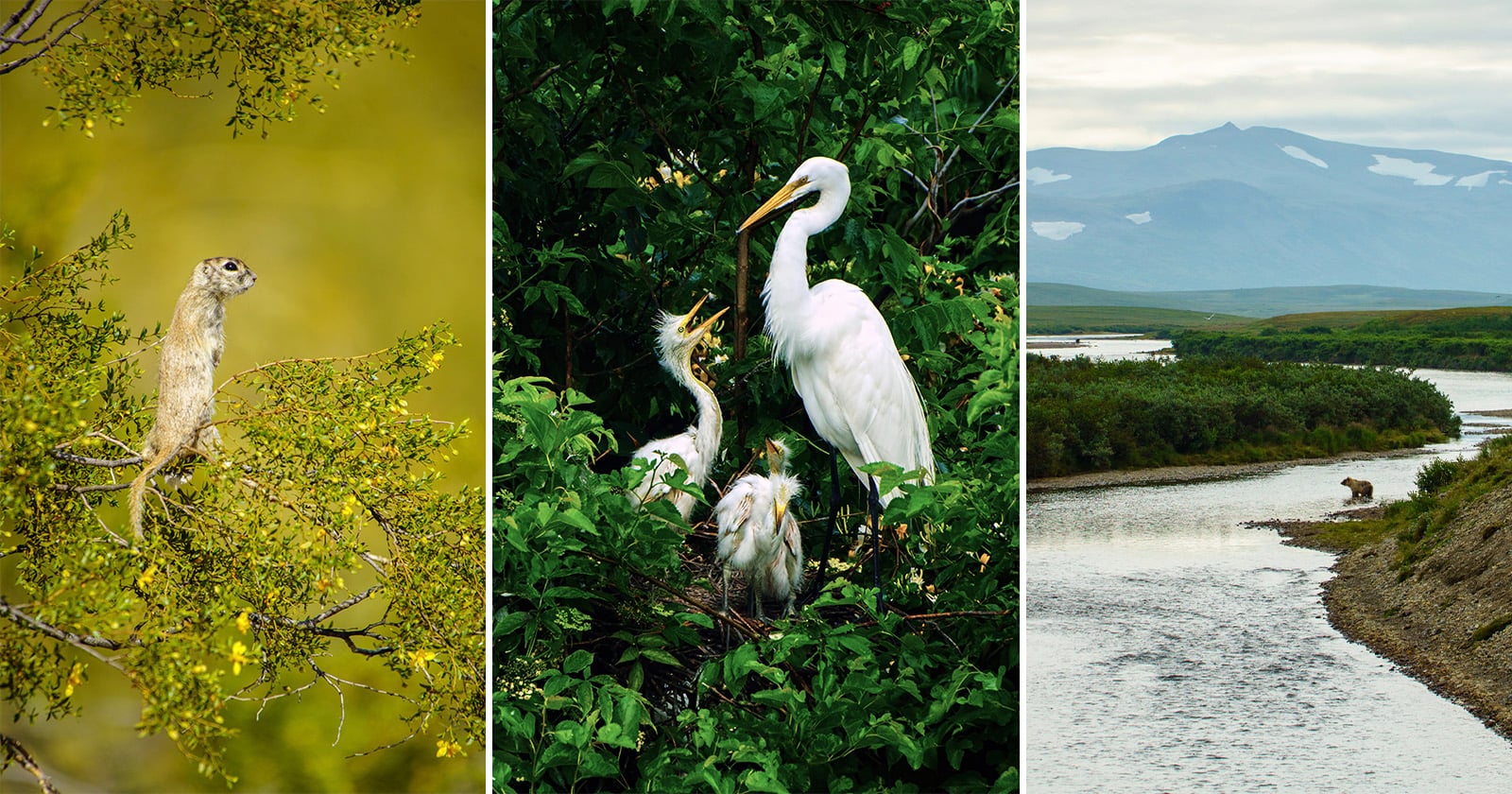
Most wildlife photography is content to capture the animal and let the background blur into irrelevance. That approach misses the point entirely. The story "Where the Wild Lives: Habitat Shapes the Story Beyond the Frame" makes a compelling case for environmental wildlife portraits, arguing that the landscape is not a backdrop but an active narrator. We believe this is the most honest way to photograph the natural world because it respects the animal's reality: a creature without its context is a specimen, not a story.
This practice aligns beautifully with the meditative discipline explored in Breathe steady, hold still: the meditative technique sharpening your photography. Where that piece teaches stillness to steady the hand, this one asks us to steady the eye. An environmental portrait demands patience not just for the right moment, but for the right composition, a branch that frames the subject, a patch of light that reveals the texture of the fur against the bark. The two techniques are natural partners. You breathe to hold the camera still; you breathe to hold your attention still, letting the habitat reveal its own visual rhythm.
What makes this approach truly artful is its restraint. A tight portrait gives you the animal's expression. An environmental shot gives you its life. By including the cracked mud of a dry riverbed or the dappled canopy of a rainforest, the photographer tells us what the animal endures, what it hunts, what shelters it. That is a richer story than any single gaze can provide. It is also a harder one to compose, requiring the same curatorial instinct that brings a portrait series like Sam Taylor-Johnson's Crying Men Series Takes Center Stage in Curated Retrospective to life, choosing exactly what to include and what to leave out so that every element serves the subject's truth.
The practical takeaway for anyone picking up a camera is this: before you press the shutter, ask what the habitat is doing. Is the tall grass hiding the cheetah's legs because it is stalking? Is the frost on the bison's back telling us about the season? If the answer is yes, move back. Widen the frame. Let the place speak. The most memorable wildlife images are not the ones that bring us closest to the animal; they are the ones that make us feel we have stepped into its world. That feeling is what separates a snapshot from a portrait, and it is the only standard that matters.